Taipei Night Markets: Choosing a Market and Ordering Street Food
Choose a Taipei night market by the evening you want: Raohe for a clearly defined market street near Songshan, Ningxia for a food-focused visit in Datong, Shilin for a broader mix of food and shopping, or Linjiang, also called Tonghua, when Da’an is convenient. You do not need to visit them all. One suitable market, a few considered orders and a straightforward journey home make a better first experience than chasing every famous queue.
This guide explains how to choose, arrive and order, without a fixed walking route or an unsupported ranking of food quality. Market information was checked on 26 October 2026. Individual vendors have their own opening times, days off and availability: a market listing is not a promise that a particular stall will be serving when you arrive.
Match the market to your priorities
| Market | Useful reason to choose it | Practical starting point |
|---|---|---|
| Raohe Street | A defined market street with a recognisable entrance beside Ciyou Temple | Songshan MRT or railway station |
| Ningxia | An evening centred on traditional snacks rather than a large shopping district | Shuanglian or Zhongshan MRT |
| Shilin | Food combined with surrounding shops and market streets | Jiantan MRT; check the actual destination |
| Linjiang / Tonghua | A market visit that fits a stay or evening in Da’an | Xinyi Anhe MRT and a walk to Linjiang Street |
Compare travel effort, the people in your party and the food you can comfortably eat. “More local” is not a measurable guarantee of better cooking, lower prices or fewer people. A smaller market can still feel crowded at a narrow stall, and a larger one can be useful when your group wants different things.
For the wider trip, try RoadMe: in supported cities, the app develops a complete personal plan around your interests, dates and pace. It is more convenient to give an evening food visit a sensible place in that programme than to keep joining disconnected saved locations.
Give yourself permission to choose one market. Travelling across the city for a second similar dinner can consume the time you hoped to spend enjoying the first. If a particular dish is the main reason for going, check the vendor itself as well as the market name.
Raohe: a clear setting, without a guaranteed short queue
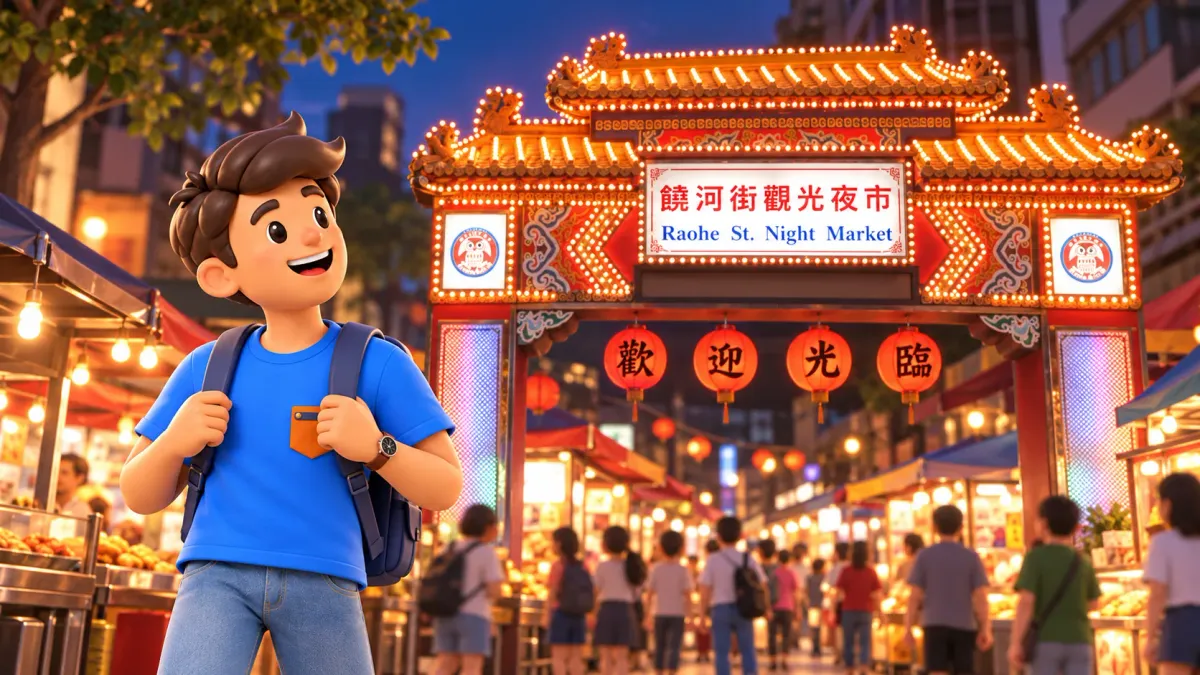
Raohe Street Night Market is in Songshan District, near Ciyou Temple and Rainbow Bridge. The city market office describes a market street about 600 metres long. Its illuminated gate is a useful recognition point, but the entrance photograph does not tell you the waiting time at any stall inside.
The market office lists Songshan MRT and railway access. Use the current station exits and your chosen market entrance when checking the final approach. It is more reliable to locate the actual entrance than to follow an exit number copied from a guide without noticing which end of the market it refers to.
Raohe's appeal includes the relationship between a neighbourhood trading street and the temple setting. The city describes it as an organised night market since 1987, and uses an owl as its market mascot. These details give the lights and entrance more context than a simple backdrop for a food photograph.
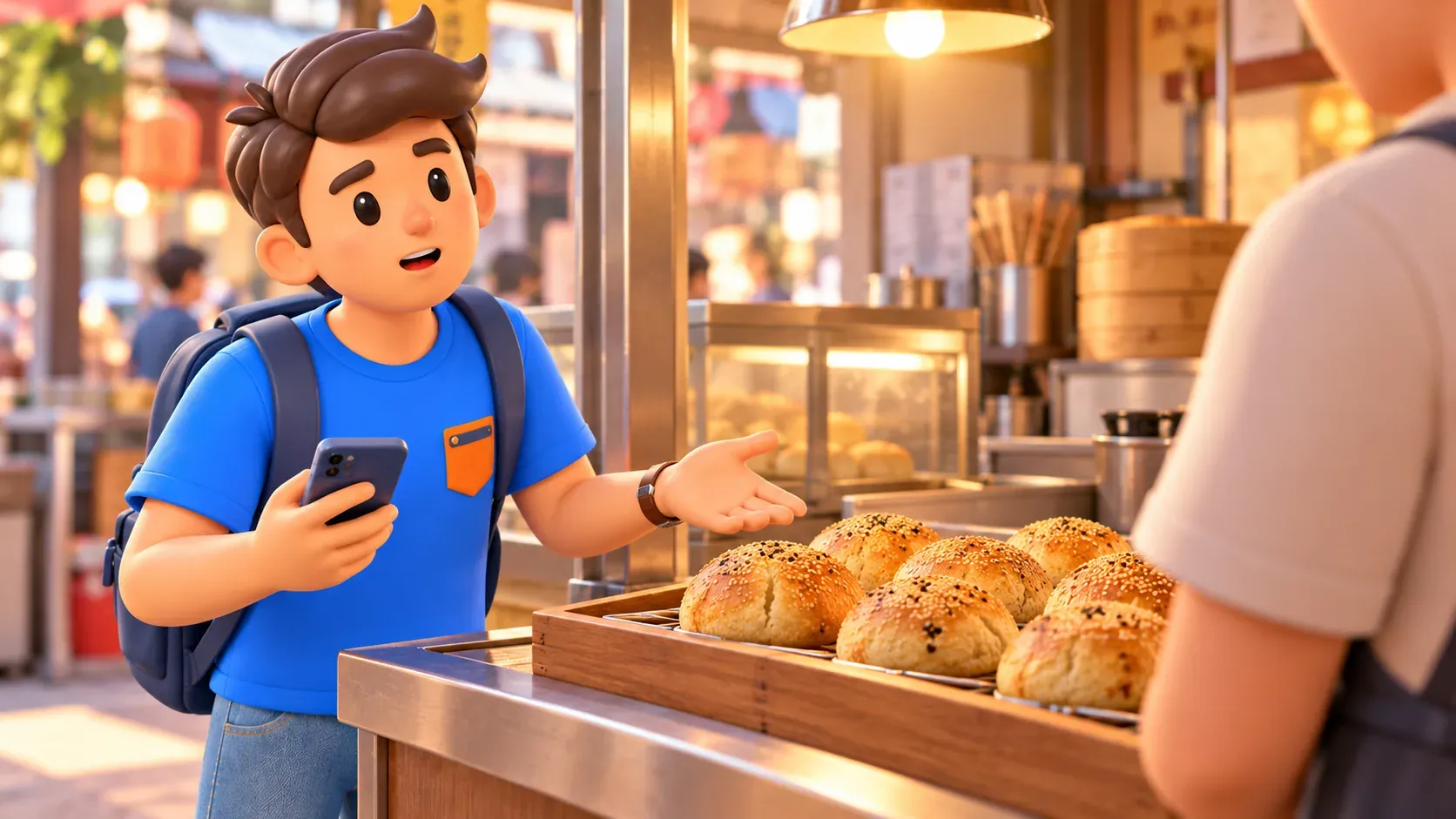
Pepper buns, oyster dishes, soups and tofu are among the foods associated with the market. Treat them as things to investigate, not a compulsory eating sequence. A famous bun may be a good first choice for someone who eats its ingredients; it is not an appropriate default for every dietary requirement.
Ningxia: start with dinner rather than shopping
Ningxia is on Ningxia Road in Datong District, between Nanjing West Road and Minsheng West Road. The market office describes a food section and a shopping section. This makes it a useful candidate when your main interest is sampling snacks, without implying that every stall sells food or that the street is always quiet.
Official visitor information lists approaches from Shuanglian and Zhongshan MRT stations. Choose the one that fits your departure point and ability to walk, rather than changing trains solely to reproduce somebody else's favourite entrance. Check the actual walking approach if stairs or mobility needs matter.
The city's food descriptions include oyster omelette, braised pork rice, chicken rice and other traditional snacks. A useful way to order is to choose a savoury dish you understand, then decide whether you want another small dish or a dessert. Buying several substantial portions before tasting the first leaves less flexibility.

Shilin: a district experience, not one single food counter
Shilin combines the market building with surrounding commercial streets. The national tourism site describes shops around Wenlin, Dadong and Danan roads, with Cixian Temple and the market area as part of the setting. Plan for a broader environment than one continuous line of food carts.
Jiantan is a practical MRT starting point identified by the tourism office. Do not choose Shilin Station merely because its name matches the market: check the destination you actually want. Similarly, a listing for the market district does not establish the hours of every shop or a particular floor of the market building.
Choose Shilin if eating and browsing shops both interest your group. Do not assume its size makes it either the best or the worst place to eat. For a specific vendor, the current menu, operating notice and ordering conditions are more useful than a blanket judgement about the whole district.
Linjiang and Tonghua: recognise the two names
Linjiang Street Night Market is commonly discussed as Tonghua Night Market. The city market office places it around Linjiang Street and Tonghua Street in Da’an, with access from Xinyi Anhe. Keeping both names in your saved note helps when a map and a food article use different wording.
The official description includes egg cakes, rice noodle soup and guabao among its foods. Consider it when it fits where you are staying or spending the evening. “Near the area I need” can be a stronger reason than a claim that one market is universally more authentic than another.
Do not turn a nearby landmark into a precise arrival instruction without checking the walk. A map pin in the correct district, a market entrance and the stall you want can be three different places. Save the street name and vendor name together if you are going for one particular order.
Opening hours: the market and its stalls are different
Think of these as evening visits. Official visitor listings commonly show Raohe from late afternoon to midnight, while Ningxia and Shilin have their own published periods and Linjiang starts later. Some official pages also differ in how they describe the market area and its businesses. Recheck the current listing rather than planning around a universal closing minute.
A stall can open later than the market, take a rest day, sell out or stop before neighbouring businesses. If one food is essential, look for its own current information. Arriving near the beginning of the evening may give you more flexibility, but it does not guarantee every cart is ready or every queue is short.
Rain, severe-weather announcements and holidays can change the experience. A roof above one shop does not mean the entire visit is covered. If the forecast is poor, prepare a simple alternative meal rather than treating an outdoor market as an all-weather reservation.
How to place an order without speaking Mandarin
- Look at the menu and the actual food before joining the payment point.
- Identify the item by its name, menu photograph or a clear gesture; confirm the quantity.
- Check whether the price is per piece, portion, set or weight.
- Ask about the ingredients that matter before paying, not after the food is prepared.
- Confirm whether to pay now, wait for a number or collect from another side.
- Move out of the ordering space once the transaction is complete.
A phone translation can help with a menu, but it is not proof of a recipe or an allergy guarantee. Keep the original name visible alongside the translation. A machine may turn an ingredient into an unfamiliar English word, and two nearby stalls can make dishes with the same name differently.
Do not assume the longest line is the payment line you need. Some vendors separate ordering and collection. Watch briefly, then ask or point politely. If you are travelling together, agree who orders and who holds the bags so the whole party does not crowd the counter.
What to try, and what to ask first
| Food name | What it helps you recognise | Useful question before buying |
|---|---|---|
| Hujiao bing / pepper bun | A baked bun associated with Raohe | What is the filling, and is the portion one bun? |
| Oyster omelette | An oyster-and-egg dish with its own sauce and texture | What is in the sauce and the preparation? |
| Braised pork rice | A rice dish with pork rather than a plain vegetable side | Which portion size do you want? |
| Guabao | A filled bun; contents depend on the vendor | What are the filling and toppings? |
| Tofu dishes or tofu pudding | A soy-based starting point, not automatic proof of vegan preparation | What are the broth, sauce and toppings? |
| Juice or a sweet drink | A separate choice from the savoury order | Which size and available sweetness or ice options? |
This is a recognition aid, not a complete recipe list. Pick according to your preferences and the actual stall. If a dish's unfamiliar texture or aroma does not appeal, choose something else without making the vendor or other customers the subject of a performance.
Start with an order you can manage. Sharing suitable portions can provide variety, but check that your group is comfortable with the ingredients and utensils. A photograph of a very large meal does not tell you whether it was intended for one person or several.
Cash, cards and a sensible food budget
Carry local cash in convenient smaller denominations and confirm each stall's payment options. Do not rely on one foreign card or one phone wallet for every vendor. Equally, do not assume that a market promoting digital payments means every stall supports the particular wallet you use at home.
Set a personal spending limit before you start, then compare posted prices and portion sizes. There is no defensible single “official dinner price” covering different appetites, drinks and shopping. This guide therefore does not invent an average or turn an old photograph of a menu into a current tariff.
For goods sold by weight, confirm the unit and the final amount before preparation. For a set, check what is included. Keep food spending separate from games, clothing and souvenirs, otherwise an inexpensive dinner can seem unexpectedly costly when you review the whole evening.
Dietary restrictions and choosing a vendor
A dish that looks vegetable-based can still have ingredients you want to avoid in its sauce, broth or toppings. Ask about your actual restriction rather than relying on appearance. Vegetarian preference, a religious requirement and a serious food allergy are different conversations; a request for “no spice” does not explain any of them.
If the answer is unclear or the vendor cannot accommodate your requirement, choose another option. A translated card can support communication, but does not verify preparation or shared equipment. Our guides to choosing street food vendors and preparing for travel with a food allergy explain these decisions in more detail.
Queues and awards can indicate interest in a business, but neither certifies a dish for your personal needs. Look at the available information and the way your order is handled. Do not claim that every busy stall is safe or that every quiet stall is unsafe.
Make the evening comfortable for everyone
Check somewhere to pause, access to toilets and the journey back if you are travelling with children or someone who needs regular rests. Do not assume a stroller will pass easily through every narrow space, or that a seat at one business can be used with food bought anywhere else. Ask before occupying tables.
Step aside to eat or take a photograph without blocking the flow. Ask before photographing a vendor closely. Keep your bags manageable and dispose of packaging at the appropriate collection point. These small decisions improve the experience more than trying to copy an exact list of stalls.
Check the last suitable train for your station and direction before staying late. Taipei's MRT prohibits eating, drinking and chewing gum in its designated no-food-or-drink zones, including the train. Finish what you want to consume before entering that zone; carrying food home is different from eating it on the platform.

A practical decision before you go
- Choose one market that fits your location and interests.
- Check a specific vendor separately if it is essential.
- Save the market's actual name, entrance and return transport.
- Bring cash, a manageable bag and a way to explain restrictions.
- Confirm item, portion, price and collection before paying.
- Leave room to change your mind after the first order.
For an easier overall itinerary, open RoadMe: in supported cities, it builds a personal day-by-day plan around your interests and preferred pace. You can organise the whole visit more comfortably while keeping current vendor and transport information as a separate check.
The right market is the one that makes your evening work. A clear choice, careful ordering and a realistic return journey let you enjoy the atmosphere without treating dinner as a competition to collect every famous snack.