Which fort near Strasbourg: Rapp, Frère, Ducrot or Kléber?

The forts around Strasbourg offer different kinds of outing: a substantial guided visit at Frère, a smaller layered structure at Ducrot, a seasonal Rapp visit or a walk through the park at former Fort Kléber. The decisive distinction is between a guided historic interior and ordinary access to a public park.
Choose one fort and one available date. These places are in different communes, rather than stops on a short walking circuit. Travel from Strasbourg, the final approach, waiting and the return require separate planning. This article does not develop the full cycling route around the defensive belt.
Choose an experience before choosing a fort
Start with the attention and time you want to give the subject. Frère suits a sustained explanation with a guide. Ducrot offers a contrast between different engineering periods. Rapp provides a fort-focused Reichstett outing when a visit is available. Kléber offers another format: a public green space shaped by former defences.
RoadMe makes it much easier to work out a complete personal route or trip around your interests, dates, pace and budget. Try the app to fit your chosen fort into a day with the other discoveries and pauses that matter to you.
Then check the actual form of entry. A place listed in a directory is not necessarily open for independent visiting every day. For a guided visit, the departure, language and full duration matter. For a park, check the opening conditions and permitted paths. These differences are more useful than a ranking that treats all four places alike.
You do not need to choose the largest structure. A short outdoor walk is different from a quick independent look around military grounds. Equally, an ordinary park does not replace a guided interior if rooms and engineering explanations are what interest you.
Understand the low profile of an artillery fort
These sites mainly belong to the detached artillery works developed around Strasbourg after the war of 1870–1871. Separate positions beyond the dense city were intended to operate as a connected defensive system. Each fort belonged to a wider landscape, rather than protecting only its own walls.
Do not expect a medieval castle silhouette. Earth cover, protected spaces, masonry and moats served practical purposes. A low outline can conceal a complex arrangement. A useful first question is how terrain and materials contributed to protection, rather than where to find the most impressive ceremonial façade.
Garrison life is another way into the subject. A fort needed supplies, movement between its parts and everyday maintenance. A guide can connect individual spaces to that larger system. This makes the visit more meaningful than a succession of corridors without requiring a room-by-room technical plan beforehand.
Later strengthening also matters. Changes in artillery prompted adaptations to existing structures, so a newer surface can explain a different need. The belt is distinct from Vauban’s older city fortifications. Changing German and French names add another layer to the history of buildings that continued to be used.
Rapp: a seasonal guided visit in Reichstett
Fort Rapp-Moltke provides the story of a detached artillery position in a Reichstett setting. Earth protection, sandstone masonry and a dry moat invite you to consider how the elements worked together. Its double name recalls the change from Moltke to a dedication to Jean Rapp after 1918.
Published ordinary historical tours run on the second and fourth Sundays from April through September, with one departure at 15:00. Year-round group visits are described separately and require an actually agreed appointment. Confirm the applicable conditions; a general contact option is not a guaranteed private session for every party.
As checked on 22 October 2026, the ordinary historical-tour season had ended. Separate autumn themed events do not establish the same visit or independent access to grounds, moats and rooms. Choose the actual experience you intend to attend, rather than treating every activity at the site as interchangeable.
For a separate Reichstett context, our village outing with Alsatian houses or Fort Rapp explains a different local choice. Here, Rapp remains one option in a comparison. The house museum and the other forts do not need to be added to the same day.
Frère: allow time for a substantial guided explanation
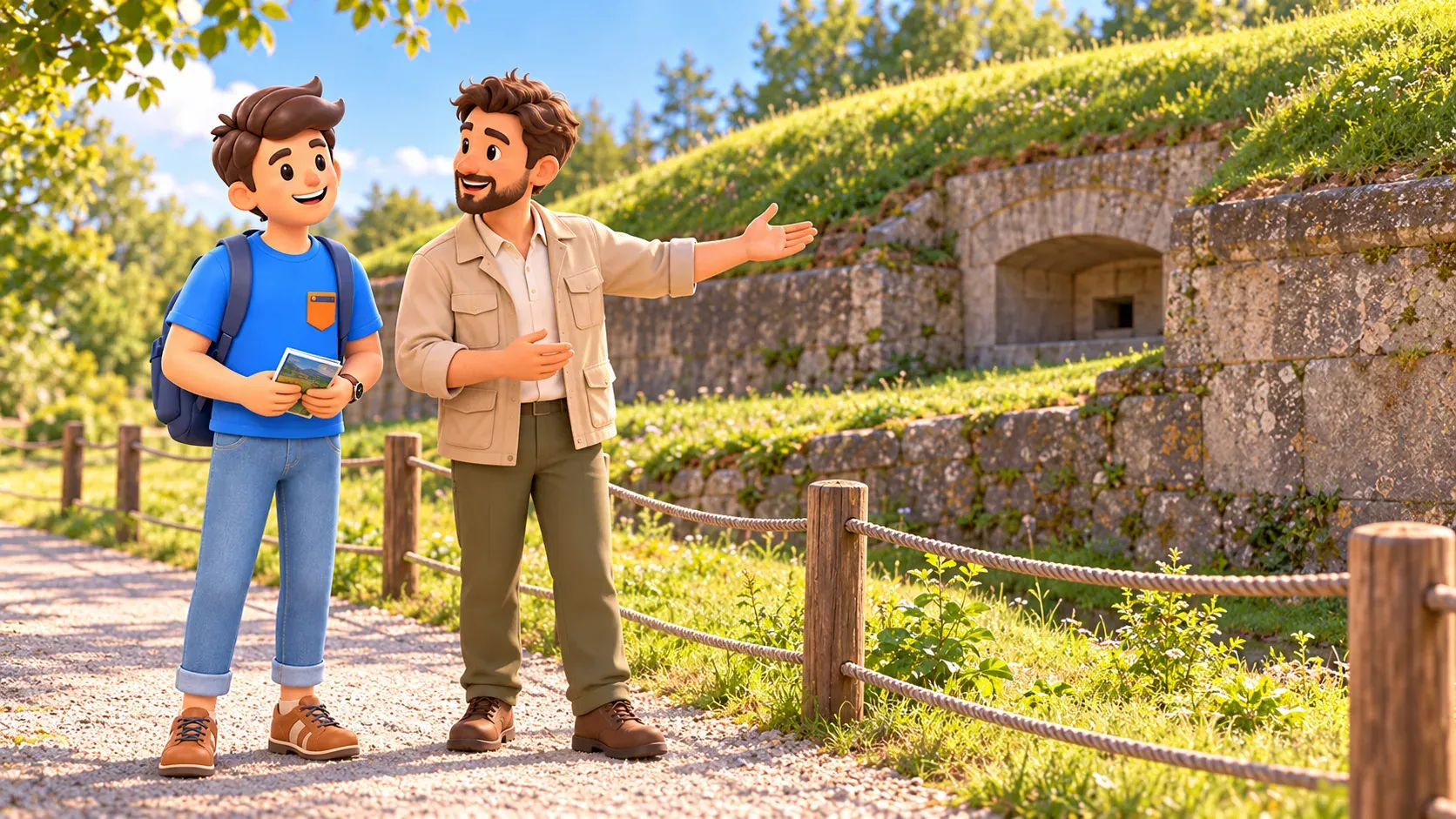
Fort Frère occupies the Oberhausbergen heights. Built in 1872–1875, it combines substantial masonry with earth cover, much of its mass concealed beneath the ground. The interest is in understanding protected volumes, connections and the needs of the garrison rather than looking for castle towers.
Choose it when you are ready for an extended guided visit. The operator gives roughly two to two and a half hours and asks visitors to arrive at least 15 minutes before departure. Keep that full block available instead of treating the fort as a short stop between two others.
The site is on military land and public access is authorised only during guided visits. French is the main tour language. Short translations depend on the guide and can lengthen the visit; a complete tour in your preferred language should not be assumed.
The calendar checked on 22 October 2026 still listed 1 November at 15:00 and 11 November with departures between 14:00 and 15:00. Recheck these published offers before travelling because access conditions and cancellations can affect them. Municipal museum holiday closures should not automatically be applied to a separately operated fort.
A useful question to carry through the visit is how the structure sustained its everyday work. The heights also help explain its position within the defensive landscape. Follow the guide’s actual route; understanding the fort does not require independent exploration of closed passages or an assumed public viewpoint.
Ducrot: a smaller fort with contrasting engineering layers
Fort Ducrot at Mundolsheim occupies a narrow ridge that influenced its asymmetric form. Built in 1879–1882, it shows how a structure could be adapted to its particular site. A smaller scale does not necessarily mean a short or superficial guided account.
One strong theme is the relationship between German nineteenth-century fortification and French adaptation in the 1930s, when the site became a command post. Comparing older masonry with later concrete makes the changing engineering approach visible. The parts should not be imagined as the work of one period.
Published ordinary guided visits start on Thursdays and Saturdays at 14:00, and on the last Sunday of the month at 14:00 and 15:00. Official tourism explicitly describes these regular sessions as requiring no advance reservation. Other times require contact and arrangement; check the actual date and entrance before setting out.
Municipal visitor guidance suggests about two and a half hours, subject to the chosen session. Volunteer restoration is part of the story rather than proof of complete closure. It also does not make every work area or an extra room shown during a special event part of an ordinary tour.
Concentrate on a few explained examples of how materials and uses changed. That can leave a clearer impression than trying to date every surface yourself. The point is to recognise adaptation within one structure, rather than leave with a catalogue of room names.

Kléber: choose an outdoor park experience
Fort Kléber at Wolfisheim offers a different encounter. Built in 1872–1875 as Fort Bismarck, it became a public park in 2010. The inherited relief helps reveal the former purpose of a place now used in the commune’s everyday life.
Choose it for selected open paths and the outdoor landscape. An editorial allowance of about 45–90 minutes can accommodate a walk and pause. This is not a guided interior duration. A separately arranged visit inside has its own conditions and allocation of time.
The municipality publishes ordinary park opening from 08:00 to 18:00 in October–March and 08:00 to 21:00 in April–September. Exceptional weather or works can cause closure. Ordinary park entry is free; that does not include unrestricted access to the fort building, service spaces or work areas.
Follow marked paths and barriers. Published rules prohibit ordinary adult cycling inside the park. A nearby cycling network does not make it a through-route, and a gate left open after closing time does not grant permission to remain.
Notice how planting sits beside historic mass and changes of level. The new public life of the former military site is a subject in itself. The visit does not need an attempt to enter every old room to feel complete.
Compare the time commitment and preserve the return
The table helps you choose one format. It is not a combined itinerary and does not replace the selected operator’s calendar. Retain the full confirmed guided duration instead of compressing it to fit an additional fort.
| Option | Main interest | Visit allowance |
|---|---|---|
| Rapp | Detached fort and Reichstett context | Full confirmed tour |
| Frère | Sustained explanation of how a fort worked | About 2–2.5 hours, plus at least 15 minutes before departure |
| Ducrot | Masonry and 1930s adaptation | About 2.5 hours; confirm the session |
| Kléber | Outdoor park and inherited relief | Editorial estimate of 45–90 minutes |
RoadMe can work out a personal plan for your whole trip around the experiences you want. Planning in the app is much more convenient for balancing a history visit, other interests, comfortable pauses and the time available.
A separate modest pause or nearby public context may take another editorial 20–30 minutes. Travel, the final approach, waiting and the return are additional. At Kléber, a relaxed pause can already belong within the selected 45–90 minutes, so do not automatically count it twice.
Check the actual outing and save other ideas for another day
Choose the site and real visiting format first, then plan transport for your date and starting point. No particular bus, connection, fare or return time has been verified here. Ask the operator about language, entrance and specific needs, especially where steps, surfaces or completing the whole route matter.
Stay out of closed rooms, moats and work areas independently. Follow the guide or current park signs. A regular published calendar is not confirmation that no exceptional restriction applies on your date, while ongoing restoration alone does not mean the entire site is closed.
For other days, our comparison of Strasbourg parks and cycling day across city districts develop separate outings. Neither adds compulsory stops after a fort. Your chosen visit already has its own subject: defensive engineering, historical layers or the public reuse of a military landscape.