Seoul subway: tickets, T-money and transfers
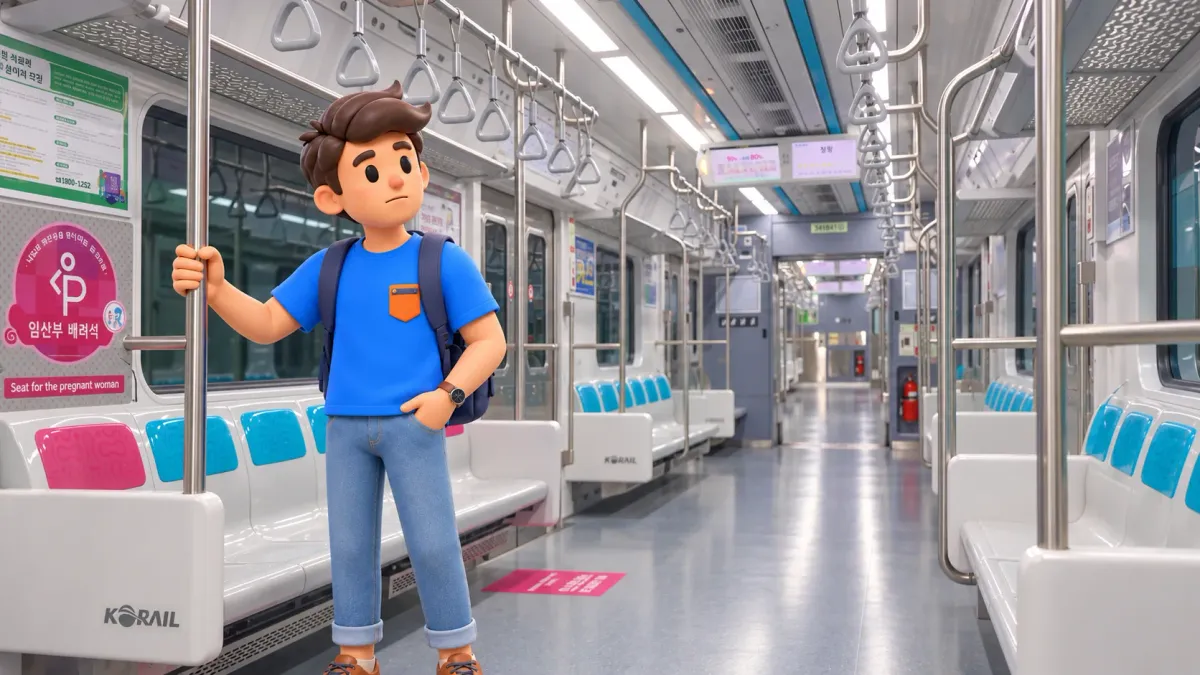
For several days of travel in Seoul, a rechargeable T-money card is a practical starting point, especially if you will combine subway and bus journeys. For an occasional subway trip, buy a single-journey card. A short-term Climate Card is a different product: choose it only after checking that your stations and services fall within its current coverage.
The basic routine is straightforward. Tap your own ticket or transport card when entering and leaving, follow the signs inside the station when changing lines, and check the destination of the actual train. Line colours help, but they do not replace the direction signs. This guide explains that routine without prescribing a sightseeing itinerary.
Choose a ticket for the journeys you will actually make
T-money holds a prepaid balance from which eligible fares are deducted. The card purchase and the travel balance are separate things. A single-journey card pays for the selected subway journey and is not a bus ticket. Climate Card covers specified services for a defined period, rather than every form of transport in the wider metropolitan region.
Planning in RoadMe is much easier than piecing together scattered notes: the app builds a personal trip plan around your interests, dates and pace. Try choosing the experiences that matter to you first, then fit the transport around a coherent day.
| Option | Consider it for | Check before buying |
|---|---|---|
| Single-journey card | An occasional subway trip | Destination and refundable card deposit |
| T-money | Repeated trips and eligible bus connections | Balance, recharge method and transfer conditions |
| Short-term Climate Card | Frequent travel within its coverage | Every station, service and the start of validity |
A tourist-oriented name is not evidence of value. A long visit to one neighbourhood may involve just an outward and return journey. A day of widely separated appointments involves a different calculation. List the journeys you expect to make before comparing a pass with pay-as-you-go fares.
Do not assume that a foreign bank card can simply replace a transport card at every gate. Buying something in a shop, recharging a travel balance and entering a subway are different transactions. Acceptance depends on the product and equipment, so keep a workable backup for the first day.
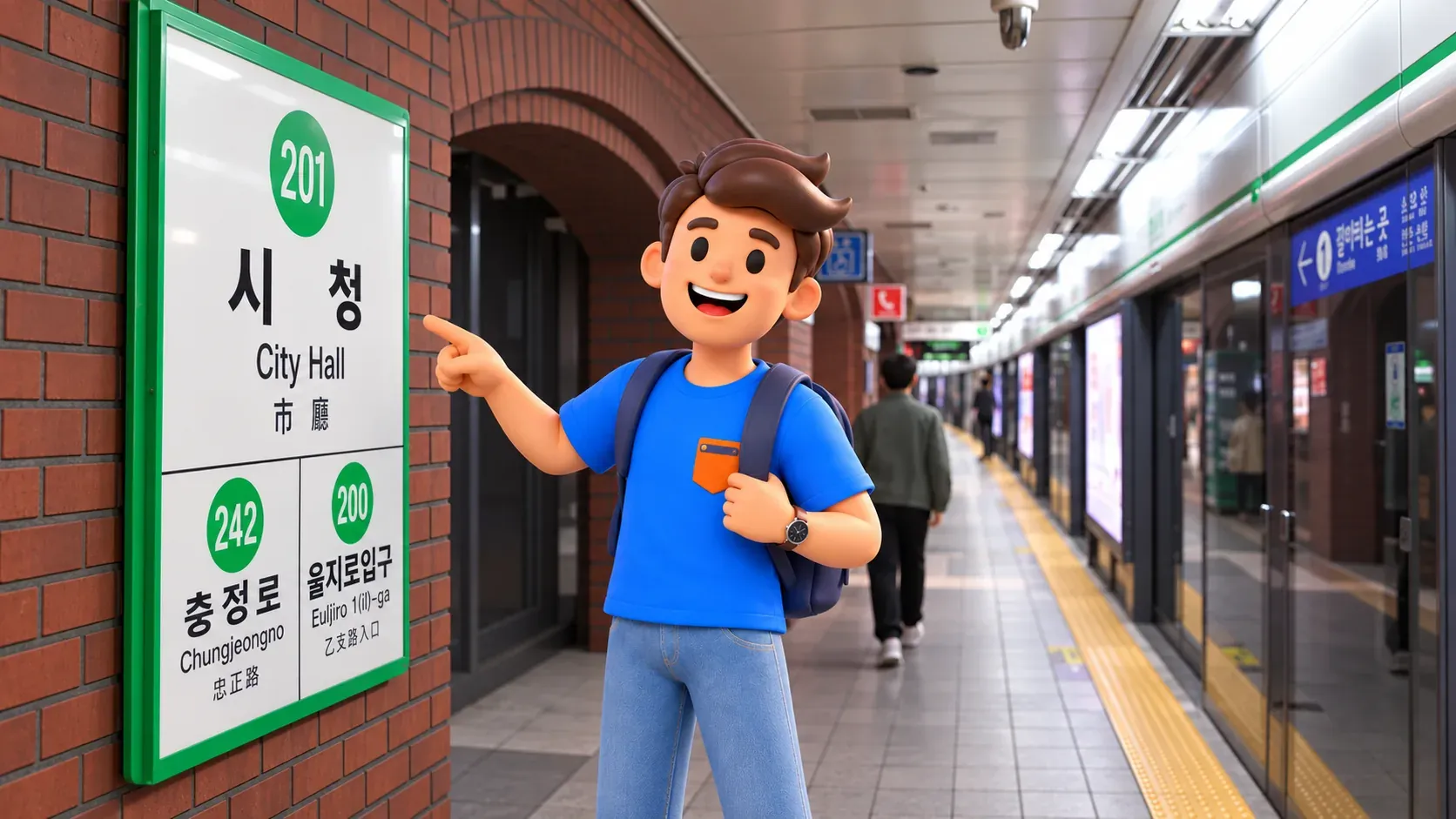
Read the line, direction and destination together
Save the station name in English and Korean if possible. Find its line, then look at the stations following your starting point in the intended direction. Compare those names with the platform signs. This gives you a stronger check than matching the colour of a wall or arrow.
Some services have branches or terminate before the farthest station shown on the network map. Check the destination displayed for the train itself. A train on the correct line is not necessarily going all the way to your stop. If the service ends earlier, identify where you will continue rather than assuming you can stay aboard.
A transfer sign and an exit sign mean different things. When continuing within the system, follow the signs for the connecting line. Walking out through the exit gates can end the paid journey. Do not rely on a universal free re-entry rule: exceptions are limited and must be checked for the station and service.
Save the useful exit number as well as the station. A large station can spread beneath several streets, with entrances on opposite sides of a major road. The closest dot on a map is not always the easiest approach to the actual museum, palace gate or hotel entrance.
Buy and use a single-journey subway card
- Find a ticket machine and select a supported language you can use comfortably.
- Choose Single Journey Ticket and select your destination station.
- Select the number of passengers and the applicable passenger category.
- Pay the displayed fare and refundable deposit using a method offered by that machine.
- Collect every card and any change before moving away.
- Tap your card at the entry reader and keep it until the journey is complete.
At your destination, tap the card again to leave the paid area. Then look for a separate Deposit Refund Device. Insert the used single-journey card there to recover the deposit. Do not throw it away or confuse the refund machine with an opening on an ordinary gate.
If the amount paid is insufficient for the journey actually made, ask staff about fare adjustment before trying to leave. An incorrect destination is a ticketing problem that can be resolved properly. Following another passenger through the gate creates a different problem and does not correct the fare.
Each passenger needs an appropriate ticket or card. Check the number issued when buying for a group. For children or teenagers, confirm eligibility and any registration requirement rather than transferring age rules from your home transport network.
Where to buy and recharge T-money
T-money is available through participating convenience stores and designated transport sales points. Look for the product indication and ask whether the purchase includes any travel balance. A decorative or souvenir design does not change the need to understand what has actually been loaded.
At a compatible recharge machine, choose the recharge function, put the card in the indicated area and wait for the balance to appear. Select the amount, use an accepted payment method and leave the card in place until the process confirms completion. Removing it early can interrupt the operation.
A shop accepting a bank card for groceries does not prove that the same payment method can fund a transport balance. Devices and services differ. Carry a reasonable amount of Korean cash for the initial recharge, then use the options actually offered rather than relying on a general claim about cashless travel.
Start with enough credit for your next journeys instead of loading a large amount immediately. Before departure, check the refund conditions for your exact product. Card purchase costs, remaining fare credit and service fees may be treated separately. Leave time for that process if recovering the balance matters to you.
Understand the basic fare and the deposit
When checked on 24 October 2026, the city’s published adult base fare for a journey within 10 kilometres was KRW 1,550 with a transport card and KRW 1,650 with a single-journey card. The latter also requires a refundable KRW 500 card deposit. These are starting figures, not a flat price for every journey across the metropolitan network.
Longer travel and certain services can attract additional charges. The actual amount depends on the stations, service and ticket conditions. Read the current calculation before paying, particularly when the trip extends beyond an ordinary central-city journey or uses a line with separate pricing.
Keep the deposit separate from the final transport cost when comparing options. It is money temporarily needed to obtain the reusable single-journey medium, provided you return it through the refund device. Likewise, buying a new T-money card involves a different cost from the fare balance loaded onto it.
A useful comparison includes only journeys you would make anyway. If you spend most of the afternoon walking around a palace district, several activities do not create several subway fares. If you travel repeatedly between distant areas, convenience and transfer handling may make a rechargeable card more attractive.
Transfers: tap out as carefully as you tap in
For a subway line change, normally remain within the indicated transfer route and follow signs to the next platform. Particular lines and services may have their own fare rules. “All transfers are free” is an oversimplification because the final charge can depend on distance and the services used.
For eligible integrated bus and subway travel, the system needs the entry and exit records. Tap when boarding and when leaving the bus, as well as at subway gates. Missing the exit record can prevent the next leg from being recognised in the way you expected.
The city describes a usual transfer window of 30 minutes after leaving the previous service, extended to 60 minutes between 21:00 and 07:00. This is a transport connection rule with limits and exceptions. It is not permission to make unlimited sightseeing stops and treat every later boarding as part of the morning trip.
A museum visit or a long meal will generally mean a new journey afterwards rather than a short transport connection. When budgeting for a day, do not count every return to public transport as a free continuation. Check the exact combination when additional services or a metropolitan excursion are involved.
Climate Card: check the current short-term rules
At the time of checking, short-term Climate Card products were offered for one, two, three, five and seven days. Older descriptions of the 30-day prepaid product should not guide a new visitor purchase: the city ended recharging of that product in August 2026. Climate Pass has different residence-related conditions and is not a straightforward replacement for every tourist.
The published short-term coverage effective from 1 October 2026 focuses on listed Seoul subway stations and eligible Seoul-licensed buses. Exclusions include the Sinbundang Line, GTX and airport buses. Check the individual stations and service rather than assuming that anything on the metropolitan subway map is included.
There is an important airport exception. The published rules allow a journey from the covered area ending at Incheon Airport Terminal 1 or Terminal 2, but do not permit boarding there using this card for the reverse journey. Gimpo Airport Station is within Seoul; that does not make every airport transport service part of the pass.
The short-term validity begins on the recharge date, so do not activate it several days before you intend to travel. Confirm the covered area, registration and refund conditions, and any separate cost for the physical card. For a few journeys, an ordinary ticket may remain simpler.
Choose the product around the trip rather than reshaping the trip around a purchase. A pass with a restricted area may be inconvenient if your plans include a neighbouring region. The most useful comparison accounts for flexibility and separately paid journeys as well as the headline price.
Exits, luggage and a comfortable sightseeing day
Allow for walking inside large stations. With a suitcase, identify a suitable lift and check the whole route to the accommodation. A nearby entrance does not guarantee a step-free approach, and facilities can be temporarily unavailable. Ask staff if the accessible route is unclear.
Before using a station locker, check size, storage period, payment and access hours. A station having lockers does not guarantee a free compartment suitable for your luggage. Make sure you can retrieve belongings before entrances close and keep documents needed for collection accessible.
RoadMe makes city time work harder for you by building a personal plan around your interests and preferred pace. Try setting a clear priority—palaces, contemporary culture or neighbourhood discoveries—so the journey feels like your own rather than a collection of unrelated suggestions.
Transport supports the visit; it should not turn it into a competition to change lines. Leave time to notice architecture, understand a museum display or pause in a district you wanted to explore. A coherent selection often creates a better day than repeatedly crossing the city for a longer checklist.
If you arrive on a late flight, plan the hotel access as well as the final train. Our guide to late-night transfers and check-in explains what to arrange before travelling.
Last trains and first-day problems
A general statement that trains run until around midnight is not a usable last-departure guarantee. Check the starting station, direction, day and every onward connection. Catching the first leg does not ensure that the next line will still be operating when you arrive.
If you board in the wrong direction, leave at a suitable station and use an authorised passage. Never cross tracks or open staff-only doors. If correcting the mistake requires leaving the gates, ask how the re-entry rules apply instead of assuming that every station has the same exception.
If a card is rejected, keep other contactless cards away from the reader, check the balance and seek assistance. Repeatedly presenting different media can make it harder to establish which entry was registered. A calm explanation of the starting station and ticket used is more useful.
- Save the station name, direction and useful exit.
- Prepare a suitable card for each passenger.
- Check the balance before a longer trip.
- Keep the single-journey card for exit and deposit refund.
- Record the exit when making an eligible bus connection.
- Check Climate Card coverage and activation date separately.
- Verify the final usable service for each leg of a late return.
Our guide to public transport abroad: tickets, zones and validation explains the broader principles. In Seoul, add three habits: check the train destination, record both ends of the journey and choose the right exit. You can then use a large network without needing to memorise every line or pass.