Seoul royal tombs: which visit should you choose?
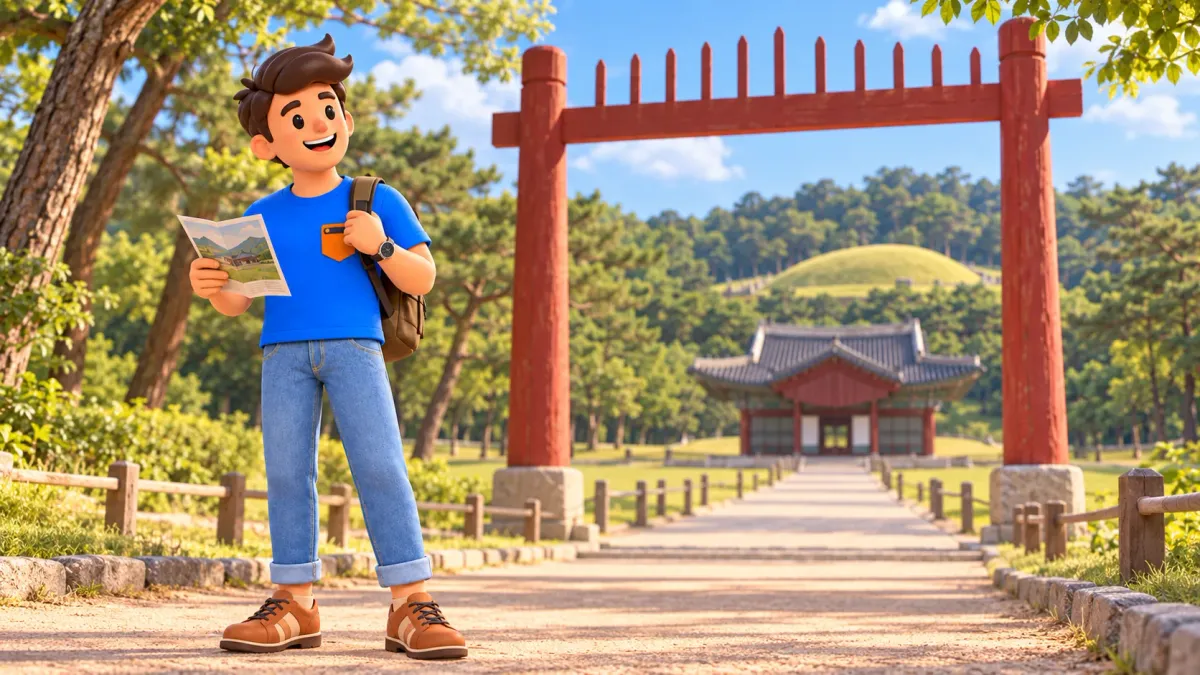
For a first royal-tomb visit, choose Seolleung and Jeongneung in Gangnam to experience historic landscape within a modern business district. The separate Jeongneung of Queen Sindeok in Seongbuk offers a more focused story about Joseon’s beginnings. Taereung in the northeast suits visitors with more time who would like a museum introduction to the organisation of royal tombs. These are three independent outings, not one walking route between similar green points on a map.
Allow roughly ninety minutes to two hours for selected viewing in Gangnam, an hour to ninety minutes for Queen Sindeok’s Jeongneung, or two to three hours for Taereung with a possible exhibition-hall visit. These editorial allowances exclude travel from your accommodation, every woodland path and special programmes. The principal experience lies in the relationship between woodland, ritual space and burial mound. A royal tomb is a whole landscape, rather than only a mound that must be approached as closely as possible.
Choose by location and question
If the day already concerns Gangnam, begin with Seolleung and neighbouring Jeongneung. Choose Seongbuk for a queen’s changing remembrance and early Joseon history. For a fuller introduction to the principles of a burial ensemble, consider Taereung with its separate museum component. Each has value. Differences concern more than distance or size: you can read contrast with the city, the history of one person, or the organisation of royal memory through spaces designed for continued ancestral rites.
Choose a suitable outing more conveniently with RoadMe: the app fully develops a personal route around your interests, dates and pace. Historic places, walks, museums and rest become a coherent plan that is easier and more effective to use in Seoul.
| Your interest | Choice | Suggested visit |
|---|---|---|
| Historic landscape within a business district | Seolleung and Jeongneung, Gangnam | 90–120 minutes |
| Queen Sindeok and early Joseon | Jeongneung, Seongbuk | 60–90 minutes |
| Understand how tombs are organised | Taereung and the exhibition hall when open | 2–3 hours for selected viewing |
Choose one option and a suitable day first. General admission, special burial-mound programmes and seasonal woodland connections have different conditions. Entering a complex does not permit access to every upper platform. Allowed visitor paths and ritual areas provide a meaningful introduction. If seeing stone figures closely matters, consider a particular programme before travelling, rather than making it the main unconfirmed expectation after a long journey.
Why a royal tomb is a landscape
Forty Joseon royal tombs form a serial UNESCO World Heritage property inscribed in 2009. Their value brings together natural setting, architecture, ancestral rites and a carefully ordered sequence of spaces. Woodland and terrain belong to the meaning. They explain why a burial mound was not conceived separately from the approach, ceremonial place and surrounding slopes.
Begin with three elements: the red hongsalmun gate, a ritual hall and the mound beyond. The gate marks a transition into a particular space, the hall relates to ceremonies, and the raised ground contains the burial. Direction and distance matter between them. Follow the sequence rather than looking only at an isolated decorative object. It shows how human movement is organised around remembrance and respect. A small vocabulary is enough when attention remains on relationships among visible parts of the setting.
Approaching the hall, notice changing openness and gradient. Trees may screen the city, a path directs attention, and a grass mound rises beyond architecture. This is an ordered experience rather than a random set of things on green land. Move slowly: first the whole view, then one detail, then the ensemble again. Such a cycle reveals cultural meaning without turning a visit into a complete inventory of sculptures. It also leaves time to see how a ceremonial landscape differs from an ordinary urban park.
Seolleung and Jeongneung: older terrain within Gangnam
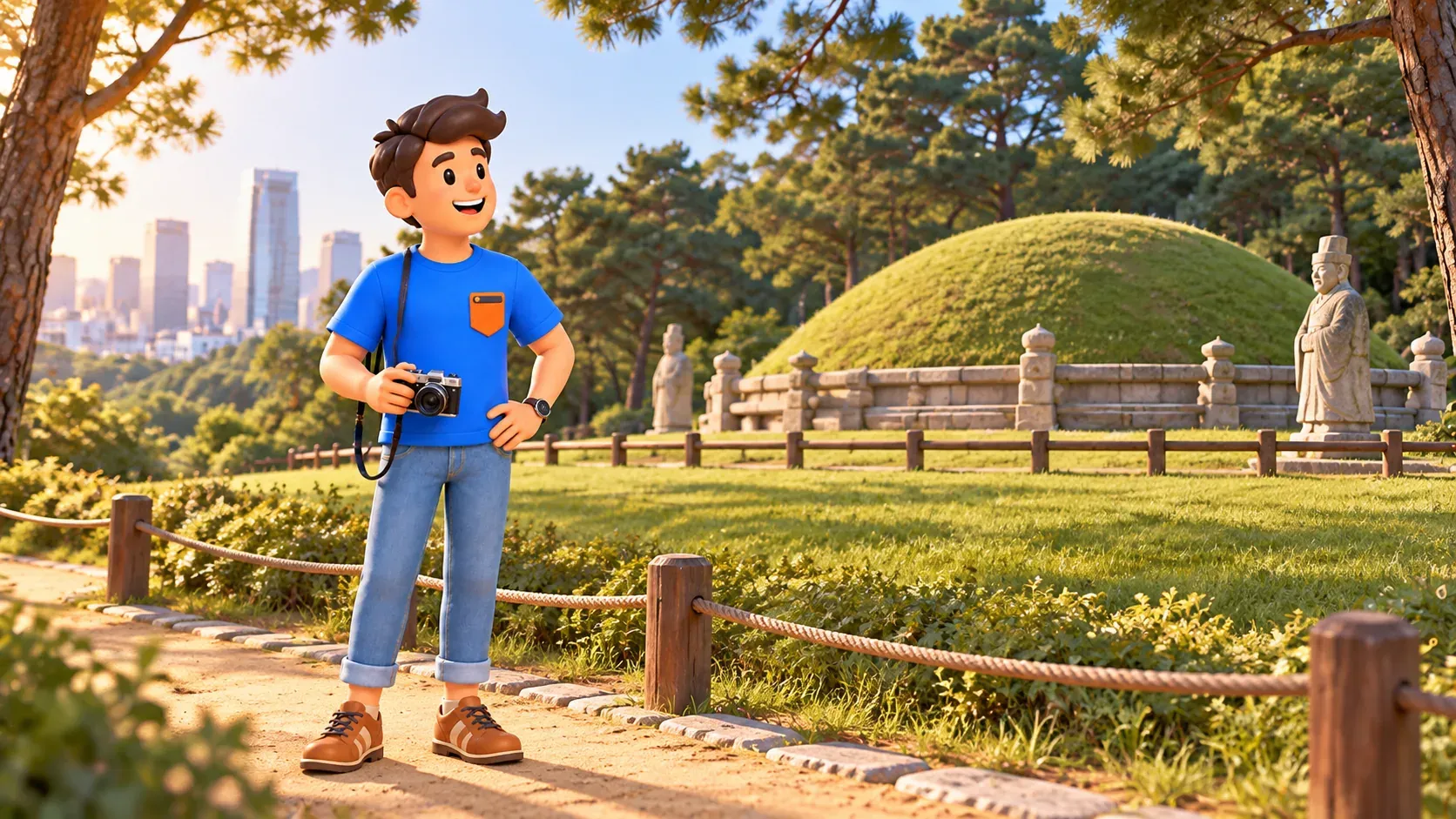
Seolleung, 선릉, concerns King Seongjong and Queen Jeonghyeon. Neighbouring Jeongneung, 정릉, concerns King Jungjong. They share one protected complex but have their own histories and burial compositions. Select a few permitted areas and compare approaches. Woodland retains a scale that predates Gangnam’s development as a business district. Distant glass buildings make that contrast especially visible. The setting offers a way to consider how a city preserves meaningful ground within dense contemporary development, rather than separating all history into an isolated old quarter.
Seolleung developed in the late fifteenth and first half of the sixteenth centuries; Jungjong’s tomb moved here in the sixteenth century. Even a compact complex therefore represents more than one moment. Sites were chosen, compositions created and maintained, while the city around them changed. Distinguish the burial tradition’s age from the present condition of paths and visitor boundaries. Contemporary access arrangements support conservation without making every part a freely available viewing platform. The difference matters when selecting what you expect to see during a short visit.
Find grass mound, tree line and city silhouette in one view. Their contrast concerns both history and the preservation of cultural space amid intensive development. Then turn towards ritual architecture: a low roof and long approach establish a different scale from a neighbouring office facade. Seeing every mound from an identical distance is unnecessary for understanding the main relationship between remembrance and surrounding city life.
Plan the Gangnam option
Use Seolleung on Line 2 and the Suin–Bundang Line, Exit 10, followed by the approach to the actual entrance gate. The nearest edge of green ground is not necessarily an entrance. Ordinary admission is charged; current fees and eligibility are separate checks. March–October hours are 06:00–21:00, last entry 20:00. November–January runs 06:30–17:30, last entry 16:30; February runs 06:00–18:00, last entry 17:00. Daylight is the simplest choice for a first introduction to the landscape and its visible details.
Monday is normally closed. A public-holiday Monday has an exception, with closure moving to the following day; check your particular date. A permitted side path by Seolleung’s mound does not establish access to every mound in the complex. Ninety minutes to two hours allows selected areas and return to the same entrance. Choose a continuation in Gangnam by interest, leaving a proper pause between the quiet historical setting and the busy street.
Jeongneung in Seongbuk: Queen Sindeok’s history
The northern Jeongneung, 정릉 貞陵, belongs to Queen Sindeok, King Taejo’s second wife. Taejo founded Joseon. This is a different place from Jungjong’s Jeongneung in Gangnam, written 靖陵. Similar romanised names make district and occupant useful checks. The distinction does more than prevent a navigation error: it separates an early dynastic conflict and a queen’s remembrance from the history of another ruler who lived much later. A name on its own is not enough to identify the visit you intend.
After Sindeok died in 1396, she was buried within the capital. In 1409, under Taejong, the tomb moved to its present location; in 1669 ritual standing was restored and the ensemble re-established. The landscape therefore concerns the politics of remembrance as well as burial. How someone was remembered could change with power and later decisions. A relatively restrained composition can hold a history of relocation, loss of standing and subsequent recognition. Reading that history first makes the visible spaces more meaningful than their modest scale alone suggests.
Concentrate on one ensemble and the relationship between hall, mound and trees. There is no need to add every northern district to the same day. An hour to ninety minutes provides room for selected viewing and a short return along permitted paths. Read an explanation of Sindeok before looking, then compare the account with the visible setting. Her name becomes more than a label attached to a green hill, and a short outing can acquire a clear historical question of its own.

Getting to Sindeok’s Jeongneung and understanding access
Use Jeongneung on the Ui–Sinseol Line, Exit 2, then the public approach to the Seongbuk tomb. Do not substitute directions to Seolleung in Gangnam. February–May and September–October hours are 06:00–18:00; summer extends to 18:30, while November–January runs 06:30–17:30. Last admission is an hour before closing. Entry is charged and Mondays normally closed, subject to holiday arrangements. A comfortable daytime window leaves more time than reaching the ticket desk just before the last possible admission.
Access to the upper burial area is associated with separate accompanied programmes varying by day and season. Close viewing of the figures should not be assumed at an arbitrary hour. A basic visit can work without the ascent: overall composition and relocation history remain understandable from open visitor areas. If a special programme matters, confirm its date and conditions first. That makes the day a considered choice rather than an unexpected wait beside a restricted section for a tour that was never confirmed.
Taereung: a tomb and museum explanation
Taereung, 태릉, belongs to Queen Munjeong, Jungjong’s wife and Myeongjong’s mother. Nearby Gangneung contains King Myeongjong and Queen Insun. The family relationship explains proximity, but these are independent burial ensembles. A nearby woodland path is not automatically a permanent connection. For a basic outing, Taereung and, when open on your date, the royal-tomb exhibition hall near its entrance are enough. Gangneung can be considered a separate extension rather than a compulsory component that silently doubles the planned visit.
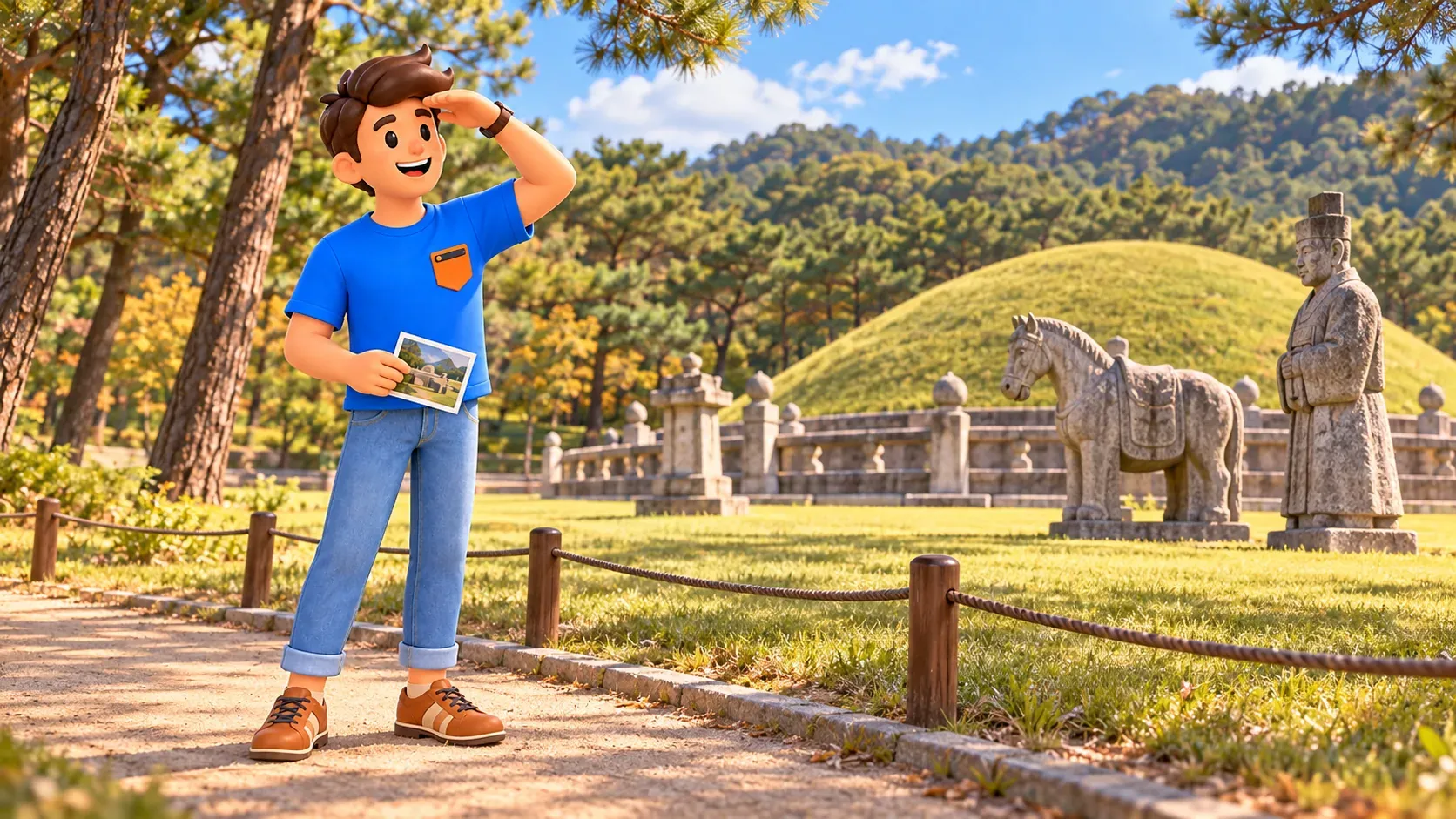
The museum introduction explains a broader system through spatial sequence, ceremony and architectural roles. Afterwards, paths, gate and roofed hall become easier to read together. At Taereung, the scale of the ensemble and stone setting conveys royal significance. Detailed interpretation of every figure is a separate task; a first introduction benefits from seeing how sculpture fits an overall order and directs attention towards the burial mound. Museum explanation and outdoor observation can support each other without requiring completion of every display and path.
Retain travel time for Taereung
Hwarangdae on Line 6 is a useful reference, followed by checking appropriate local transport to Taereung’s actual entrance. The station is not directly beside the gate. Two to three hours refers to selected viewing, not the entire hotel-to-hotel journey. Regular February–May and September–October hours are 09:00–18:00, summer extends to 18:30, and November–January closes at 17:30. Last entry is an hour before closing; Mondays are normally closed. Check tickets and the exhibition hall’s calendar separately for the date you plan to travel.
The Taereung–Gangneung connecting woodland path opens seasonally and closes earlier than the general grounds. Taereung’s upper burial area also has special accompanied times. These conditions differ from ordinary entrance admission. For a simple first visit, choose daylight viewing of accessible areas and the museum according to its calendar. If the woodland connection is the aim, confirm opening and add time. Distinct possibilities then remain genuine choices, rather than becoming accidental complications after you have already begun an outing with a shorter plan.
Distribute these historical experiences across your days more easily in RoadMe: the app develops a complete personal trip around your interests and preferred rhythm. Tombs, museums, neighbourhoods and rest receive convenient places in the programme, helping you use time more effectively.
After visiting, name one relationship that became clearer: trees protect a place of remembrance, a gate changes the character of an approach, or a person’s history explains a tomb’s relocation. That matters more than an equally close photograph of every mound. Begin where district, interest and a suitable day fit together. Other ensembles can add a later question to the trip rather than repeating the same walk among hills without a new reason to look.