
Seattle Public Transportation: ORCA, Link Light Rail and Transfers
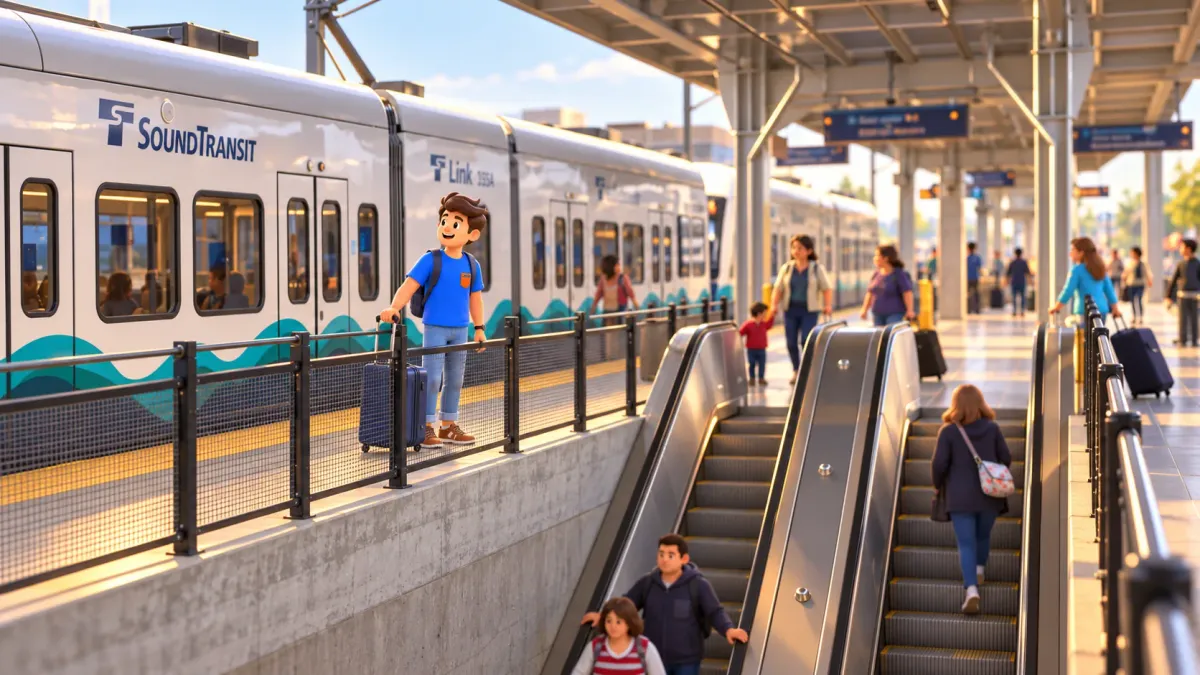
Seattle’s public transportation uses several operators and payment products. ORCA is the shared fare system, not a promise that every journey costs the same or that every service offers a free transfer. Link light rail, buses, Sounder and the Seattle Center Monorail have differences worth understanding before boarding.
For many ordinary adult journeys, a contactless bank card is now an alternative to ORCA. A regional pass, reduced fare or special service can change the best choice. This guide explains payment, validation and transfers rather than prescribing a sightseeing route. Conditions and published adult amounts were checked on 28 October 2026.
Separate the service, payment method and fare product
Ask three questions: which operator runs the ride, how you will pay, and what that payment buys. An ORCA card can hold stored money called E-purse or a pass. Having the physical card does not by itself provide unlimited travel, and loading money is different from buying a day pass.
Use RoadMe to prepare your whole personal Seattle trip plan around your interests and pace. Planning the stay in the app is more convenient than collecting disconnected attractions and choosing a transport product before knowing which journeys you actually need.
| Service | What to check |
|---|---|
| Link light rail | Line, direction and payment before boarding |
| King County Metro buses | Correct stop, route and payment or valid transfer |
| Sounder | Its own timetable, distance-based fare and tap-off |
| Seattle Center Monorail | Separate fare and special ORCA transfer rules |
| Ferries and Water Taxi | Actual operator, direction and pass or transfer acceptance |
Services with similar names are not interchangeable. Link is light rail; Sounder is a different rail service; the Monorail is the short connection between Westlake Center and Seattle Center. A train icon on a general map does not make their fare rules identical.
ORCA: E-purse money is not a day pass
With E-purse, you add money and the system deducts applicable fares as you travel. An eligible transfer can carry the value already paid toward another ride. Keep enough balance for a fare difference or a service that does not accept the expected transfer credit.
A pass is a specific product loaded onto the card. Check its validity period, covered fare value and exclusions. Do not assume that repeated deductions from E-purse automatically turn into the regional day pass you could have purchased separately.
ORCA is available at Link ticket machines and participating retail or customer service locations. For a short visit, getting a usable card in person can be more practical than arranging a mailed card. Check the purchase and loading options at the location you actually intend to use.
The myORCA app helps manage cards and balances. That is different from simply showing an app screen as proof of fare. A digital ORCA in a compatible Google Wallet setup is another product: the official process can convert a plastic card and deactivate that original plastic card.
Do not assume that the same ORCA card can remain active simultaneously as a shared plastic card and a converted digital card. Set up the actual device before relying on it. For a group, plan a separate appropriate payment method for each traveller rather than passing one card back repeatedly.
Contactless bank cards: useful, with limits
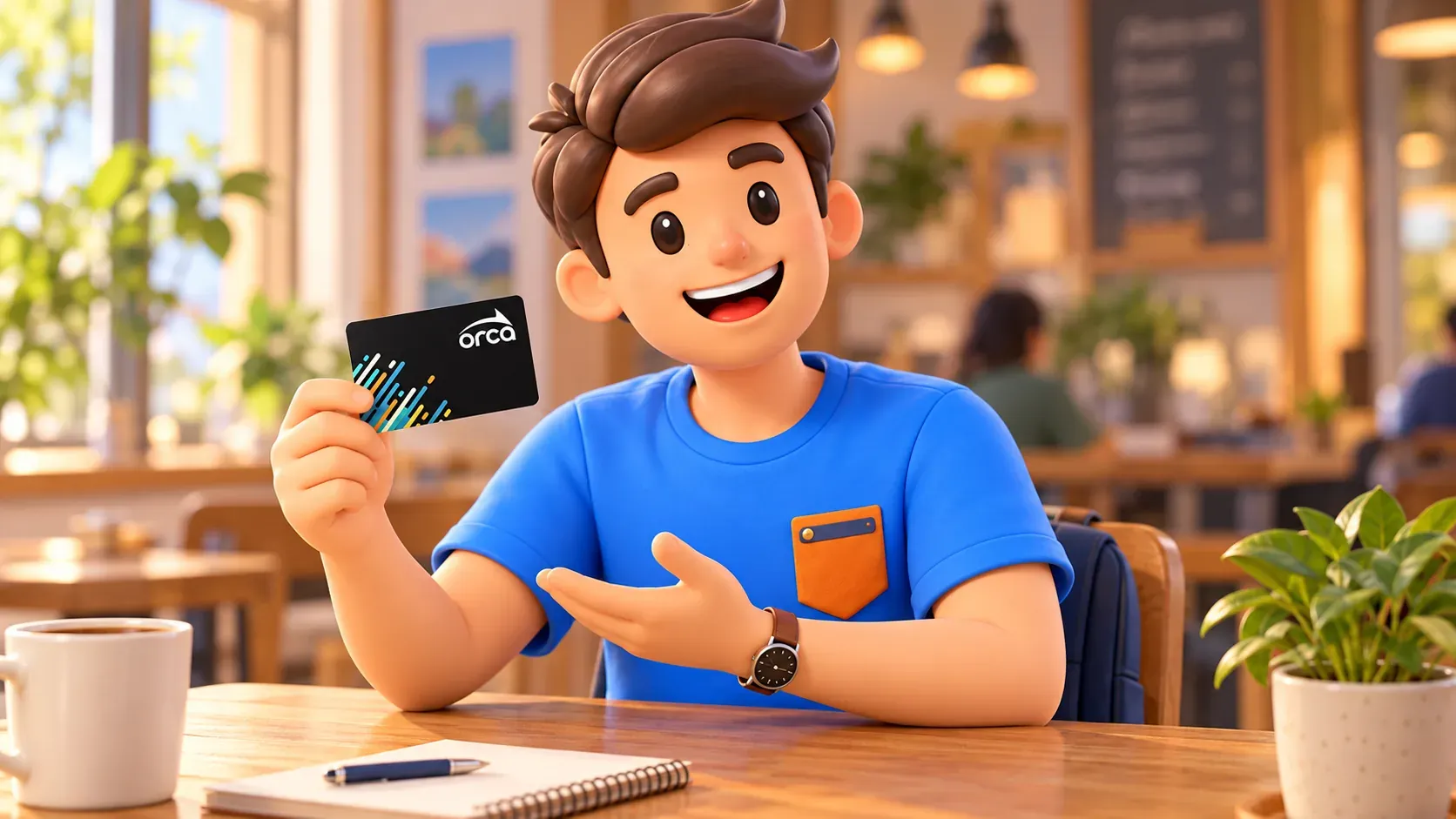
Current Tap to Pay accepts eligible contactless credit or debit cards and supported phone or watch wallets on participating services. It can simplify ordinary adult travel if your card works. ORCA remains useful for loaded passes, concessions and services with different acceptance rules.
Use the same payment method when transferring. Switching between another card, an ORCA card or a different wallet device can break the link between your payments. Choose one method per person and continue with it instead of changing whenever a different item is easier to reach.
Bank-card tapping charges the full adult fare. A traveller who wants an eligible reduced or free fare should use the appropriate ORCA entitlement rather than expect a bank card to identify their age, permit or employer benefit automatically.
Everyone needs their own payment method: the official instructions do not allow one card or device to pay for several riders by repeated taps. Plan a family’s payment before approaching the reader so a second tap is not mistaken for buying another person’s fare.
Tap to Pay through the regional readers is not universal. The Monorail’s ORCA validators do not accept bank-card tapping; Washington State Ferries and certain on-demand services also have exclusions. Paying by card at a ticket machine is a different transaction from tapping that card at an ORCA validator.
Link: validate before entering the journey
For Link, tap the selected ORCA or supported bank-card method before boarding, following the reader locations and station instructions. If using an individual ticket, buy it first. A station without the sort of closed gates you expected still requires a valid fare.
Current Link instructions do not require a tap-off at the end of the light-rail journey. That differs from Sounder. Some older general rail instructions still describe tapping out for trains, so use the current instructions for the actual service rather than treating all rail modes as one.
The published ordinary adult one-way fare on the 1 and 2 Lines is $3. This does not establish the price of Sounder, a ferry or the Monorail. Check any special fare entitlement separately; the ordinary adult calculation is not a family total.
Confirm line and destination as well as station name. Services can share central stations before heading to different destinations. Look at the current platform display, not a saved image from an older network map. Leave time for the correct platform and any accessibility arrangements.
Keep your payment method or valid ticket available for inspection. A successful bank purchase notification alone is not a substitute for following the service’s proof-of-payment process. If validation fails, resolve it before boarding rather than relying on an intended payment.
Buses and Sounder: different boarding habits
On an ordinary Metro bus, tap the reader when boarding. RapidRide and some boarding arrangements use external readers or proof-of-payment procedures, so follow the actual stop and vehicle instructions. Do not assume that an open rear door means fare payment is unnecessary.
Cash remains possible on Metro buses with the exact fare; drivers do not provide change. Ask for the relevant paper transfer when paying. That paper product is valid within Metro’s stated scope, not as a universal ticket for Link and every other operator.
Sounder fares depend on the distance travelled. Tap on before boarding and tap off at the destination so the system can calculate the correct journey. Omitting the second tap can lead to the highest fare from the origin, rather than the fare you expected.
Read Sounder’s actual timetable before choosing it for a visit. Sharing a payment system does not make a commuter rail service run like a frequent city light rail line throughout every tourist day. Check the return journey before leaving the outward platform.

Transfers: a credit within two hours, not unlimited free travel
On eligible services, ORCA or supported contactless payment carries the original fare toward the next leg within a two-hour window. If the next fare is higher, you pay the difference. Keep tapping correctly on each service so the system can recognise the transfer.
The window is measured from the initial payment, not from whenever you decide the excursion should start. A long café stop or museum visit can put the next ride outside it. Plan using the actual timing instead of assuming a transfer benefit lasts all afternoon.
Consider two ordinary adult Link rides under eligible conditions. If the second is a valid transfer within the window using the same method, you should not count it as another full independent fare in your day-pass comparison. If it is outside the window, the calculation changes.
Transfer acceptance has exceptions. In particular, do not infer free Monorail or ferry travel from a successful ORCA tap elsewhere. Read the rules of the next operator and the product loaded on the card. A shared payment brand is not a shared promise about every transfer.
Our guide to public transport tickets and validation abroad explains the general distinction between payment, activation and coverage. Seattle’s current light-rail and contactless rules still need to be applied specifically; another city’s tap-off rule is not evidence here.
The regional day pass: compare paid journeys
The published adult All-Day Puget Pass costs $6 and covers eligible rides with fares up to $3, with any applicable higher-fare difference paid from additional E-purse value. It activates on first use after purchase and expires at 03:00 the following day, not 24 hours after an afternoon activation.
Compare it with the number of separate fares you would actually pay. Two independent ordinary $3 journeys equal the $6 purchase price. Three separate paid journeys can favour the pass, but not if some of those boardings would already be included as eligible transfers.
Loading a pass and loading money are separate choices. Make sure the product you intended is really on the card before starting. The price of obtaining the card, if needed, is a different purchase from its stored balance and the pass itself.
Do not confuse a Link-only day ticket with the regional ORCA product because their headline adult prices can look similar. A ticket for one service does not automatically acquire regional transfer rights. Check the actual name and validity shown at purchase.
Our guide to comparing total travel costs and time helps keep both options equivalent. Include only journeys you want, together with real exceptions and extra fares. Do not add unwanted rides simply to make a pass appear more valuable.
Monorail: ORCA acceptance does not mean a free transfer
Seattle Center Monorail links Westlake Center and Seattle Center. Built for the 1962 World’s Fair, it is also a historic transport experience, distinct from Link. It does not run to the airport, even though a journey can combine the two systems.
Under the policy effective from 1 January 2026, an E-purse payment does not receive a free transfer onto the Monorail from another ORCA operator. The Monorail fare is charged for each ride. Do not rely on an older guide describing a free connecting ride.
The Monorail’s own current information separately accepts qualifying regional passes, with E-purse money needed for a fare-value difference. Confirm your exact product with the Monorail before travel rather than treating this as either fully free access or a blanket rejection of every ORCA pass.
Its yellow ORCA validators accept ORCA, not contactless bank-card Tap to Pay. Buying a Monorail ticket by bank card or wallet at the machine remains a separate option. For children, check the Monorail’s actual youth-card conditions rather than applying another operator’s proof-of-age rule.
Transit GO tickets, ferries and airport arrival
Transit GO Ticket is a different mobile ticket system. Purchase the right operator’s ticket and activate it before boarding. Metro explains that these tickets do not provide the same intersystem transfer benefit as ORCA; a Metro mobile ticket is not automatically a free Link connection.
For ferries and Water Taxi, identify the operator and direction first. Washington State Ferries, Kitsap Fast Ferries and King County Water Taxi are different services. Card acceptance, transfer rights and regional-pass coverage must be checked separately rather than inferred from the word ferry.
At SEA Airport, follow current signs to the SeaTac/Airport Link station through the parking-garage connection. The airport describes access via the fourth level and a covered walkway. Allow for that access, luggage and fare preparation in addition to time on the train.
Check service notices and your final destination before arrival. A published city-centre train duration does not include immigration, collecting bags, reaching the station or continuing to your hotel. Those are separate parts of the real journey and need their own time allowance.
RoadMe helps you build a complete personal visit around your interests and pace, with transport serving the trip you actually want. Working through the stay in the app is more effective than letting fare products or disconnected booking lists dictate every choice.

Before your first ride
- Identify the service and its current operating instructions.
- Choose an appropriate separate payment method for each traveller.
- Distinguish E-purse money, a regional pass and an operator-specific ticket.
- Validate each boarding; tap off Sounder, not ordinary Link or bus rides.
- Count eligible transfers before deciding a pass saves money.
- Check Monorail and ferry exceptions and leave time for station access.
Seattle becomes easier when you keep these layers separate: the service you ride, the method you tap and the fare product you hold. You can then pay correctly and choose useful coverage without assuming one card removes every boundary.


