Moscow with a child for one day: choose one main stop
A good day in Moscow with a child starts with one main interest rather than a long attraction list. The night sky, spacecraft and the natural world suggest three different plans: Moscow Planetarium, the Museum of Cosmonautics or the State Darwin Museum. Each can anchor a day with an approach, food and a small local walk. They are alternatives, not three consecutive appointments. Different districts, formats and demands on attention make combining them unnecessary for a satisfying family outing.
As a starting point, allow around three to five hours for your chosen scenario, including local travel and breaks. This is an editorial estimate, not a measured duration or an age-based target. Time inside can be shorter or longer according to programme and interest. A child absorbed by one gallery has already found something worthwhile. Other places do not become a debt to complete before returning to your accommodation, home or the next part of the trip.
Choose interest and format before reputation
Ask not only where your child wants to go, but what they want to do: see a sky show, examine technology, recognise animals or try permitted experiments. That answer helps choose a format. An interest in space does not create an identical response to a dark dome show and a self-paced museum. An interest in animals does not require live animals, natural-history collections and every interactive activity within the same afternoon.
To turn that choice into a personal day, try RoadMe: the app plans a walk or trip around your interests, dates and pace. One main visit, a short extension and rest can take the space that suits your family.
Choose with a date in mind. When checked on 23 October 2026, the Planetarium’s usual closed day was Tuesday, while the Cosmonautics and Darwin museums listed Monday. Check individual programmes and holiday changes separately. Do not assume one place must be open because another is closed. A thematically similar museum does not replace an unavailable session automatically and may have different admission, programme and age conditions that change how the outing works.
The Planetarium: choose the sky and a scheduled experience
Moscow Planetarium is at 5 Sadovaya-Kudrinskaya Street, building 1. Barrikadnaya and Krasnopresnenskaya are useful metro orientations, with the current entrance route checked before departure. Choose a particular area and programme first. The Large Star Hall, Lunarium and other spaces should not be described as one unlimited museum where any ticket opens everything and allows an arbitrary order. Their different formats are part of the decision, rather than an inconvenience discovered at the door.
The Large Star Hall is recommended from age four. That is a format recommendation, not a promise that every four-year-old will enjoy it equally. Official rules highlight darkness, sound and rapidly changing images. If your child dislikes that experience, the famous dome need not determine the whole day. Verify the chosen programme’s conditions before purchase. Do not extend them to every hall: the Small Star Hall and 4D cinema have separate requirements.
A Large Star Hall ticket includes the Urania museum during the hour before the show, with no return to Urania afterwards. This sequence matters when arranging lunch or deciding when to arrive. Do not assume you can see everything after the film. Allow a real approach margin and be on time: official rules do not provide admission after the show begins. Lunarium is a separate interactive option, chosen according to its own ticket and visiting conditions.
A small continuation could be a quiet break or a short exterior look towards Kudrinskaya Square using a convenient public route. Do not make the neighbouring zoo compulsory: a substantial zoo visit can occupy the main part of another day. If live animals are the real priority, choose the zoo as a separate main outing and check its arrangements. Adding it after an already substantial dome programme does not make it a small extra stop.
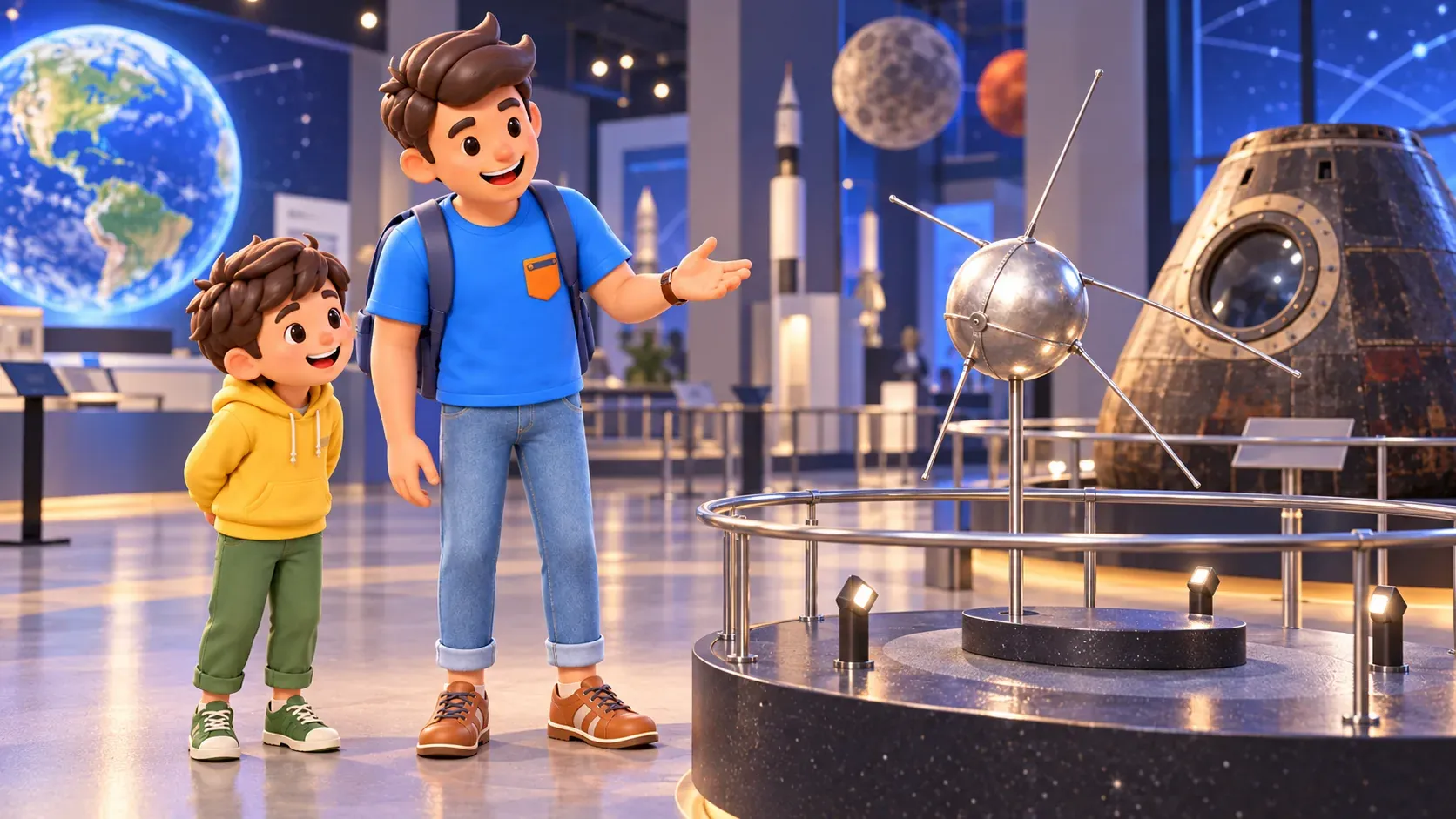
Cosmonautics Museum: spacecraft and everyday life in flight
The Memorial Museum of Cosmonautics is at 111 Prospekt Mira, by the Monument to the Conquerors of Space, with VDNKh as the metro orientation. It is a separate institution from the Cosmonautics and Aviation Centre in pavilion 34. Similar themes do not mean the same address, route or ticket. For a family day this is a practical distinction: selecting the wrong place can silently add a long walk across a large exhibition area.
Choose this scenario if spacecraft shapes, spacesuits and questions about living in space are appealing. One simple question may be enough: how does a person live in limited space, or why does a device have this form? You do not need to explain the entire history of space exploration in one visit. A carefully examined section and a few questions can provide more than reading every label while a child begins looking for the next exit.
An independent visit and a specialist guided programme are different decisions. Confirm a particular language, family activity or workshop separately if it matters. Do not promise that any spacecraft can be opened, touched or entered; follow current exhibition instructions. Size does not determine attention. A small personal item can raise more questions than a large model, so leave room for your child to decide what deserves a longer look instead of moving on only because the adult itinerary says so.
For a modest extension, the public space around the monument and a short available nearby section are enough. A complete VDNKh day, the Cosmos pavilion and another museum are not automatically light additions. Assess energy and the return direction after the main visit. If another exterior object appeals, choose just one and understand the way back. The familiar name VDNKh does not establish that all interesting places are only a few steps apart.
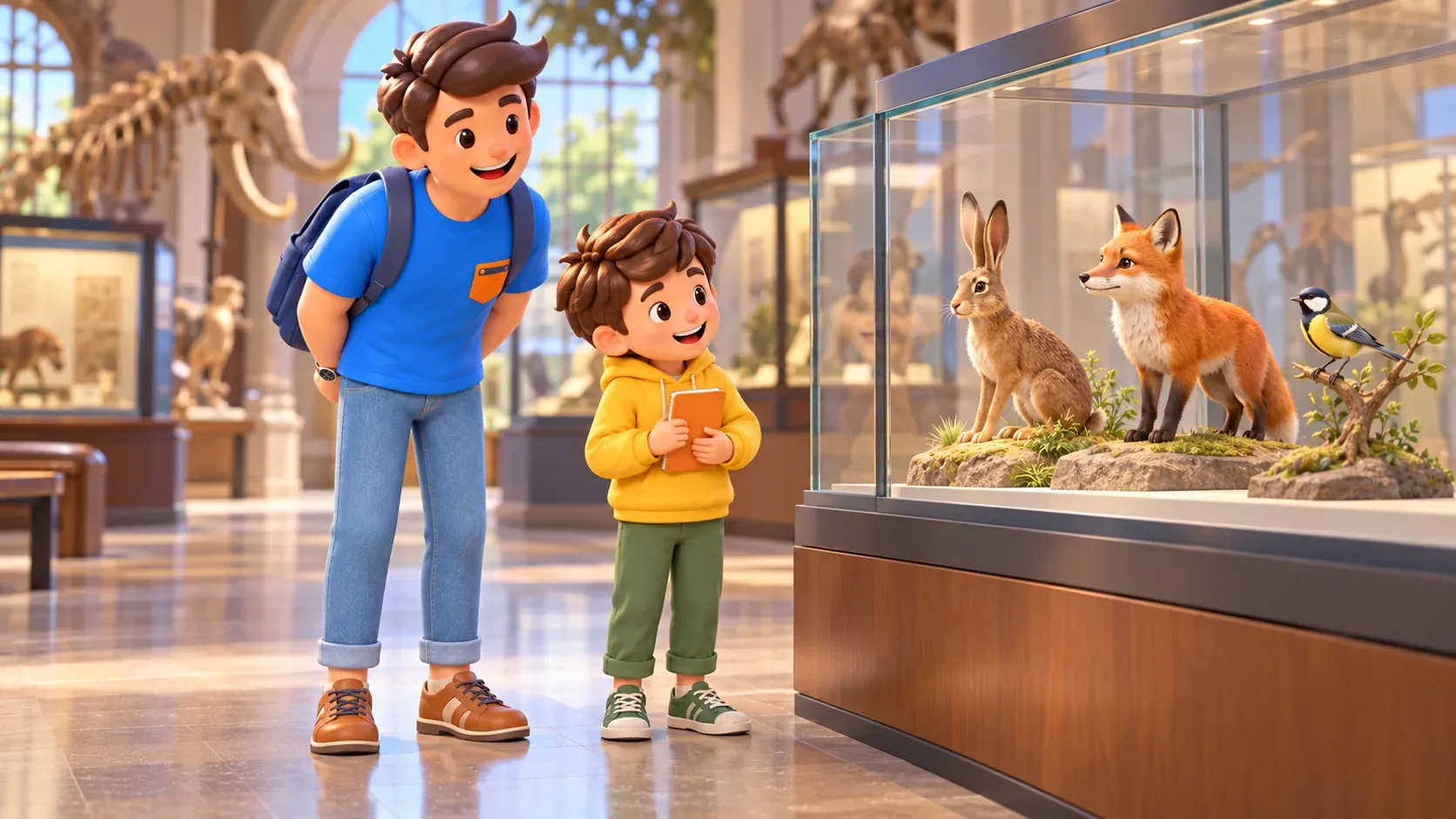
Darwin Museum: animals and careful observation
The State Darwin Museum is at 57 Vavilova Street. The official walking approach uses Akademicheskaya metro and Dmitry Ulyanov Street towards Vavilova. The museum estimates about ten to fifteen minutes for that link; your pace can differ. Do not start counting the family day only at the ticket desk. Time and energy have already gone into transport, leaving the station and approaching the building, particularly if this is not your first journey of the day.
The central subjects are life’s diversity and development. Choose a question a child can use directly: how are animals alike, how do they move differently, or what helps them in different environments? There is no need to begin by testing school vocabulary. Comparing two displays and noticing a clear difference can create a substantial conversation when long explanations do not appeal. An adult can help with questions while leaving space for the child’s own observation and interpretation.
Permanent galleries, temporary exhibitions and separate interactive programmes have their own arrangements. Do not transfer the exhibition complex’s opening hours to the main building, especially for an evening visit. The museum also has its own digital planetarium, which is not Moscow Planetarium on Sadovaya-Kudrinskaya. If you select an extra show here, check it separately. Matching words in programme names do not turn different sites into one venue or remove their separate ticket requirements.
A small extension can stay on the museum’s grounds. An ecological trail appears among its activities, but check present access beforehand or on site rather than promising it as an all-season guarantee. If the weather is uncomfortable, a break after the galleries and a return to transport are sufficient. A distant park is not needed to complete the day, especially if the museum has already engaged your child and taken longer than you expected that morning.
Build the day around the visit
Use a simple structure: an unhurried approach, one main block, food or rest, then a small optional continuation. Account for travel across Moscow separately from time in the institution. A long journey does not need to be followed immediately by demanding attention. A calm pause before entry may be more useful than another attraction at the beginning. For a session, preserve a realistic buffer rather than the minimum navigator estimate without waiting or searching for an entrance.
Think about food before everyone is tired. Do not promise yourselves a suitable empty café immediately at every exit. Select a few possibilities from a current map according to your needs. Equally, a specific restaurant need not become a fourth compulsory attraction. Cloakrooms, toilets and gathering belongings also belong in the programme. These ordinary tasks matter during a family outing and do not disappear simply because neighbouring galleries are close together within the same building.
If your child becomes absorbed by the chosen place, you can change the stops in your personal RoadMe plan and shorten the remaining walk. Try keeping the day centred on actual interest, with a comfortable pace and rest instead of another compulsory major visit.
Age, experience and weather matter more than a universal ranking
No institution is best for every child. The same age does not mean the same response to darkness, sound, reading or long walks. Check official restrictions and discuss the format in simple terms before purchase. A programme involving sustained sitting may or may not suit this particular day. If movement is the priority, seek an appropriate permitted interactive option rather than assuming every museum gallery allows running and touching everything on display.
With a pushchair or reduced mobility, confirm access to the particular area and storage arrangements for belongings. A general accessibility statement does not explain every stair, entrance or link between buildings. Include the route from transport. In rain, choose a shorter continuation or finish after the museum. In pleasant weather, increase a quiet walk rather than the number of transfers. Clothes and shoes should suit both galleries and the time outdoors between them.
The zoo and Experimentanium can be independent ideas for other days; they are not required backup stops for this comparison. If interests change before departure, select a new main place and check its arrangements afresh. That is more realistic than promising an instant replacement without considering district, tickets and effort. A successful day often remains clear because it contains a genuine choice and enough room for ordinary needs between the major impressions.
Check the essentials and know where to finish
Save the exact address, date, ticket conditions, any session time and entrance approach. Check the usual closed day and special changes. Bring evidence for a concession if you intend to claim one, without assuming entitlement from language or an old age description. Conditions can differ for the child and accompanying adult. The contents of your purchase matter more than a general label describing the venue as family-friendly.
Keep the finish simple: a clear route to transport after the small extension and a return without another large task. If your child is tired, shorten even that outdoor section. Choosing one of three scenarios does not mean losing the other two. The Planetarium offers a sky-show format, the space museum a conversation about flight and technology, and Darwin observation of the natural world. A good day connects that interest with comfort, food and the freedom to stop at the right time.