Las Vegas Museums: Neon, Mob or Atomic History?

The Neon Museum, The Mob Museum and Atomic Museum tell three very different stories about Las Vegas. One preserves the city’s advertising landscape, another examines organized crime and law enforcement, and the third explores the nuclear age through its connection with Nevada.
Choosing a museum is therefore less about finding the most famous name and more about choosing the kind of attention you want to give. Would you rather look closely at signs, follow a complex historical narrative, or think about science and its consequences? One clear answer can make a much better day than three hurried tickets.
Choose your subject before your museum
Start with what you would happily spend time doing even without a photograph to take home. The Neon Museum is especially appealing to people drawn to design and the visual memory of the city. The Mob Museum suits visitors who enjoy history told through evidence and competing institutions. Atomic Museum is the strongest starting point for an interest in nuclear testing, technology and the twentieth century.
RoadMe makes planning much more convenient by working out a personal route or whole trip around your interests, available time and preferred pace. Let the app fit your chosen museum into a day that feels coherent, rather than collecting unrelated reservations.
| Your main interest | Consider first | What affects the visit |
|---|---|---|
| Signs, design and the city’s visual history | The Neon Museum | An outdoor collection, light and weather |
| Organized crime and law enforcement | The Mob Museum | Reading time, historical context and mature subject matter |
| Nuclear history, science and Nevada | Atomic Museum | A separate journey to East Flamingo Road and a thoughtful subject |
This comparison is not a recommendation to connect all three on foot. The Mob Museum and The Neon Museum belong to the Downtown side of the city, but a shared broad area does not remove the need to plan the actual journey. Atomic Museum is on East Flamingo Road, outside that Downtown pairing. Choose the subject first, then arrange transport and the rest of the day.
The Neon Museum: read the city through its signs
Las Vegas has often introduced itself through advertising. A sign could identify a business, promise a mood and compete for attention before a visitor reached the door. At The Neon Museum, those objects become evidence of how the city presented itself across different periods.
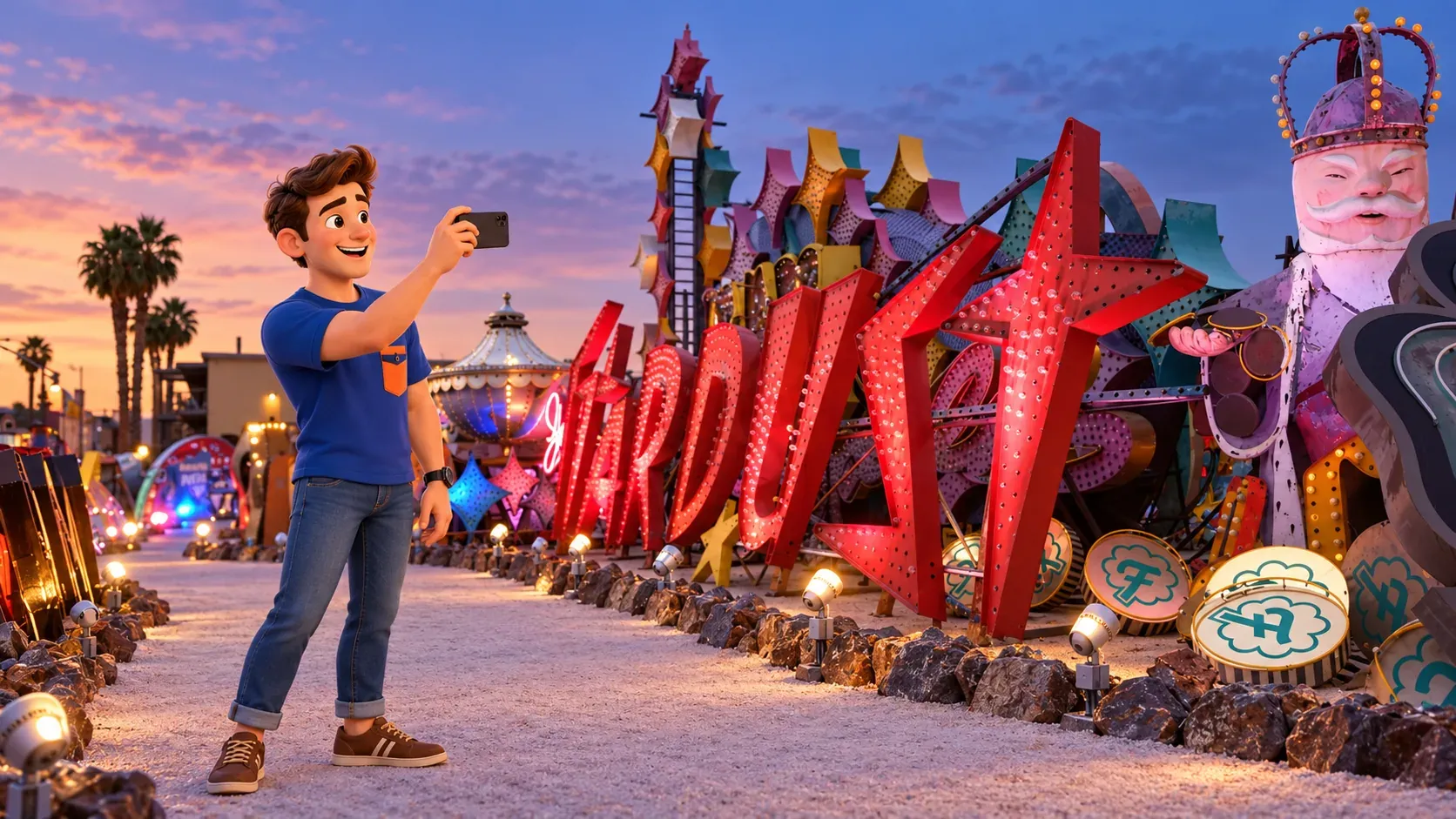
The Boneyard’s appeal is partly physical. Lettering, metal, paint, bulbs and neon tubing have a presence that a small screen image cannot reproduce. Look at the shape of a letter, the scale of a sign and the relationship between its materials. You do not need to know the history of every business to begin noticing different approaches to attracting a passerby.
Do not assume that every object is fully illuminated or that every luminous element is neon. Preserved, restored and differently lit signs create a varied collection. The museum is a place to look at objects with different histories, not a promise that every familiar photograph will be recreated during your own visit.
Choose the ticket and date carefully. Daylight and evening change the experience, while seasonal operating arrangements and particular products can differ. The outdoor setting also means weather matters. A late visit in summer is not automatically a cool visit, and a winter plan needs its own timetable.
Travel light. The current visitor rules allow personal photographs with phones or tablets, while cameras, tripods and selfie sticks are restricted. Backpacks, luggage and large bags are not allowed; check the current permitted small-bag dimensions before leaving your hotel. These rules are worth knowing before building the museum into a day with a suitcase or photography equipment.
Choose this museum if a short conversation about lettering and atmosphere sounds more enjoyable than an afternoon of dense historical reading. Give yourself permission to slow down at a few signs. The value comes from noticing how a city communicates, rather than ticking off every object.
The Mob Museum: follow a history, not a gangster fantasy
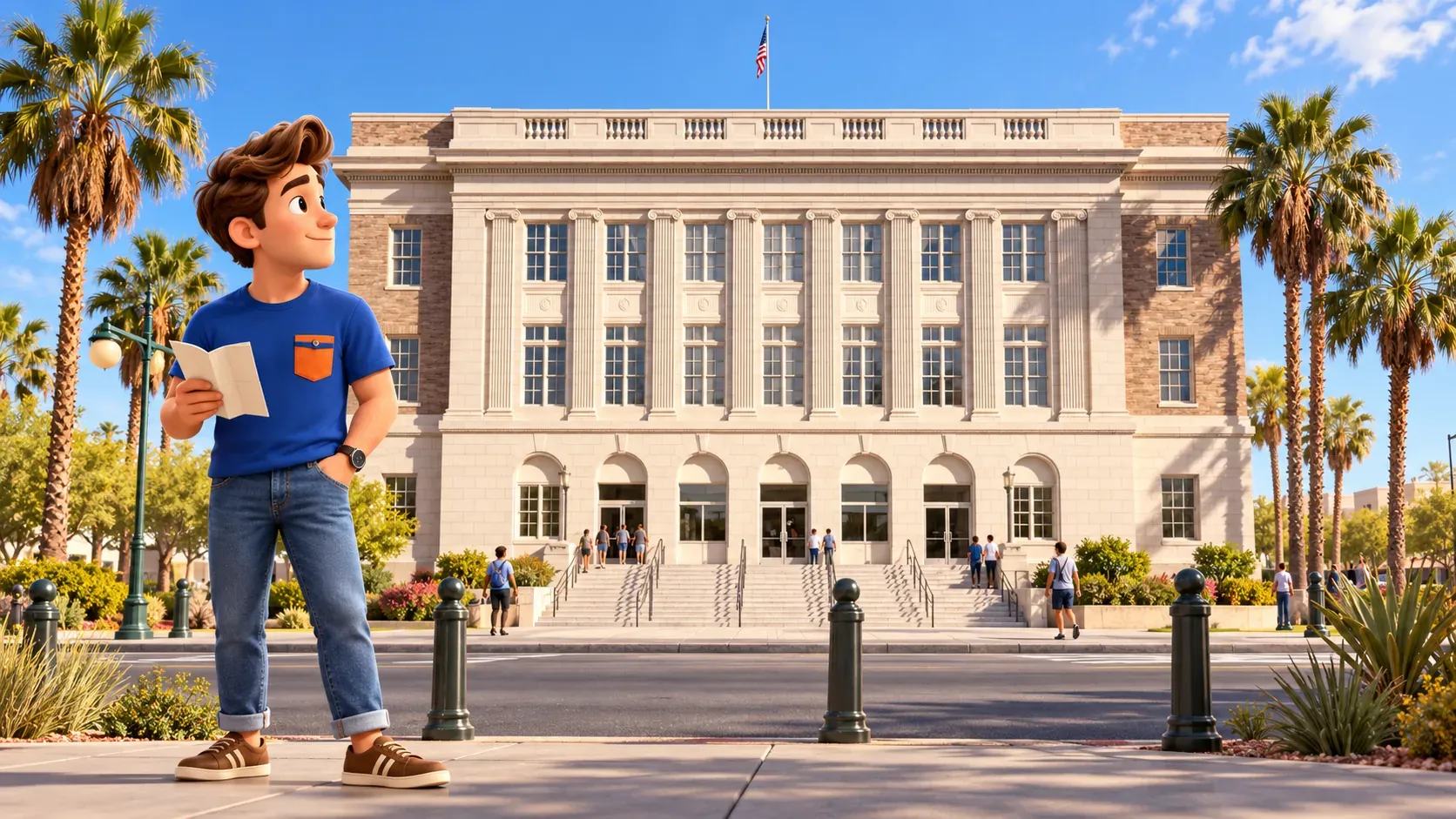
The Mob Museum occupies the historic former federal courthouse and post office on Stewart Avenue. The building already belongs to the civic history of Las Vegas; its formal facade is a useful reminder that the story here includes public institutions as well as criminal organizations.
The museum examines organized crime and law enforcement. Approach it with curiosity about evidence, money, power, public life and the work of investigators. Reducing it to glamorous gangsters misses the tension that makes the subject interesting: crime has consequences, while efforts to confront it are part of the same history.
This is the option to consider when you enjoy following a narrative across rooms and spending time with documents and explanations. Your appetite for reading matters more than the number of exhibits you can pass. A companion who wants mainly a visual break may have a different experience from someone who likes to compare accounts and understand a chronology.
Leave a generous part of the day if you want that slower approach. The museum describes visits of roughly one to three hours; for planning, reserving a substantial museum block is more useful than treating the shortest estimate as a target. That is an allowance for your interests, not a promise about queues or an instruction to finish at a particular minute.
Check what the ticket includes. General admission and additional experiences such as the Crime Lab, Firearm Training Simulator or distillery activities have their own arrangements and age conditions. An image of one experience does not establish that it is included in the ticket you are considering.
Families should look at the content as well as the entry rules. Some exhibits include graphic material, and the museum’s subject can be demanding for younger visitors. Choose according to the actual children and their interests; being able to enter is different from finding the experience appropriate and engaging.
Atomic Museum: place Nevada in the nuclear age
Atomic Museum offers another way into the region’s history. Nuclear testing is part of Nevada’s twentieth-century story, connecting the state with scientific research, national policy, military programs and the wider culture of the atomic age.

This is a good choice when your interest extends beyond resort architecture. The subject can connect technical questions with historical ones: how was a new technology presented, what institutions developed around it, and how did the period understand its possibilities and risks? You can enter with a general interest in history without pretending to be a physicist.
Keep room for reflection. Scientific ingenuity and the consequences of nuclear weapons belong in the same conversation. The experience is richer when it becomes more than a search for spectacular images. Pay attention to context and to the relationship between what was known, what was promoted and what later generations have had to consider.
Plan this as its own visit on East Flamingo Road. It is not a Downtown museum, and a map containing all three institutions should not be mistaken for a convenient walking route. If Atomic Museum is the subject that interests you most, let the day’s geography follow that decision.
At the time of checking, the museum lists daily opening from 9 a.m. to 5 p.m., with the last admission at 4:15 p.m. Holiday closures and adjusted dates are separate, so use the calendar for your actual visit. Last admission is an entry limit, not a recommendation to leave the entire experience to the end of the day.
The museum is cashless, and advance reservations are encouraged even though walk-in admission may be possible subject to availability. A museum admission is also different from a tour of a nuclear testing site. Do not interpret photographs or historical references to the Nevada test grounds as an included excursion.
Turn one museum into a comfortable day
Build around one main museum and leave the next decision open until you know how you feel. A reading-heavy visit can leave you wanting a meal and a quiet pause; an outdoor sign collection can leave you wanting somewhere indoors. The most useful pairing is often a change of rhythm rather than another institution with an equally demanding story.
Planning in RoadMe is easier and more effective because the app can work out a personalized trip according to your interests, time and pace. Use it to shape the whole day around the museum you genuinely want to explore, with practical space for travel and rest.
Before booking, check the specific date, ticket type, current access rules and any additional experience you want. Prices and packages can change; compare the actual product rather than an old headline tariff. If you have accessibility questions or specific sensory needs, ask the selected venue about the conditions that matter to you.
The illustrations interpret the choice and the subjects. The planning scene and science reading space are conceptual, while the sign collection and courthouse are artistic interpretations of real settings. They are not floor plans, inventories or instructions for accessing a particular display.
Choose The Neon Museum for the city’s visual language, The Mob Museum for a complex civic and criminal history, or Atomic Museum for Nevada’s nuclear story. Then give that choice enough time to become an experience rather than another stop. Las Vegas becomes more interesting when you follow a question that is actually yours.