Kabuki or noh: which Japanese theatre evening should you choose?
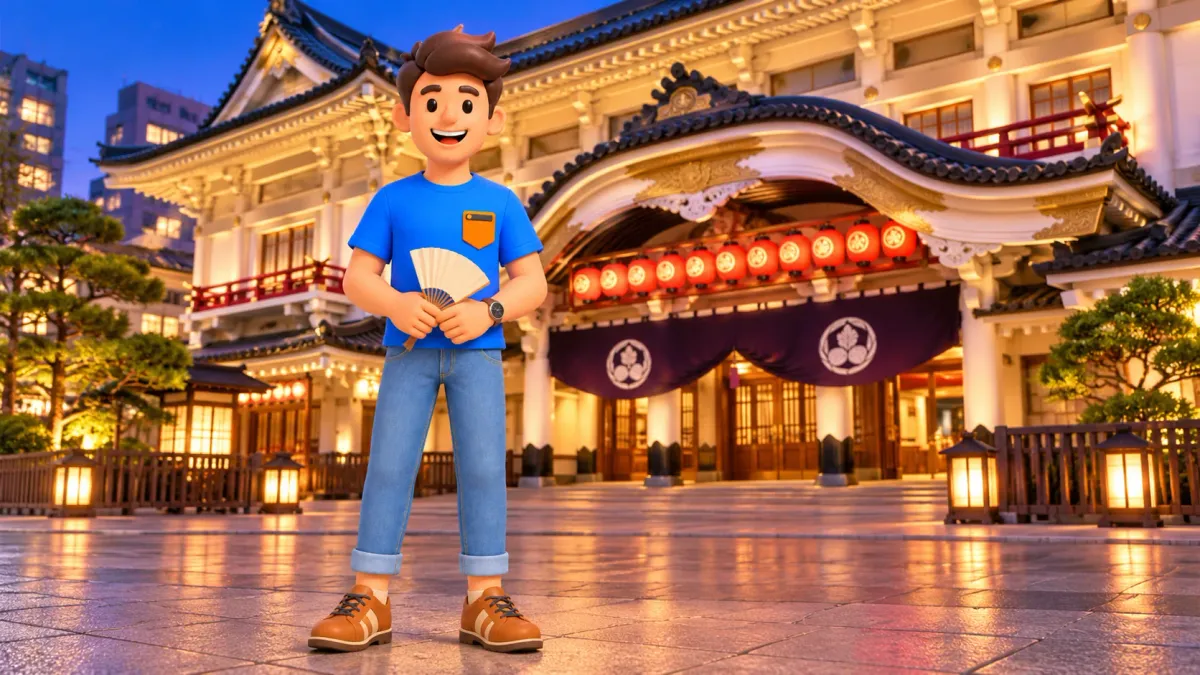
A first theatre evening in Tokyo works best when you choose a performance you want to experience, not simply a famous building to enter. Kabuki and noh are different forms with different rhythms, visual languages and programmes. Neither is automatically the more authentic choice for a visitor. Your interest, attention and the practical support available for the actual performance matter more than a ranking.
Consider kabuki if you are drawn to a visibly varied stage experience and want to explore the current programme at a theatre such as Kabukiza. Consider noh if you are curious about concentrated movement, voice and the meaning carried by a restrained stage. Then check what is being performed on your date. An evening is shaped by its programme, not only by the genre written above the ticket.
Choose the kind of attention you want to bring
Begin with your own appetite for the evening. Do you want a strong first encounter with theatrical storytelling, dance and stage convention, or are you interested in how a small movement and a musical phrase can hold attention? These are useful starting questions, not a claim that all kabuki is loud or all noh is quiet. Individual pieces and performers matter.
To make the performance part of a trip based on your interests, you can try RoadMe: it prepares a personal plan around your dates and pace. Give theatre enough room instead of placing it after an already crowded day.
Watch a short official introduction if you are unsure. Notice what draws you in before deciding which form you are supposed to prefer. A visitor can appreciate costume, sound, movement and stage space without understanding every word, but that does not mean preparation and language support are irrelevant. Choose an experience whose available help and duration suit the way you enjoy watching.
Kabuki: let the actual programme make the case
Kabuki encompasses different kinds of performance, including historical drama, stories of townspeople and dance-focused work. A programme can therefore offer more variety than a single promotional photograph suggests. Read the descriptions of the pieces rather than assume every show resembles one famous makeup image. The question is which available programme invites your curiosity, not whether you recognize a style from a poster.
Kabukiza is a clear Tokyo starting point, but the building and a performance are different purchases and experiences. Seeing the exterior does not mean you have attended kabuki, and buying a ticket requires the correct date and part of the programme. A theatre can have more than one daily programme. Check the actual beginning, end and what your seat covers.
For a shorter first encounter, investigate whether single-act tickets are offered for the programme you want. They are a specific ticket product with their own sale arrangements, seating and availability, not a general right to enter any performance briefly. Read the current official single-act information. Do not assume a previous month's method or seat choice automatically applies to your dates.
A full programme can be rewarding if the pieces interest you and you are comfortable with its duration. It is not automatically a better cultural experience just because it is longer. A well-chosen shorter visit may leave a clearer impression than several hours endured through fatigue. Let the available programme and your attention determine the commitment rather than an idea that a beginner must see everything.
Noh: give small changes time to become visible
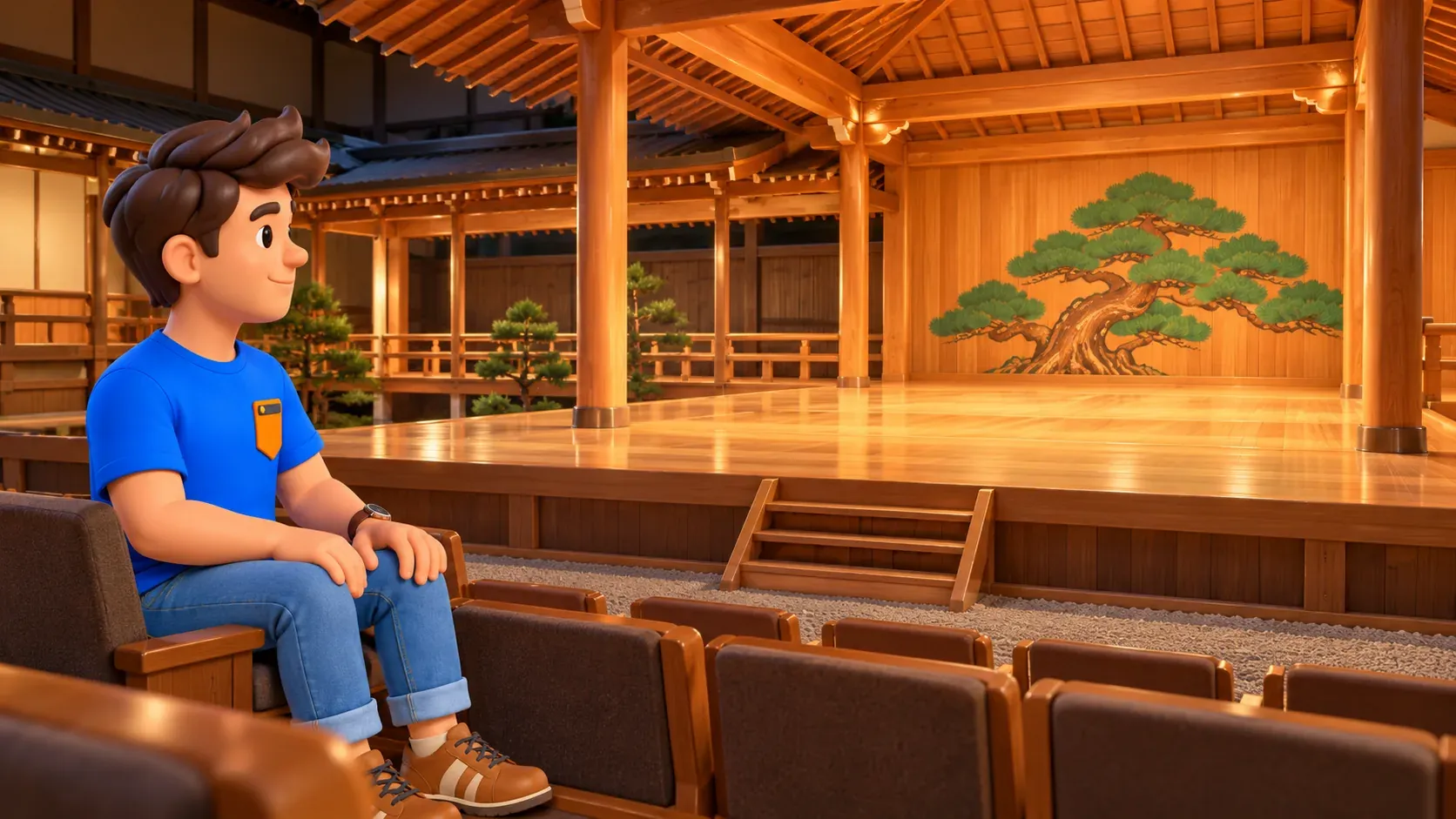
Noh combines voice, music and highly shaped movement. Masks and costume can carry meaning, while the stage leaves much to the spectator's imagination. You do not need a complete history to begin, but it helps to expect a different relationship to action from a rapidly changing screen narrative. Attention often rests on something that would be easy to overlook if you were waiting only for a large event.
Read a brief synopsis of the piece before the performance. Understanding who appears and what situation brings the character to the stage gives you a place to stand as the action develops. You can then notice the relation between movement, voice and pauses rather than try to decode the whole story while it is happening. Preparation supports attention without needing to explain every symbol.
Noh and kyogen are related but distinct forms often presented within the same broader tradition of nohgaku. Kyogen's spoken comedy is not simply a casual name for a break between noh pieces. Look at the actual programme to see what is included. A listing that combines the forms can give the evening a changing rhythm, while another may emphasize one of them.
Choose noh if the invitation to look and listen patiently sounds interesting. Do not book it only because you imagine a quieter evening must be easier after a tiring sightseeing day. Concentrated attention is still attention. A rested arrival and some understanding of the piece can matter more than trying to fit the performance after every other attraction on your list.
Language support belongs to the specific performance
Check language assistance on the page for the exact date and programme. A theatre's general English website does not establish that every performance offers identical support. Kabuki information may identify captioning, an audio service or a written synopsis, with conditions that vary by venue and programme. Look at the actual offer rather than use the word guide as if it described one universal service.
The National Noh Theatre has its own captioning arrangements, and availability must be confirmed for the production concerned. Do not transfer a service offered for an in-house performance to every independent production in the same building. The useful question is whether your ticketed programme supplies the language and format you need, not whether an old review describes a helpful monitor.
A synopsis, captions and audio are not interchangeable. Some give the plot, others follow the performance more closely, and using any of them takes attention. Choose the support that suits you and read the rental or access conditions when relevant. A translation can help without turning the experience into an ordinary performance in your own language.
If support is unavailable, decide consciously whether visual and musical curiosity are enough for you. Some visitors enjoy that choice; others prefer another date or a programme with assistance. Neither response is a failure. The point is to avoid paying with an unverified expectation that language help will appear automatically at the seat.
Check the length before planning the evening
Look at the actual timetable and any announced intervals. A full theatre programme, a single act and a special introductory event can require very different commitments. Do not use a general genre description as a duration estimate. The ticket you choose should fit your available attention and the way you want to spend the evening.
Leave time to reach the correct entrance, collect any required item, find the seat and settle before the start. A nearby train station does not deliver you to a seated position in the auditorium. If the performance has late-entry limits, arriving after the opening may mean waiting rather than immediate access. Read the production's instructions and allow a sensible margin.
Food and other bookings should follow the actual timetable rather than an imagined finish. If a meal matters, decide whether it belongs before or after the show and check practical availability. Avoid a tight dinner reservation elsewhere that depends on exiting and travelling instantly. A theatre evening is easier to enjoy when the next appointment is not competing with the final scene.
For a longer Tokyo stay, use RoadMe to balance theatre, neighbourhoods and rest in a personal plan shaped by your interests. You can change the stops when a performance becomes the priority.
Choose the seat and ticket for your own visit
Compare the seat and programme you are actually buying. Price categories, sightlines and the part of the performance covered may differ. A low headline price cannot explain every option. Read the seating information, especially if an unusual angle, stairs or a particular access requirement affects the experience you can comfortably have.
For mobility, hearing or other individual needs, use current theatre information and ask questions before purchase when necessary. The same building can offer different arrangements for different programmes. Do not infer all practical details from the theatre's reputation or from the fact that a friend attended comfortably. Choose a ticket that corresponds to the real visitor, not an abstract average audience member.
Check official sale dates and current availability. If one ticket channel shows no seats, read the operator's guidance about other official options rather than assume an unofficial offer is the only solution. Conditions on cancellation, changes and collection belong to the actual seller and product. Understand those before paying, especially when the rest of the trip is still uncertain.
Let theatre etiquette support the performance
Follow the rules for photography, recording, phones and food given by the theatre and the particular production. Do not assume that an attractive stage is available to photograph during a performance. Quiet attention and consideration for neighbouring seats help everyone. If you are unsure what is permitted during an interval, read the notices or ask staff instead of copying another visitor.
Keep preparations simple: have the confirmation available, know the date and programme, and arrange belongings so that you do not need to search through them during a scene. Theatre etiquette is easier when the practical side has been settled before the lights change. Avoid turning the first minutes into a last check of restaurant directions and messages.
For children, check both admission conditions and the likely demands of the chosen programme. A child who enjoys one form or a shorter introduction may not enjoy a long evening without breaks that suit them. Pick the actual performance rather than decide only by age or by the label traditional. A comfortable shared visit matters more than completing a cultural obligation.

One well-chosen evening is enough
Kabukiza belongs naturally to a Ginza-side plan; a National Noh Theatre visit calls for its own current approach and nearby arrangements. Do not treat the two choices as one short pre-show walk. Choose the performance first, then make the surrounding day manageable. A little free time before the theatre often contributes more than an additional distant attraction.
For kabuki, begin with the current pieces and whether a full programme or available single act suits you. For noh, read the story, confirm support and give its movement and sound a rested attention. Neither choice requires you to master the tradition before buying. It requires only curiosity and an honest understanding of what the ticket offers.
Leave with a few details you want to remember: a gesture, a voice, a change in stage space or a story you would like to understand better. That is a stronger result than declaring one form the winner after a single visit. Another theatre evening can belong to another Tokyo day. The first is successful when it makes you want to look and listen again.