Whirling Dervishes in Istanbul: Ceremony, Show and Booking Choices
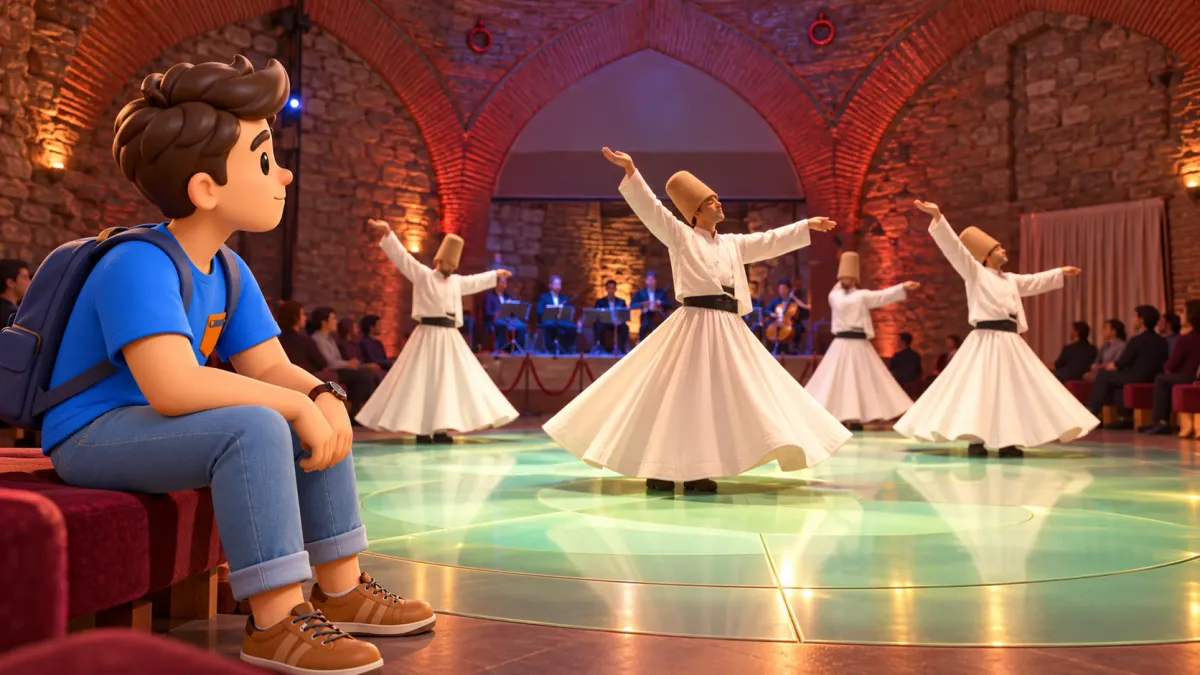
To see whirling dervishes in Istanbul, first decide whether you want to learn about the Mevlevi Sema ceremony or attend a broader entertainment show that includes a whirling sequence. Similar photographs can advertise very different experiences. Choose by the actual programme, the organiser and the visitor rules, not by a promise of the most authentic show.
The Sema has a religious and cultural context; it is not simply a dance number with white skirts. A cultural centre may present it to visitors, while a restaurant or cruise may include a separate staged performance. This guide helps you understand those distinctions, read a ticket and prepare respectfully without inventing a schedule for every venue.
Start with the kind of visit you want
If your interest is the tradition, look for a programme that explains the Sema and makes clear how visitors should behave. If you mainly want an energetic evening with several types of dance, choose an entertainment programme on those terms. Neither a dinner photograph nor the word ceremony alone tells you the full content.
With RoadMe, you can prepare a complete personal Istanbul trip plan around your interests, including the cultural experiences you want to understand. Building the whole visit in the app is more convenient than collecting separate recommendations and fitting every activity together yourself.
| Type of offer | What to establish | What not to assume |
|---|---|---|
| Visitor presentation of the Sema | Programme, cultural explanation, seating and conduct | That it is interchangeable with an evening of varied dance |
| Visit to a working religious community | Whether visitors are currently admitted, on what terms and to which event | That a lodge is a daily walk-in attraction |
| Restaurant or cruise entertainment | The actual dance segment and the rest of the package | That a brief performance is a complete Sema ceremony |
| Museum visit | Collection access and any separately confirmed event | That opening hours guarantee a live ceremony |
Use these distinctions to ask better questions rather than to award authenticity scores. A paid presentation can still require respectful attention. A religious address does not automatically establish visitor access or a current public timetable. What matters for your booking is a clear description of the event you will attend.
A little context: why the turning is not the whole ceremony
The Mevlevi tradition is associated with the legacy of Rumi. The Sema combines spiritual meaning, music and a structured ceremony; the visible turning is part of that whole. You do not need a detailed theological background to attend as a respectful visitor, but it helps to approach it as more than a search for a striking photograph.
The Mevlevi Sema ceremony was inscribed on UNESCO’s Representative List of the Intangible Cultural Heritage of Humanity in 2008, after its earlier proclamation in 2005. That recognition concerns the tradition. It does not certify every commercial ticket that uses a dervish image or guarantee that two advertised experiences have the same programme.
Türkiye’s cultural authorities describe music and the ceremony’s spiritual context as inseparable from its presentation. This is a useful reason to read the programme rather than judge solely by costumes. A short whirling sequence during dinner and a presentation organised around the Sema can have very different aims.
Hodjapasha: distinguish its two different programmes
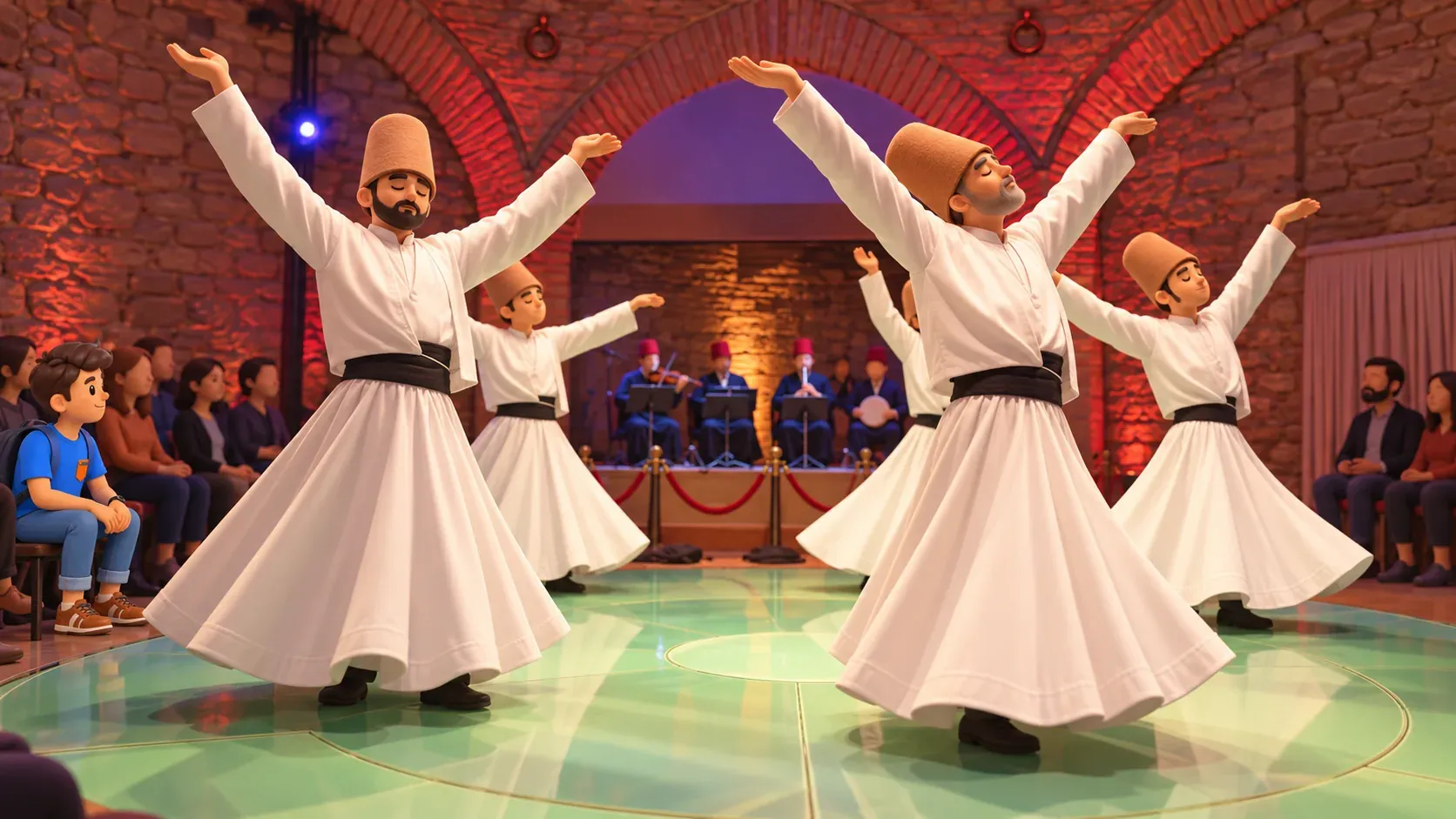
Hodjapasha Cultural Center is a useful example because its own website separates the Whirling Dervishes programme from Rhythm of the Dance. The former is presented as a spiritual ceremony, while the latter offers varied Turkish dance entertainment. The same venue name therefore does not identify a single interchangeable show.
The centre is housed in a converted historic hamam. That gives the setting a history of its own, but you are not booking a bath treatment. Read the activity name carefully: a familiar building description does not explain whether your ticket is for the Sema, a different dance show or another event.
For the Sema, the official visitor information asks for a quiet atmosphere and does not allow photography or video. It also describes an age restriction and a specific seating procedure. Those conditions belong to the selected programme; they should not be replaced by the rules of the venue’s separate entertainment show.
Use the current booking and confirmation for the exact session and arrival instructions. A timetable in an older travel article cannot establish availability on your date. If a ticket includes an exhibition, check how that visit fits around the ceremony rather than assuming it is a second live performance.
Other settings: ask what is actually taking place
When a lodge or community admits visitors to a religious event, find the organiser’s current information about that event. Do not arrive expecting a continuously operating attraction simply because the building is described as a mevlevihane. A place’s historical identity and its present visitor programme are separate questions.
For a museum, distinguish access to the collection from a separately scheduled ceremony. A museum admission ticket can be worthwhile for learning about the tradition, but it does not establish that practitioners will perform during your visit. If live Sema is your main purpose, obtain explicit confirmation of the event.
For a restaurant or cruise, read the entire programme. Identify whether whirling is a short segment among several performances, whether music and explanation are included, and how dinner fits in. Choose that package if it matches your evening; do not buy it under the assumption that every whirling sequence is the same ceremony.
Be cautious with a claim that a seller offers the only genuine experience. A superlative is not a programme description. Ask who organises the event, what is presented and what visitors are expected to do. If those basic points remain unclear, there is little reason to make a hurried purchase.
Read the ticket before comparing the price
Write down the actual event name, venue and date. Check whether the offer is admission only, includes an exhibition or explanation, or combines transport, food and entertainment. A lower starting price is not a saving if it refers to a different activity from the one you want to attend.
Identify the seller as well as the venue. A cultural centre’s own sale and a reseller’s package may have different support and change procedures. Keep the confirmation and the conditions of the selected offer. The same photograph appearing on several platforms does not establish identical services.
If a pass or combination ticket claims to cover the experience, check whether you must reserve a session separately. Entry to a building, eligibility to make a booking and a confirmed place at a particular ceremony are different things. Do not plan the evening around an unconfirmed assumption of walk-in access.
For a combined transfer, clarify pickup point, time and return arrangements. A reference to transport in an advertisement is not enough to show that your accommodation is covered. If you prefer independent travel, compare the admission component rather than paying for a service you cannot use.
Seats and arrival: do not confuse booking order with a queue
Hodjapasha’s published seating description uses booking order. That differs from a promise that the first person to arrive takes the best seat. Follow the actual procedure and the arrival instructions; do not present an early queue as a guaranteed way to secure a particular view.
At another venue, ask whether seats are assigned, allocated by category or selected on arrival. If you need a particular arrangement, contact the organiser before purchasing. A photograph taken from the edge of a performance area is not a guarantee of the view from every visitor’s place.
Give the ceremony a protected time slot in your day. Allow for finding the entrance, presenting the confirmation and settling quietly. A live event has a beginning; it is not equivalent to entering a museum whenever you arrive within opening hours. Clarify late-admission conditions if your preceding journey is uncertain.
Our guide to planning around a festival or concert explains the practical parts surrounding a fixed event. For the Sema, that means organising arrival and the return journey without treating the ceremony itself as an item you can interrupt or shorten at will.

Photography, phones and quiet attention
At Hodjapasha’s Sema, photography and video are not permitted under its published rules. Do not reinterpret this as a ban on flash only. Permission for a different show, foyer or exhibition does not carry over to recording the ceremony. Ask staff before taking images anywhere the conditions are unclear.
Put your phone on silent and keep the screen away during the event. A bright display can distract the people around you even without a flash or shutter sound. If you want information about the tradition, read it before the start rather than searching while the programme is under way.
Follow the host’s directions about applause, movement and the end of the visit. Do not assume the conventions of a variety show apply to a spiritual ceremony. If you have a question, use the introduction or another suitable moment instead of speaking over the music or interrupting practitioners.
Watch from the designated visitor space. Do not enter the performance area, imitate the turning alongside practitioners or move closer for a better photograph. The point of a visitor place is to let you observe without changing the conditions of the event for participants and other guests.
Clothing and visiting with children
Read the chosen venue’s dress instructions. Hodjapasha’s FAQ does not set a formal dress code, but that should not be presented as a rule for every religious setting in Istanbul. If you visit a working community, ask about its own conditions. Comfortable, considerate clothing is a practical choice, not proof of a universal mandatory outfit.
Do not invent a requirement for every woman to wear a headscarf or for every visitor to dress in a particular colour. Any specific requirement must come from the current organiser or setting. The useful advice is to check the real conditions and arrive prepared, rather than adding rules from an unrelated mosque or tourist attraction.
For children, distinguish admission from whether the experience suits their attention and needs. Hodjapasha publishes a minimum age of seven for its dervish ceremony. That named programme’s limit should not be treated as the rule of every performance in the city, nor as a promise that every admitted child will enjoy sitting quietly.
Explain the quiet setting beforehand and consider your child’s interest in music and a measured programme. A varied dance show may fit a family seeking entertainment more closely. Choose it knowingly, without describing it as an identical substitute for the Sema. If someone needs to leave during an event, ask about arrangements in advance.
Accessibility and comfort: obtain a specific answer
Hodjapasha’s official information says its theatre is not suitable for wheelchair users. Do not replace that with a reseller’s generic accessibility icon. If this affects your visit, contact the venue about your actual needs and consider a different confirmed arrangement rather than assuming assistance will solve the problem on arrival.
For any venue, ask about steps, the route to the seat, companion placement and relevant facilities. A historic building description does not tell you whether a particular event space is accessible. Obtain the answer before payment when the arrangement is essential to attending.
Take only the items you need for the visit and journey. Confirm bag rules instead of assuming that every cultural centre has a cloakroom for large luggage. Keep the confirmation available, but avoid handling bags and devices throughout a quiet programme. The less you need to organise during the event, the easier it is to listen.
RoadMe helps you prepare a personal plan for the whole trip, based on your interests and pace, so a quiet cultural visit fits naturally among the other experiences. It is more efficient to organise that connected programme in the app than to keep rebuilding separate lists of places.
Fit the visit into a realistic day
Choose a time when you can arrive without rushing. A full afternoon followed immediately by a fixed ceremony may leave you tired and distracted. Leave room for food and a short rest outside the event, especially if the programme itself does not include a meal.
Plan the journey from the exact address, not merely a broad neighbourhood name. Use current transport information for your date, and check the return as well as the outward trip. No single suggested station or travel time works for every accommodation and every event advertised under the same search phrase.
The guide to balancing visits, travel and rest can help you reserve enough space around the fixed time. This is not a ready-made Istanbul itinerary: it is a way to avoid a booking that becomes stressful because the rest of the day leaves no margin.

A final booking check
- Identify whether you are booking Sema, another dance show, a museum visit or a combined package.
- Confirm the actual venue, organiser, date and session.
- Read the photography, conduct, age and seating conditions of that programme.
- Resolve any essential access or family requirement before payment.
- Check inclusions, change conditions, arrival and the return journey.
The most useful choice is one you understand: what you will see, why it is presented in that way and how you can attend respectfully. Once those points are clear, you can stop searching for an authenticity slogan and give your attention to the experience itself.