
Grand Palace, Wat Pho or Wat Arun: what to choose when time is short

You have a few free hours in Bangkok and three famous names on your list: the Grand Palace, Wat Pho and Wat Arun. The most useful question is which experience deserves those hours. Giving one place proper attention can leave a clearer memory than collecting three entrances while watching the time. Begin with the subject that attracts you, then test whether the actual journey and visiting window work.
The Palace and Wat Pho are separate complexes on the eastern side of the Chao Phraya. Wat Arun stands on the western bank. Their familiar appearance together in suggested itineraries does not turn them into one entrance or remove river travel. This article helps you choose one main visit. It leaves room for arrival, a proper break and the journey onwards, rather than promising every major landmark in a spare afternoon.
Choose the experience you would miss most
The Grand Palace suits an interest in royal Bangkok and a rich architectural ensemble. Wat Pho offers the powerful focus of the Reclining Buddha with a wider temple setting to explore. Wat Arun rewards curiosity about a distinctive riverside silhouette and the detail of porcelain decoration. Each has a clear reason to visit. Ask which subject you would most regret leaving for another trip, especially if the three currently feel equally “essential”.
With RoadMe, it is much easier to build a personal Bangkok trip around your interests, time and comfortable pace. Let the app develop the whole itinerary so the visit you care about fits your day with sensible journeys and useful pauses.
Then ask where you will start and where you must finish. A place already on your side of the river may be more practical than a different favourite with an additional transfer. Interest and logistics should work together. Someone who wants to see the Reclining Buddha has a stronger reason for Wat Pho than a general wish to tick off a temple; someone fascinated by decorative surfaces may have an equally strong reason for Wat Arun.
The Grand Palace: royal setting and a larger commitment
The Grand Palace grew from the establishment of Bangkok as the capital in 1782. Its ensemble brings royal, administrative and religious functions into one setting. The Temple of the Emerald Buddha, Wat Phra Kaew, belongs within the palace compound. Understanding that relationship helps you see the place as a connected royal landscape, rather than imagine a separate journey between two distant attractions with similar ticket descriptions.
Choose this option if architecture and royal history are the main interest you want to give time to. The appeal lies in the relationship between structures, ornament and ceremonial setting. Looking at one façade, then noticing how a nearby roofline changes its effect, can be more rewarding than trying to photograph every visible building. There is plenty to look at without treating the public visit as a complete inspection of a royal residence.

Allow roughly three hours for the selected visit, plus about thirty minutes of entry-and-exit margin and forty-five for a seated break afterwards. This is a planning estimate, with your actual transport added separately. It makes the Palace a meaningful part of a day. If your entire available window is much smaller, do not assume you can compress security, movement and observation into the time you happen to have left.
What the Palace choice needs from your day
Check the official calendar for your date and the current public visiting route. Royal ceremonies and other arrangements can affect access. A ticket or a photograph of a grand interior does not promise that every hall, chapel area or private room is part of today’s visit. Choose on the basis of what is available, particularly if one specific space is the only reason you would travel here.
Prepare appropriate clothing before arriving. The Palace publishes restrictions on sleeveless or revealing tops, shorts, torn or very tight trousers and other unsuitable clothing. For a simple practical approach, choose a top covering the shoulders and loose full-length trousers or another garment complying with the current rules. Establish the requirements for your actual outfit rather than planning to solve them at the gate when time is limited.
Think about the return as well as the entrance. The size and richness of the ensemble can absorb attention, which is part of the pleasure. Give yourself a point at which to finish, pause and leave without rushing. A three-hour visit is still a selection; it is not a promise to see everything. Being comfortable with that makes this choice much more useful for a short stay.
Wat Pho: a strong main focus with more beyond it
Wat Pho is a separate temple complex, known for the Reclining Buddha. The temple describes the image as 46 metres long, made in brick and stucco and finished with lacquer and gilding. Its scale creates a powerful focus for a first visit. If this is the image you most want to see, make that preference the beginning of the decision instead of letting the more general fame of the Palace decide for you.
The surrounding temple offers another layer: courtyards, rooflines and chedis with decorative surfaces. Leave time to notice how the large image and the outdoor spaces create different kinds of attention. After the main hall, a slower look at a small pattern can be a satisfying change. You can choose a limited part of the complex and still feel the visit has a coherent beginning and end.
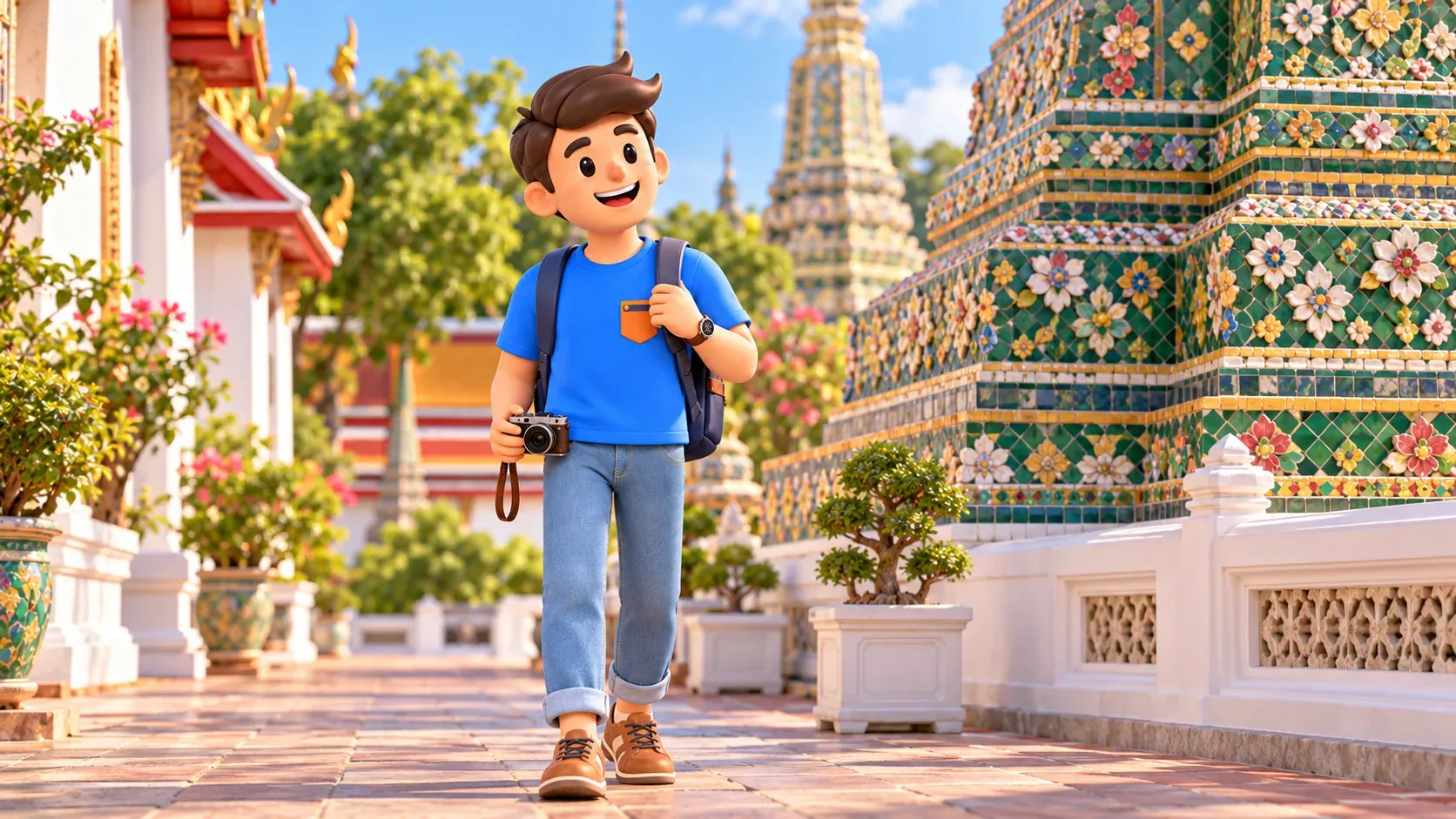
For a comfortable plan, give Wat Pho around two hours, then add thirty minutes of arrival-and-exit margin and forty-five for rest. The actual journey from your starting point remains additional. This is not a measured minimum, and a shorter selective visit may suit some people. The useful question is whether the time left after travel, entry and your obligations allows you to look without feeling you must immediately leave.
Let Wat Pho remain a temple visit
Follow the current clothing, footwear and photography instructions for the areas you enter. A busy landmark is still a religious place used by people with different reasons for being there. Let others move through the space and keep your own photo arrangements modest. The value of seeing the Reclining Buddha does not depend on finding a moment that resembles an empty-room promotional photograph.
Do not automatically attach a massage appointment or every other associated activity to the visit. Each would have its own arrangements and time. Likewise, proximity to the Grand Palace does not merge the two admissions. Finishing Wat Pho and sitting down afterwards can be an entire satisfying outing, particularly if you have already travelled through the city or need to keep energy for the next day.
With children or companions whose interests differ, choose one small shared task: describe a detail that surprised you, or compare the feeling of the main focus and a courtyard. There is no need for everyone to study the same amount. Agreeing on an achievable visit often works better than deciding at the exit that you must now add another famous temple to make the afternoon count.
Wat Arun: choose the porcelain and the other bank
Wat Arun stands on the western bank of the Chao Phraya. Its prang gives it a distinctive silhouette, while porcelain decoration rewards a closer look. These two scales explain much of the attraction: a recognisable shape from a distance and a textured surface when you visit. Choose it if that combination interests you, rather than because the name Temple of Dawn seems to dictate an exact hour.
The Tourism Authority of Thailand describes porcelain and other decorative materials among the features of its towers. Look at how small pieces form patterns on the larger surface. You can enjoy that detail from permitted areas without trying to touch it or assume that every stairway is open. A visit does not require climbing to the top of the main prang, and this article makes no promise of such access.
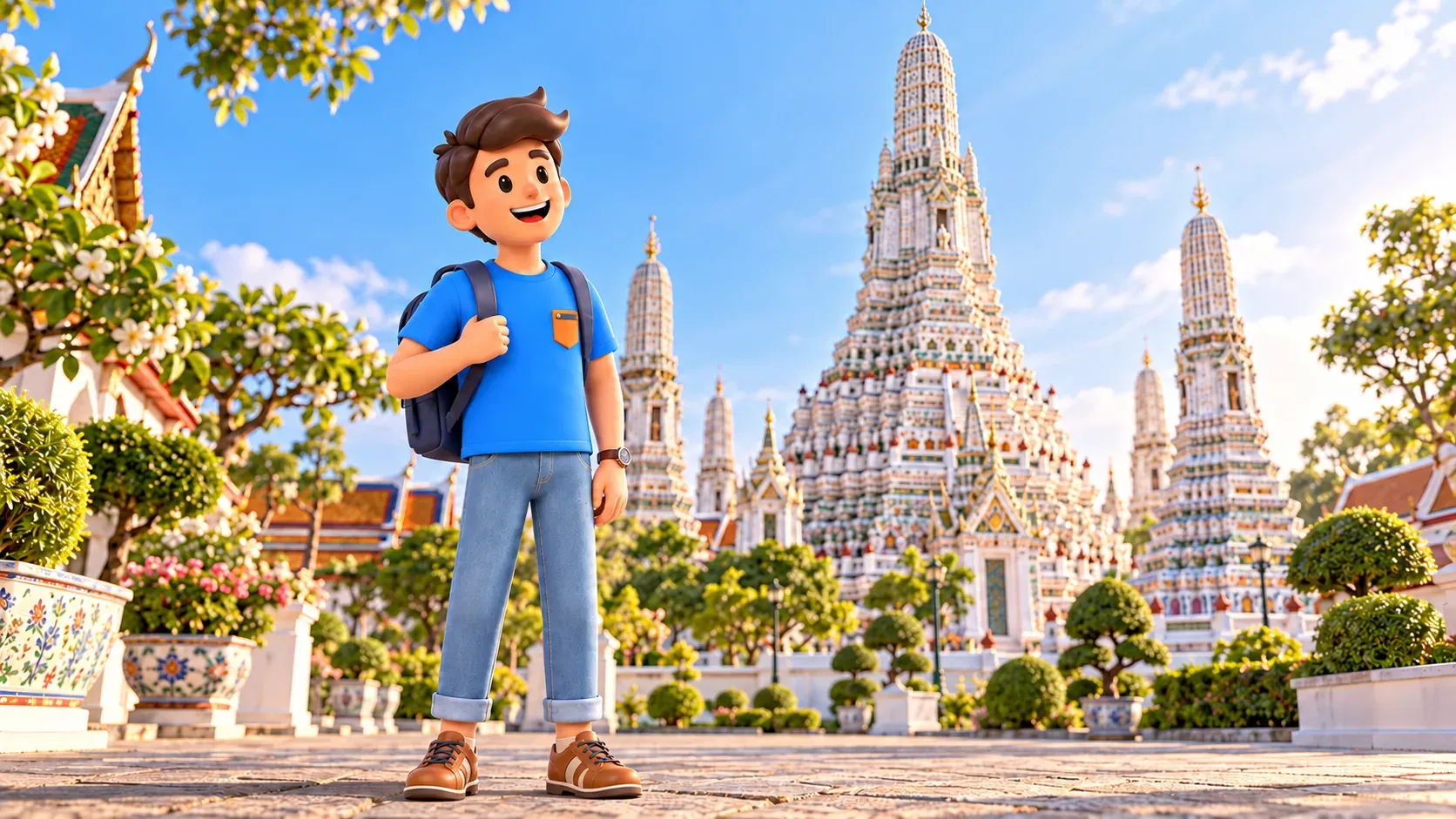
Allow around ninety minutes for a selected visit, with thirty minutes of entry-and-exit margin and forty-five for a break. This local allowance begins after reaching the western side. Add your actual hotel journey and any river crossing separately, including the approach to the real pier and waiting. If the transfer makes your available window uncomfortably short, choose a different date or the option that fits your existing location.
A river crossing is part of the plan
Establish the actual service, departure and arrival points for your day. “Across the river” is a geographic description, not a timetable. Walking to a pier, waiting, boarding, crossing and reaching the temple entrance all take time. You might approach by another form of transport instead; the decision should come from the real route, rather than an assumption that every riverside location is linked by an immediate boat.
Separate an interior visit from a view of Wat Arun from another bank. Both can be enjoyable, but they are different experiences with different arrangements. A public viewpoint must have confirmed public access; a restaurant terrace has its own costs and conditions. Sunset colour, illumination or a particular empty foreground is not part of a guaranteed temple admission. Let the choice rest on the experience you can actually arrange.
Count the pause before adding another landmark
After any of the three, plan somewhere suitable to sit, eat or drink. Include the cost and approach in your day. Rest does not need a landmark view to be useful. A simple nearby pause can give you time to connect what you noticed, check the journey onwards and decide whether you want any further walking. The day does not become incomplete because one main visit was enough.

If heat is shaping the decision, our slower day with a proper midday pause explores another rhythm. If rain dominates, the two museum and art plans offer different outings. Consider them on their own terms. Adding every alternative to today’s programme would undo the useful simplicity of choosing one interest well.
RoadMe makes the whole trip more convenient and effective to organise by developing a personal plan around your interests and pace. In the app, your chosen landmark can fit naturally among the Bangkok experiences you want, with room for travel, meals and rest.
One visit can give a short stay its centre
Choose the Palace for a larger royal ensemble, Wat Pho for the Reclining Buddha and a temple selection, or Wat Arun for porcelain detail and the western riverside setting. Confirm your date, applicable admission and actual route. Keep all travel outside the estimated visiting windows, with enough margin for your next obligation. A single clear choice gives limited time a purpose; you can leave the other two for another day without turning this one into a race.


