Exposition Park in Half a Day: One Museum and the Rose Garden

Exposition Park makes it tempting to put too much into one outing. A natural history museum, a science centre, a rose garden, a stadium and another museum share the same cultural area. Their proximity helps with travel, but it does not shorten the time you want inside. For a half day, choose one main museum and add a garden pause with a little local history.
This itinerary suits a first visit or a trip where you would rather keep some of the day free. The main choice is between the Natural History Museum of Los Angeles County and the California Science Center. The rose garden offers a change of pace after indoor exhibits; an optional exterior look at the Memorial Coliseum adds the city’s Olympic story. Leave other possibilities for a return visit.
Build a half day around one main interest
Allow roughly three to four hours on site: about two to two and a half hours in your chosen museum, 20–30 minutes in the rose garden when it is open, and space for walking and a break. Add a brief Coliseum exterior stop if it still feels comfortable. These are editorial planning estimates, not an official tour duration; queues, events and your own interests can change the timing.
For a half day that fits the rest of your journey, let RoadMe develop a personalised plan around your interests, dates, budget and pace. The app makes it much easier to connect your chosen museum with transport, rest and other experiences than to assemble a day from separate lists of places.
Begin with the museum, particularly when you have a ticket or a scheduled admission. Afterwards, decide how much energy remains for the open-air stops. You can reverse the order if the garden is your priority, but leave a comfortable margin before a museum booking. A late arrival is a reason to reduce the programme rather than hurry through the galleries.
You do not need to drive between the main stops. However, Exposition Park is not a single museum with one ticket and shared opening rules. Save the name of the institution you choose and its current entrance information, then follow on-site signs and temporary access notices. Travel to the park and your journey back belong outside the on-site time allowance.
Choose the Natural History Museum for the natural world
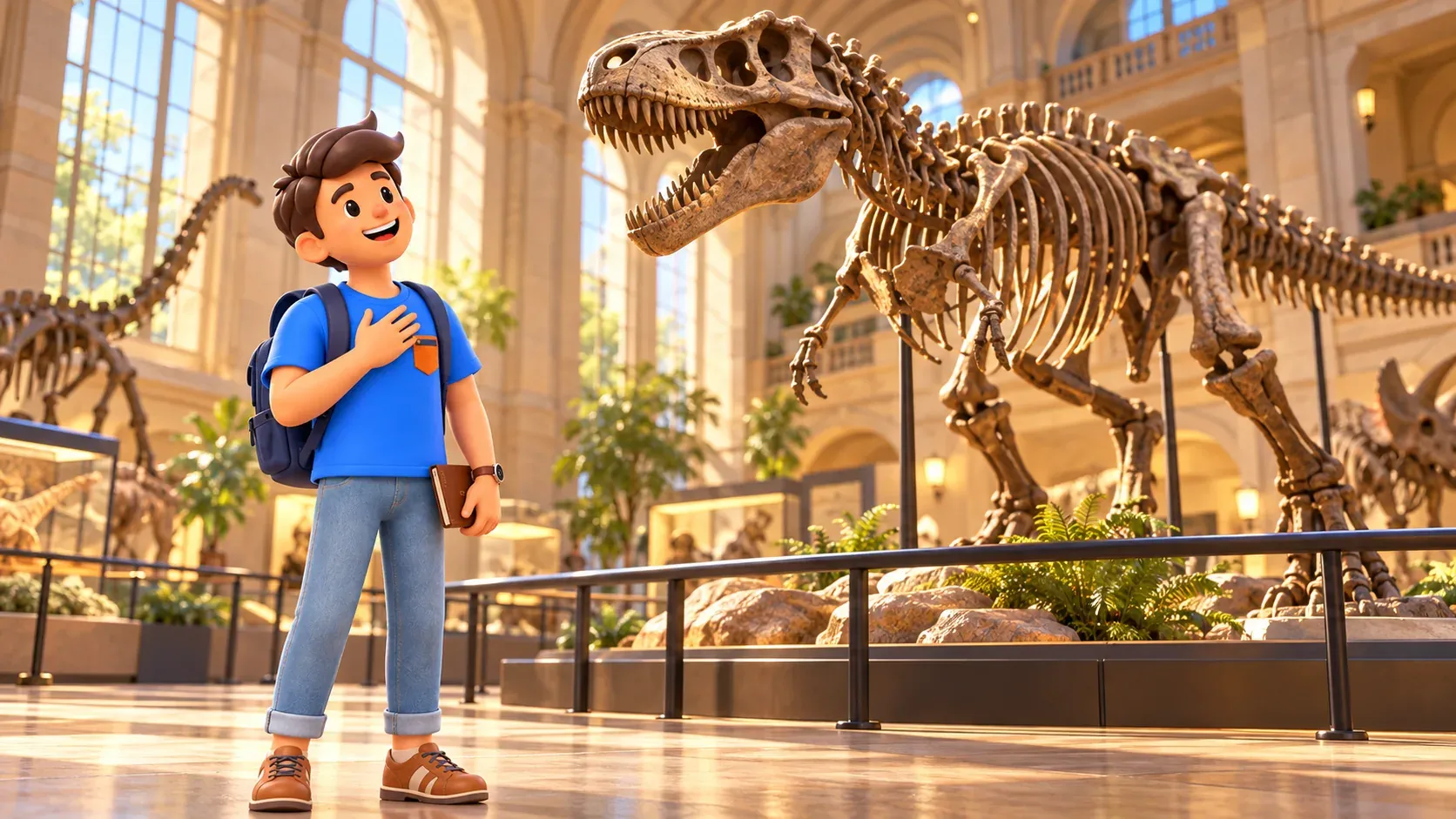
The Natural History Museum of Los Angeles County is at 900 Exposition Boulevard. Choose it for fossils, the history of life and actual natural specimens. Dinosaur Hall is an approachable starting point: the scale of the skeletons offers a different perspective on animal life. You do not need to memorise every name to take away something worthwhile.
For a shorter visit, select one principal theme and one secondary area from the current museum map. You might give most attention to dinosaurs, then look at another available natural-collection gallery. Ask what a specimen helps explain about life or materials. That question gives the visit a thread and keeps it from becoming a race between the best-known objects.
The ordinary hours checked on 17 October 2026 were 9:30am to 5pm. The museum closes on the first Tuesday of the month except June–August, as well as selected holidays. General admission is paid, and advance online tickets are recommended. Special exhibitions and additional experiences may require separate admission, so check what your chosen ticket actually includes.
With children, choose a shared interest before arriving rather than relying entirely on the adults’ priorities. One gallery a child genuinely explores can be more rewarding than several visited after attention has faded. If your group prefers different speeds, agree on a meeting place and time after independent viewing. A second large museum is not automatically the best compromise.
Do not try to complete the permanent collections within the half-day allowance. A few observations worth discussing in the garden are enough for this itinerary. If the museum is more absorbing than expected, shorten the stadium stop. The main museum is your chosen focus, and giving it longer does not mean that the rest of the outing has failed.
Choose the California Science Center for hands-on questions
The California Science Center is at 700 Exposition Park Drive. It works well when you want to investigate principles through interactive experiences as well as look at exhibits. Permanent galleries explore inventions, living things and ecosystems. Choose this option if asking how something works appeals more than steadily moving through natural specimens.
A useful approach is to spend time with a few experiences. Predict a result, see what happens and discuss the difference. There is no obligation to try every available activity. Moving constantly between installations can produce more stimulation than understanding. For a family half day, a slower exchange about one experiment is often more valuable than the number of buttons pressed.
General admission is free; ordinary hours are daily, 10am to 5pm. Check separate shows and special experiences under their own admission arrangements. Free basic entry does not make every add-on, transport option or parking space free. If budget matters, decide first whether the permanent galleries provide the experience you want, before automatically adding a paid activity.
Endeavour needs a separate check: on 17 October 2026 it is not on public display; the operator announced its new centre for 13 November 2026. For a later trip, confirm actual opening and timed-entry conditions. Older photographs of the horizontal shuttle should not become a promise about your visit.
This itinerary does not depend on entering the new air and space centre. You can choose the science museum for its existing galleries and arrange a specific space-related visit separately once the conditions are clear. If Endeavour is your sole reason for travelling here, establish that experience first. An object’s presence on a site and public access to it are different matters.

The rose garden: a slower scale after the galleries
After the selected museum, head towards the Exposition Park Rose Garden within the same complex. It allows the outing to shift from dense indoor displays to quieter observation. Its history as a municipal rose garden goes back to 1928. That small piece of context is enough to appreciate it as a place in its own right, rather than incidental planting outside a museum.
Leave the garden pause free of compulsory photographs. Follow the permitted paths, find a comfortable stopping point and look at the relationship between planting and open space. Stay out of beds and leave other visitors room. If an organised event is using part of the garden, respect its boundaries and use the public areas that remain available.
The plan is seasonal: the rose garden closes annually from 1 January to 15 March for maintenance. Do not promise a garden walk during that period. At other times, check current access and visit in daylight. The appearance of the planting changes; a photograph of abundant flowers does not guarantee the same display on your travel date.
If the garden is unavailable, preserve the idea of a pause after the museum instead of insisting on a particular circuit. Finish earlier or choose a permitted outdoor stopping point according to current signs. Adding another museum is not a necessary replacement. Fatigue from indoor galleries rarely disappears simply because you have walked into a different building.

A little history at the Memorial Coliseum exterior
If energy remains after the museum and garden, add an exterior look at the Los Angeles Memorial Coliseum. Completed in 1923, the stadium is associated with the 1932 and 1984 Olympic Games. This short stop shows another layer of Exposition Park: it is also a setting for major events in the city’s history. A detailed sporting chronology is unnecessary for this introduction.
View it from the permitted public side and take account of the day’s arrangements. An exterior stop does not include entry to the field, stands or a guided tour. Those experiences and events have separate conditions. If the stadium itself is the main attraction for you, plan that visit independently rather than treating an interior look as a free extension of a garden stroll.
On major event days, access routes, crowds and arrival time can differ from a quiet museum morning. Leave a margin and follow current signs. You can comfortably omit this ending when tired: it adds context but is less important than the museum you selected. The advantage of a half-day format is having permission to finish at a sensible moment.
An alternative when art and history matter most
The California African American Museum, at 600 State Drive, is another institution in Exposition Park. For visitors more interested in art and African American history, it can replace the main museum portion. Avoid turning it into a third required institution after both NHM and the science centre. Choose a cultural focus because it interests you, rather than simply because another entrance is nearby.
General entry and exhibitions at CAAM are free. Ordinary hours are Tuesday–Saturday, 10am to 5pm, and Sunday, 11am to 5pm; Monday is normally closed. Check the actual exhibition and holiday changes before travelling. Keep the same half-day structure: one museum followed by an outdoor pause when conditions suit. The alternative changes the subject without requiring a much longer programme.
When travelling companions have different interests, RoadMe can develop a personalised trip plan around your dates, budget and comfortable pace. Using the app makes it easier to give different experiences a place across the whole journey, so one afternoon does not have to carry every museum at once.
Make a few decisions before leaving
A morning visit lets you give the museum your freshest attention and pause afterwards. Arriving in the afternoon calls for an honest look at the time left before the chosen galleries and garden close. Do not book an extra show merely because a slot is available; it needs to fit your time allowance. Meals and queues also occupy the day, even when they are not separate attractions.
Ask each companion for one experience they particularly want. Sometimes one theme works for everyone; other interests can have their turn on another day. If preferences genuinely diverge, agree on a calm split and a clear meeting arrangement. That can be more useful for a first visit to a large cultural complex than continuously moving the whole group from one building to another.
Choose one museum, check its date, ticket and additional conditions, then the seasonal availability of the rose garden. Plan water, a break and the return journey. Do not apply general park hours to every institution or judge the visit only by the distance between doors. Proximity supports the logistics; it cannot replace time spent enjoying what you came to see.
- NHM: natural collections and the history of life, with paid entry and closure dates to consider.
- Science Center: interactive learning, with Endeavour checked separately.
- Rose garden: a seasonal pause without a guaranteed flowering display.
- Coliseum: an optional exterior historical accent.
- CAAM: an alternative interest, rather than another compulsory stop.
A good half day leaves a sense of having explored one subject and a reason to return. One museum, some garden time and a brief connection with the city’s history provide enough for a relaxed, substantial visit. Choose the amount that suits your group and let the main experience have room.