Which Dubai museums should you choose: history, the future or contemporary art?
Choosing a museum in Dubai begins with the question you want to explore. How did a trading settlement become a city? How was the United Arab Emirates formed? What futures can we imagine, or what can contemporary art make us notice? Different institutions give those questions different settings.
For a first trip, select one main museum experience and give it room in the day. Al Shindagha, Etihad Museum, the Museum of the Future and Jameel Arts Centre do not form a single interchangeable category. Their subjects, architecture and ways of asking for your attention differ. That is useful variety, provided you choose for your own interest.
Start with the kind of visit you enjoy
Think about what usually holds your attention: objects and everyday life, documents and political history, a constructed scenario or an artwork whose meaning remains open. There is no need to rank those approaches. Matching one to your curiosity is more useful than selecting a museum only because its building is famous.
RoadMe develops a personal Dubai trip plan around your interests, dates and pace, so a museum can become the right focus for a well-balanced day. The app makes it much more convenient to connect cultural visits with the rest of the journey.
Then check the current visit itself: access, available programme, booking requirements and the entrance you intend to use. A museum’s general identity does not confirm a particular temporary exhibition, activity or visiting format on your date.
Keep the building and its contents distinct. An exterior can be worth observing in its own right, while an interior visit asks for another kind of time and attention. Choosing only the exterior of one institution and a fuller visit elsewhere can be a coherent plan.
Al Shindagha Museum: understand the city through everyday life
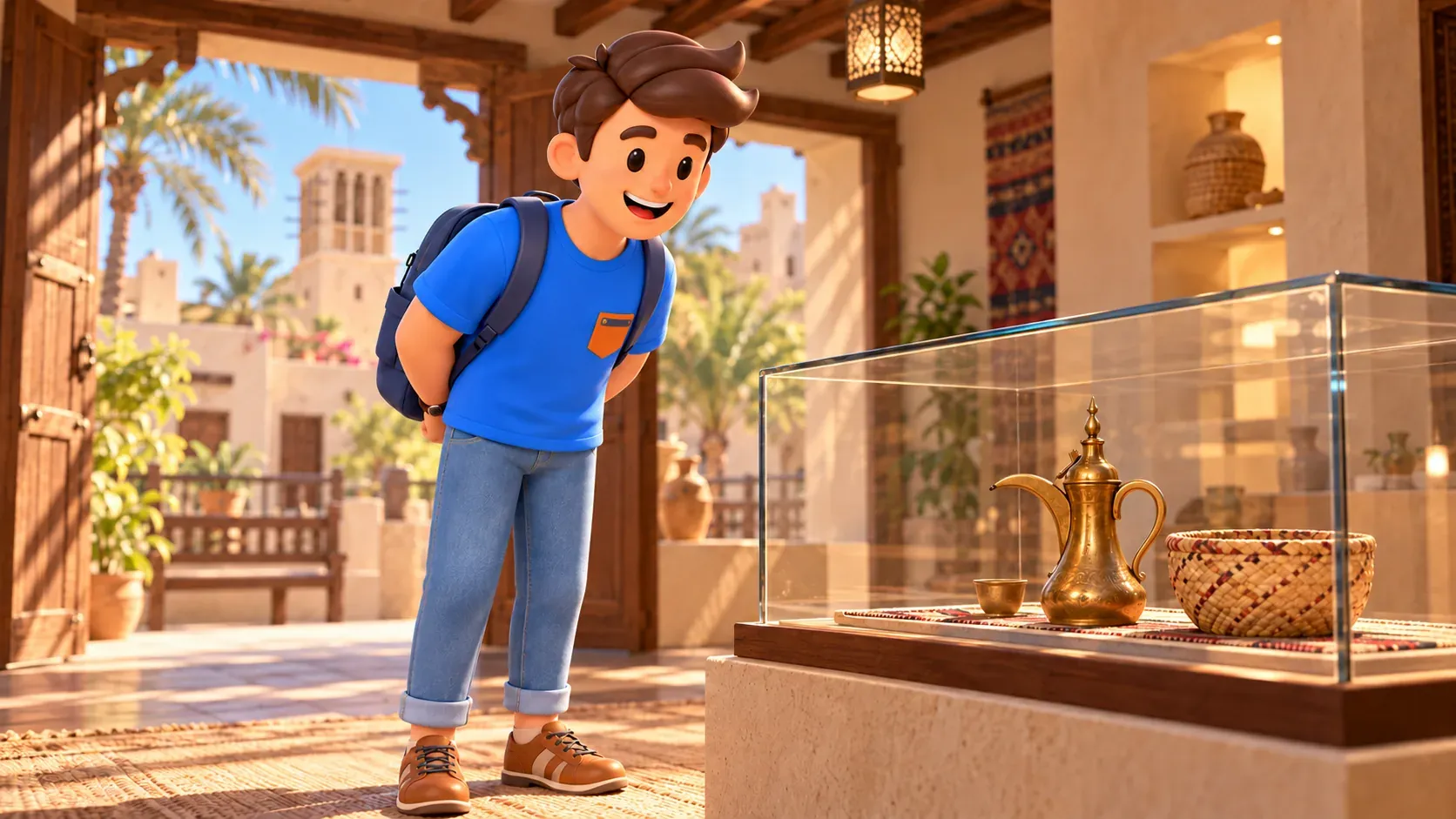
Al Shindagha Museum is a complex of historic houses beside Dubai Creek. Its thematic spaces connect maritime trade, domestic life, craft and the formation of the city. It suits a visitor who wants to see large changes through the activities and material world of people.
The setting matters. Instead of treating the museum as one isolated room, notice the relationship between houses, courtyards and the water nearby. The architecture provides a context for the subjects being presented: trade and family life belong to a place, not only to an explanatory panel.
The maritime theme can help you connect boats, goods and the Creek’s role in urban development. Craft adds another scale, through the knowledge involved in choosing materials and making things by hand. Select a thread that interests you rather than trying to absorb every theme equally.
The Culture of the Sea Pavilion and Traditional Crafts House are examples of thematic components within the wider museum. Treat them as parts of the institution, not automatically as unrelated extra attractions. Confirm the programme and scope of the admission you actually plan to use.
Al Shindagha is a strong choice when your wider day is about the Creek and older urban spaces. An appropriate nearby walk can extend the context after the galleries. Keep actual entrances and the manageable size of the outing in view rather than promising a complete tour of both banks.
Etihad Museum: focus on the formation of the UAE
Etihad Museum addresses a different historical scale: the formation of the United Arab Emirates. Its position beside the historic Union House links the exhibition’s subject to a significant place in the federation’s story. Choose it when documents, decisions and the creation of a state interest you.
The entrance pavilion uses the image of a manuscript sheet, while exhibition spaces extend below ground. Architecture and historical narrative work together: the building’s symbolism is connected to writing and agreement rather than merely providing a striking roof.
This makes a useful distinction from a general museum of everyday city life. The subject is not all of Dubai’s past collected under one heading. It is a more focused account of federation, with the attention that documents and historical context require.
Give yourself time to read selectively and connect the material, rather than moving as though every room were an independent photo stop. You do not need to arrive with detailed prior knowledge. A clear question about how the union was formed is enough to begin.
Afterwards, a pause can help organise what you learned. Adding a second history institution immediately may be less useful than letting this particular narrative settle. If you want both Al Shindagha and Etihad, assign them distinct roles within the trip.
Museum of the Future: choose an exploration of possibilities
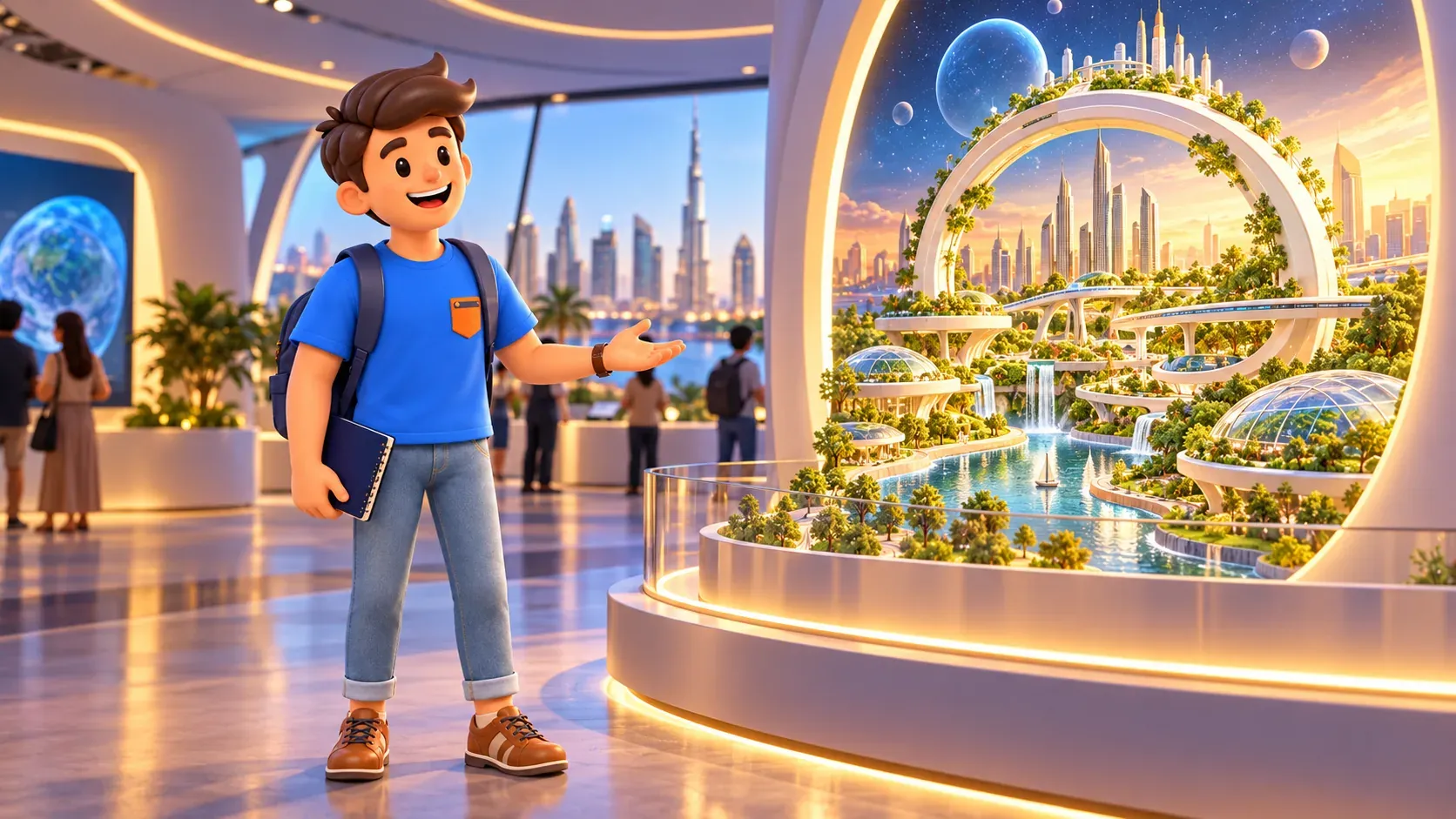
The Museum of the Future opened in 2022. Its role differs from a museum whose main task is to preserve objects from the past. It creates a setting for considering possible futures and the relationship between people, technology and the world they may inhabit.
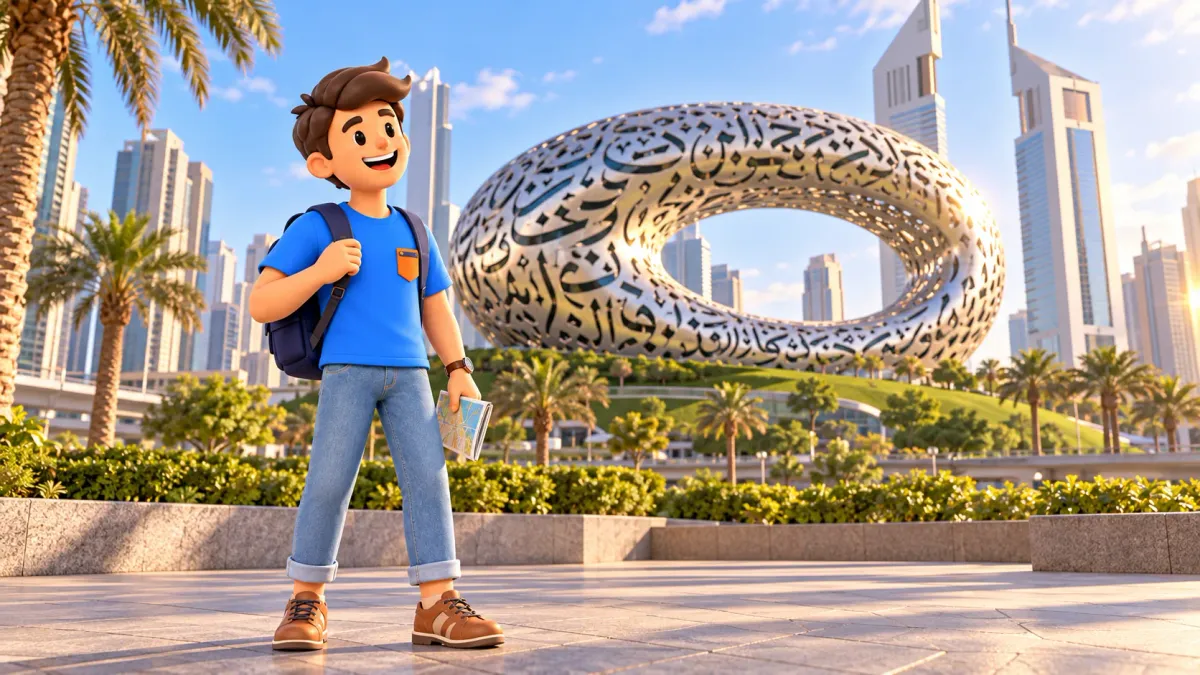
The building by Killa Design is part of that invitation. A silver ring-like form surrounds a large void, and Arabic calligraphy becomes openings in the surface. Architecture and engineering produce a memorable whole, while the empty centre gives the form a subject beyond its outer outline.
An imagined future should be approached as a scenario to think with, rather than a prediction guaranteed to happen. Ask what assumptions it makes, what choices it raises and which part interests you. This keeps the experience meaningful even when you do not agree with every possibility.
Check the current visitor programme and any booking needed for the date. Do not assume a past photograph or a remembered description establishes exactly what will be available. The famous exterior and the interior experience are connected, but they remain different planning decisions.
Choose this museum if a constructed experience and discussion of possibilities appeal to you. If your main interest is the architecture alone, be honest about that when allocating time. A building can attract you without making its entire interior programme the right fit for the day.
Jameel Arts Centre: allow contemporary art its own pace
Jameel Arts Centre opened in 2018 on Dubai Creek as an Art Jameel institution. It brings together exhibitions, research and learning. This is a contemporary arts centre, a distinction worth keeping when comparing it with a historical museum or a scenario-led visitor experience.
The building by Serie Architects combines galleries with courtyards, a research library and changing relationships between inside and outside. Its light volumes and gardens make the sequence of spaces part of the visit. The architecture can slow the pace between works rather than demand continuous spectacle.
Seven courtyard gardens designed by Anouk Vogel refer to different desert ecosystems. They connect landscape and the building’s organisation, creating intervals as well as visual interest. The centre’s relationship to light, plants and the Creek belongs to its cultural identity.
For the art itself, consult the actual programme. A temporary exhibition is not a permanent promise, and not every medium will interest every visitor equally. Choose according to the current subject and give yourself permission to spend time with a small number of works.
You do not have to solve every artwork. Begin by noticing material, scale, sound if present and the way the work occupies the room. Then read the available explanation and see whether it changes your first impression. That conversation between looking and context is a useful starting point.
A smaller subject can suit a shorter visit
The Coffee Museum in Al Fahidi offers a more focused cultural theme: the history and practices surrounding coffee. Objects used for roasting, grinding and preparing the drink connect everyday technology with hospitality. It can appeal when one familiar subject provides a better entry than a broad overview.
Keep a focused museum distinct from a guaranteed tasting or café stop. Check the present visiting arrangements and whatever is actually included. The cultural interest lies in the relationship between objects and practices, even before deciding whether any additional activity fits.
A smaller subject is not necessarily a lesser experience. It can give a clear question to carry into the surrounding district: how does an ordinary object hold social meaning? Allocate the visit according to your attention rather than assuming that every museum must fill the same number of hours.
Build one museum-led day before adding another
Choose one institution as the anchor, establish its current arrangements and give the day a practical beginning and end. Add a pause and one nearby activity whose access you have checked. A good museum day can contain more looking and less movement than an attraction circuit.
RoadMe turns your interests into a personal day-by-day itinerary, making the wider trip easier and more effective to organise. Use the app to balance a museum’s subject with architecture, neighbourhoods and rest at your preferred pace.
With children, choose one concrete question or object rather than asking them to absorb everything. In a mixed group, agree on the main interest and leave room for different reactions. A quiet gallery and an immersive scenario can call for different kinds of attention.
If you plan two cultural visits, let the second contribute a different subject and account for the journey between them. Avoid assuming that being beside the Creek makes Al Shindagha and Jameel immediate neighbours. The water connects their wider setting without erasing geography.

Choose the question you want to leave with
Al Shindagha suits city life, trade and craft. Etihad concentrates on the formation of the UAE. The Museum of the Future invites discussion of possibilities, while Jameel gives contemporary art and research their own setting. A focused institution such as the Coffee Museum offers a smaller cultural thread.
Confirm the current visit, then give your choice enough time. The best museum programme is the one that leaves you with a clearer understanding or a worthwhile question, with enough space in the trip to carry it into the city outside.