
Chicago Without Paid Attractions: How to Build a Walking Day
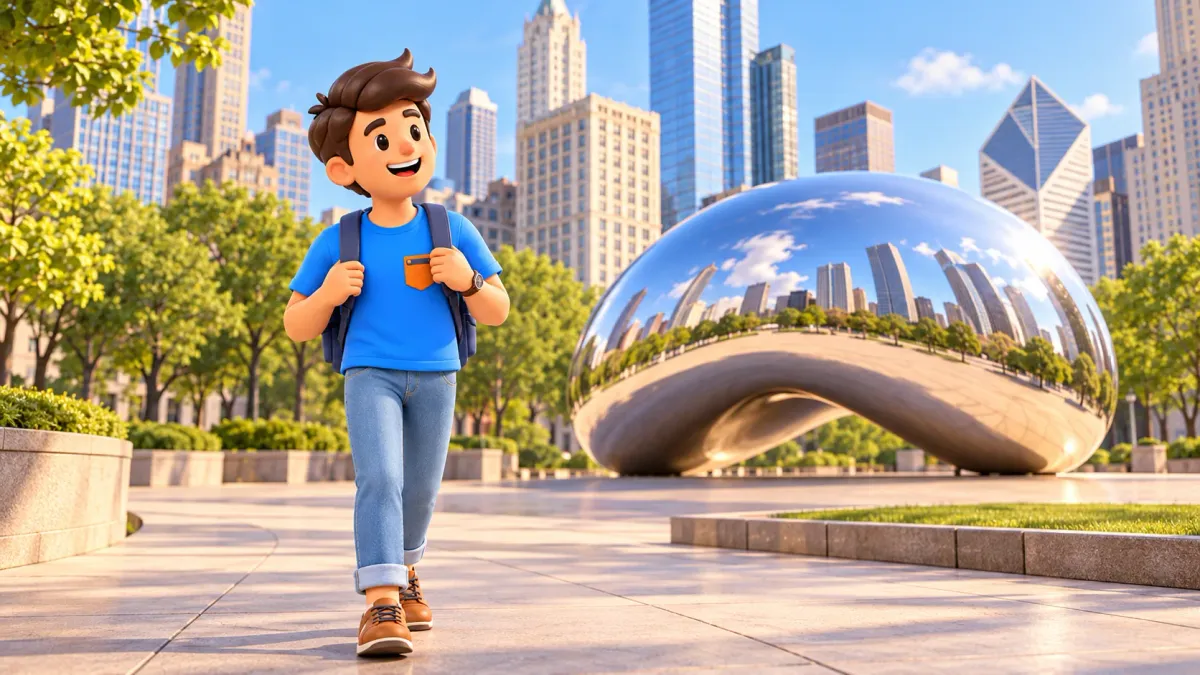
You can give a first Chicago day a clear shape without buying admission to a major attraction. Start with Millennium Park, use the Chicago Cultural Center as an indoor cultural stop when open, look at selected public art in the Loop and finish in a manageable part of Grant Park. The interest comes from the relationship between places, not from adding a paid view or cruise to make the day feel complete.
This is a day without paid attraction admissions, not a promise of zero spending. Food, city transport, parking and optional services still need a budget. Access can also change because of events, works or building schedules. Keep a short base route and the option to omit a stop rather than letting a free visit become an expensive chain of replacements.
Decide what the budget includes before choosing the stops
Separate admission from the other costs of travelling. A public sculpture does not require a museum ticket, but getting from your accommodation to the centre may still cost money. A lunch is not included because the surrounding park is free to enter. Make those distinctions at the start so the day’s budget remains understandable.
RoadMe helps build a complete personal trip around your dates, interests and preferred pace. Try giving this day a free-admission theme, then balancing Chicago’s meals, transport, neighbourhoods and other interests across the whole stay.
Choose the amount of walking you actually want. A budget day should not demand more distance than a visitor can comfortably manage simply to avoid every possible fare. It is reasonable to shorten the selection or pay for an appropriate journey. The purpose is to control costs while enjoying the city, not to turn spending nothing into a test.
Before leaving, choose an arrival point, a likely meal pause and a departure area. These three decisions matter more than adding another sculpture to the map. They also make it easier to adapt if weather or a temporary closure changes the middle of the day. Keep money available for needs rather than allocating the entire budget to optional extras.
A compact order through parks and public art
The base sequence is Millennium Park, the nearby Cultural Center, Daley Plaza for the Chicago Picasso, Federal Plaza for Calder’s Flamingo, then a chosen part of Grant Park. These are a selection, not a requirement to cover every corner. The Four Seasons mosaic at Chase Tower is discussed separately because its plaza access should not be assumed during renovation.
A possible five-hour outline allows forty-five minutes in Millennium Park, forty-five at the Cultural Center, forty-five across the two public-art stops, seventy-five for the day’s connections, forty-five for a modest meal pause and forty-five in Grant Park. The figures are editorial estimates, not measured walking times. A longer restaurant meal, a slow pace or extra stops will extend the day.
Begin on the Michigan Avenue side of Millennium Park. After the Cultural Center, move west along Washington towards Daley Plaza. Continue south through the Loop towards the Federal Plaza area near Adams, then turn east towards Michigan Avenue and your selected Grant Park approach. Use actual crossings and current signs; the outline does not replace a navigation map.
Count your journey to the first stop and home from the last separately. If you prefer less walking, remove one public-art stop or shorten the final park portion. Do not reduce the meal or return allowance to protect every name. A small route with attention can be richer than an ambitious circuit completed while tired.
Millennium Park: a proper beginning without an admission ticket
The city lists Millennium Park as free to enter, with current hours of 6am–11pm. Check notices before visiting. A park can remain open while a path or facility is unavailable, so its general schedule does not certify that every part of a photograph is reachable on your date.
Use the first section to look at the relationship between reflective surfaces, planting and surrounding buildings. Choose a few observations rather than a complete list of features. You might notice how a view changes as you move, or how a skyline appears through a foreground detail. You do not need to buy an experience for the scene to hold your attention.
Do not build the plan around an unconfirmed concert, guided activity or seasonal facility. A free public event has its own date and arrangements. The walking day stands on its own without one. If an event happens to fit, decide what you will remove elsewhere rather than simply adding its full duration to the original schedule.
Temporary works can also affect practical expectations. Read current signs about paths and facilities, and accept a permitted detour. Do not assume that a familiar route through a garden is open because it appears in an older guide. The useful version of the park is the one you can enjoy that day, with enough room left for the next stop.
The Cultural Center: indoor interest when the calendar fits
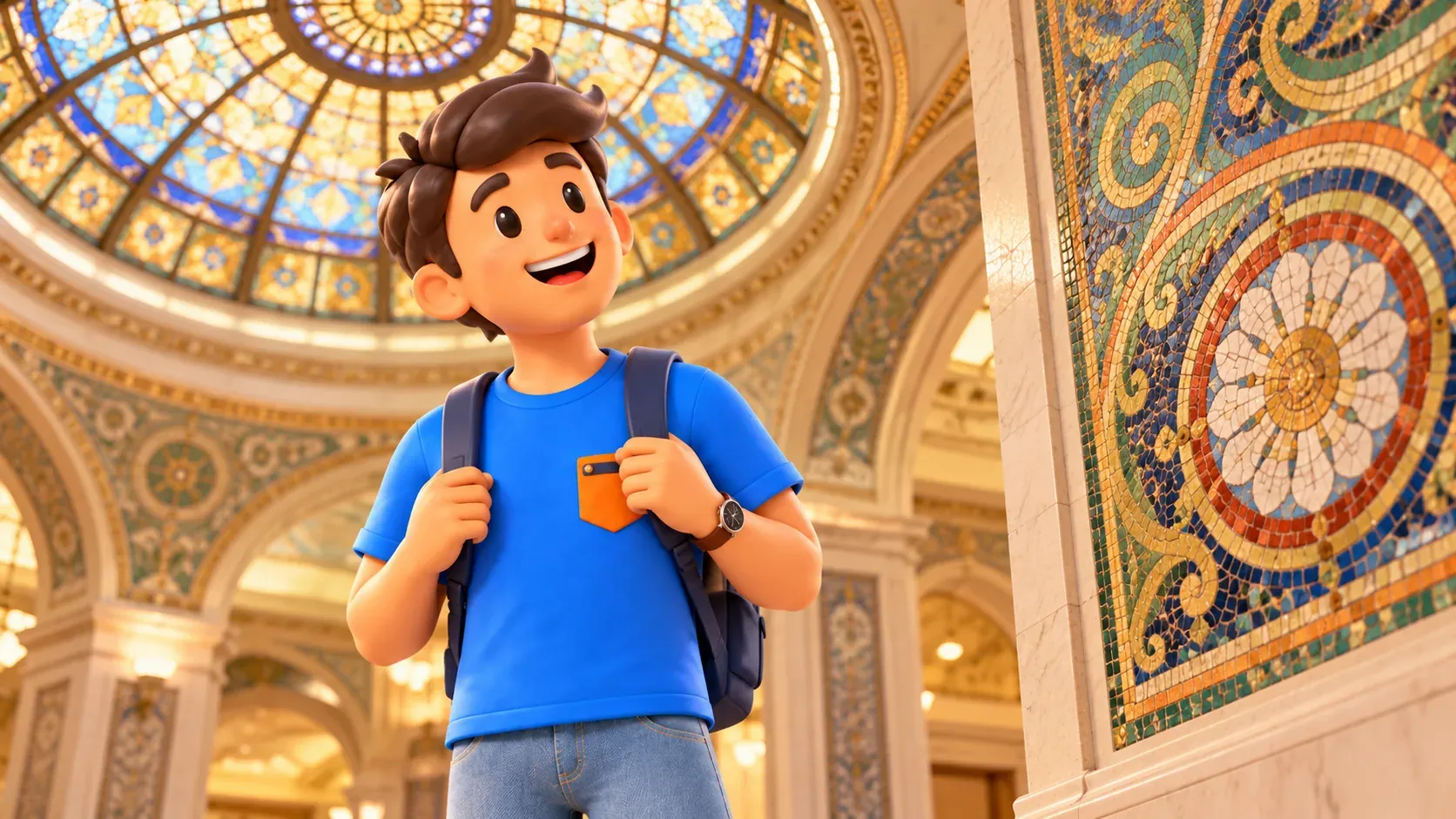
The Chicago Cultural Center at 78 East Washington Street offers free admission. Current public hours are 10am–5pm, with holiday exceptions and exhibition access ending before the building closes. Confirm the date. This is a cultural stop with a schedule, not an always-available interior added automatically to every morning or evening walk.
Look at the available public spaces and choose one architectural or exhibition focus. A dome, a material detail or an artwork can be enough to make the visit memorable. Do not assume all rooms are available or that a performance starts when you arrive. The free base visit and a particular programme are different things.
If the building is closed or a desired space is occupied, omit it. Use a permitted outdoor part of the existing route or take a pause elsewhere, rather than treating a paid museum as an unavoidable substitute. You can keep the day’s admission budget intact while changing its emphasis. A missing indoor stop does not invalidate the rest.
Plan the exit before leaving. The next part heads west into the Loop, so take a moment to check your position and the crossing you need. An attractive doorway is not necessarily the most convenient departure point for your next street. A clear connection helps preserve a relaxed pace without adding unnecessary backtracking.
Two public-art stops with different visual questions
At Daley Plaza, the Chicago Picasso offers an open-air encounter with an unnamed steel sculpture. You do not need to settle exactly what it represents. Look at its shape from a permitted position, then move a little and compare. Different impressions can coexist without turning one suggested likeness into a documented answer.
The visit is to the exterior plaza, not a promise of access inside the Daley Center. Events or temporary arrangements may affect the available space. Keep to public approaches and respect barriers. A free artwork does not imply unrestricted use of every surrounding building or permission to enter a working area for a closer photograph.
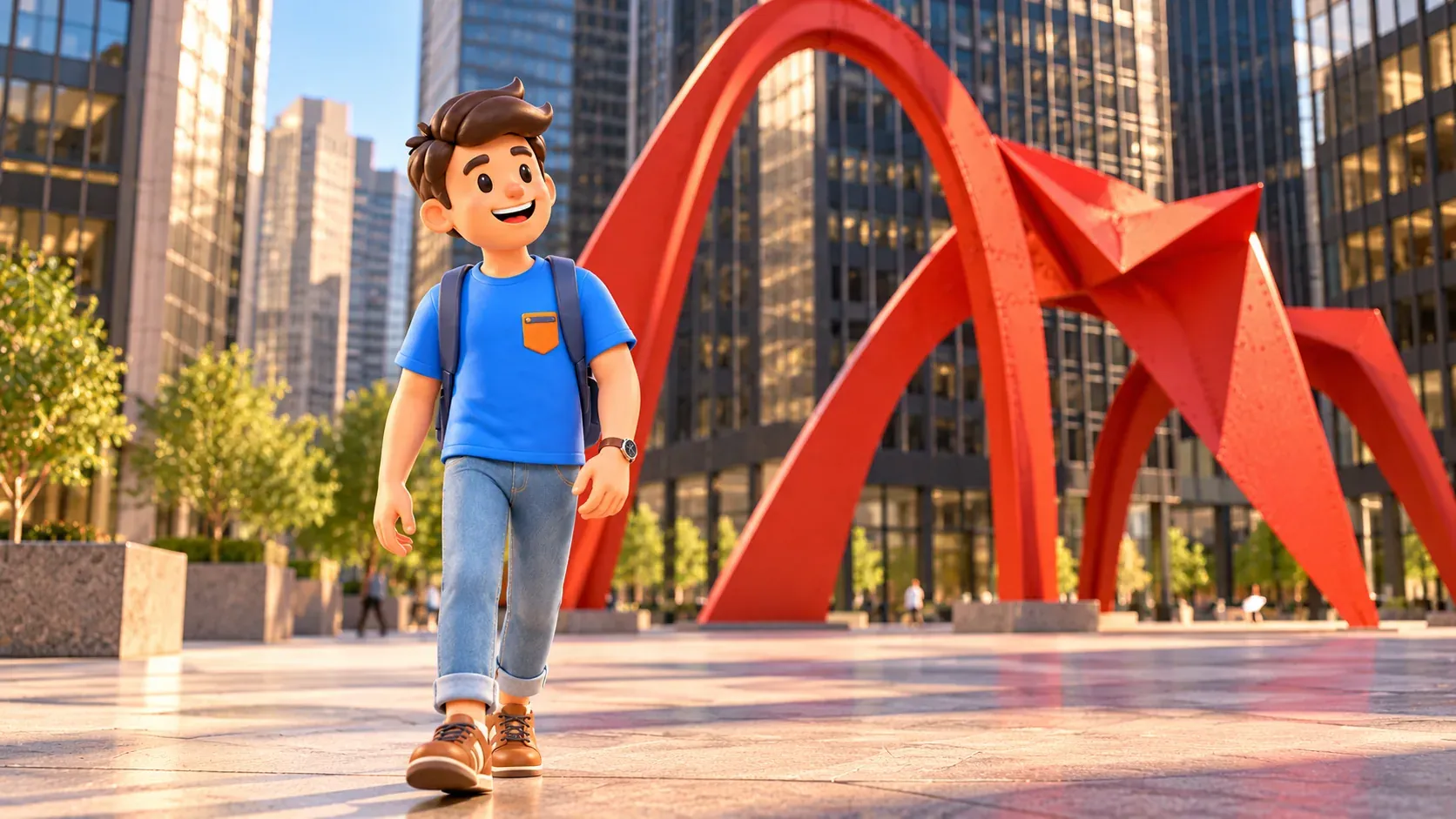
At Federal Plaza, Alexander Calder’s Flamingo is a stationary steel sculpture whose red form contrasts with the surrounding dark architecture. Let that contrast guide your attention: curved form against a stricter grid, colour against a restrained backdrop. This gives the second art stop a different purpose rather than another identical photograph beside a famous name.
Stay with the open exterior view and follow current directions. You do not need a courthouse visit to appreciate the sculpture. If access is restricted, shorten the stop or omit it without attempting a route around barriers. Public art can be the day’s subject while the surrounding place continues to have security, work and other everyday uses.
Why The Four Seasons is a conditional addition
Marc Chagall’s Four Seasons belongs to the Chase Tower plaza setting. The owner has announced major work on that plaza, and 2026 reporting from architectural researchers describes it as inaccessible during renovation. Do not make a close view of the mosaic a guaranteed stop in this day’s base plan.
If you want to add it, first establish current public access for your date. A picture of the completed artwork or a statement about future improvements is not proof that the approach is open now. Follow signs and omit the detour if the answer is unclear. Do not try to enter a construction zone to preserve the original list.
The other parks and public artworks already give the day a complete theme. Nor should you substitute a paid museum interior automatically because another Chagall work is associated with it. That would be a separate visit with its own admission and time. Keep the budget decision visible rather than letting an unavailable exterior quietly change the whole plan.
Finish in a selected part of Grant Park
Grant Park provides a public landscape for the final part, but it is a large setting rather than one small point. Choose an approach and a manageable section before walking there. The operator currently lists 6am–11pm. Check event and access notices instead of assuming the general park pin identifies the right entrance for your finish.
Use the last forty-five minutes for a short walk and a view you can comfortably leave from. Do not promise a fountain performance or an evening water display. Seasonal operations and temporary notices can change those features. The finish works through open space, planting and city context even when a particular display is not running.
Keep your departure route in mind before wandering farther. If the group is tired, stop earlier in a permitted place or leave from a closer suitable point. Saving the attraction fee does not justify making the final journey difficult. A clear end is part of a satisfying walking day, particularly when accommodation lies elsewhere in Chicago.
RoadMe can shape the whole Chicago trip around your interests and travel rhythm. Try keeping this day’s selection short enough to enjoy, with meals, rest and the return journey included in the complete plan.

If rain changes the balance, the downtown rain backup guide offers nearby alternatives with their own opening checks. Keep any paid replacement an explicit decision. A free-admission Chicago day is complete when the route fits your budget and energy, even if you leave one artwork for another visit.


