Boston Public Transportation: MBTA, CharlieCard and Ways to Pay
Boston’s MBTA offers several ways to pay, and their similar names can hide different rules. A CharlieCard, a CharlieTicket, contactless Tap to Ride and the mTicket app are not interchangeable. The correct choice depends on whether you need subway and buses, a pass, Commuter Rail or a ferry.
The system is also in transition. New Charlie readers coexist with older fare equipment, and some fare rules changed during autumn 2026. This guide explains the current payment choices and their boundaries without prescribing a sightseeing route. Published prices and official instructions were checked on 28 October 2026.
Choose your services before choosing a card
Start with the actual transport you expect to use. The subway, local buses, Silver Line, Commuter Rail and ferries can share MBTA branding while requiring different fares or ticket presentation. A payment method suitable for a short subway ride may not cover the regional train you take tomorrow.
Use RoadMe to prepare a complete personal Boston trip plan around your interests and pace before selecting transport tickets. Organising the stay in the app is more convenient than gathering disconnected places and buying a payment product before knowing which journeys you actually need.
| Payment choice | Useful distinction |
|---|---|
| Existing CharlieCard | Stored value or suitable passes for the services it actually covers |
| CharlieTicket | A ticket whose purchased product and format determine coverage |
| Contactless Tap to Ride | Pay as you go on supported subway, bus and ferry services; not ordinary Commuter Rail payment |
| mTicket | Mobile tickets for specified Commuter Rail and ferry travel |
Do not interpret the letter T or an MBTA logo as one universal fare. Identify the service, the product you hold and the place where it must be presented. Those three questions are more useful than asking only whether Boston has a transport card.
Tap to Ride: bank card, phone or watch
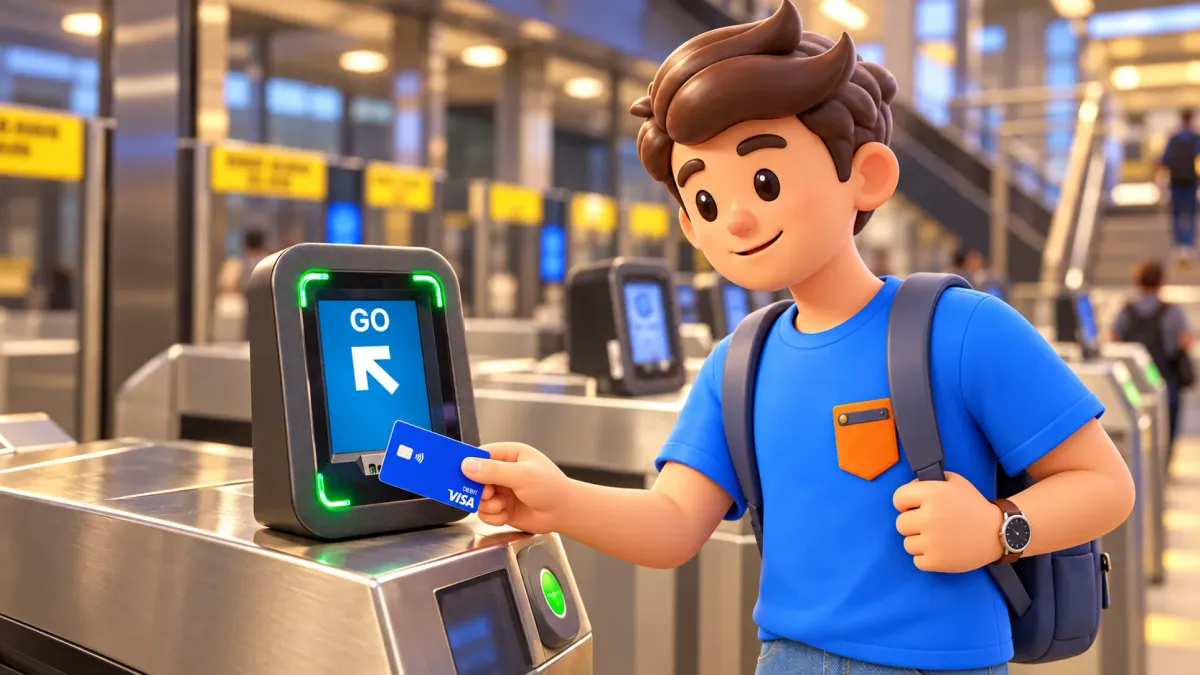
Current contactless payment lets you use a compatible credit or debit card or a supported mobile wallet on bus, subway and ferry. Choose the method before boarding and use the same one throughout a linked journey. A different card or device can be treated as a different payment.
On bus and subway, present it to the new Charlie reader at the gate or vehicle entry as directed. Wait for the successful Go response. On ferries, the official procedure uses the reader at the ticket booth or register, with East Boston tapping during boarding.
A successful tap pays the applicable fare; it does not buy a daily or weekly pass automatically. MBTA currently tells users of weekly or monthly passes to keep their existing method. Contactless bank payment is not described as compatible with those loaded pass products.
For concessions, use the actual applicable benefit and official linking process where offered. A bank card does not identify a visitor’s age or permit by itself. Do not assume that the ordinary adult calculation applies to every child or qualifying reduced-fare rider.
Set up the wallet and check your card’s international usability before travelling. Keep a workable alternative if your chosen issuer does not support the transaction. A payment logo alone is not a guarantee that every card will be accepted in every situation.
CharlieCard and new Charlie readers are different layers
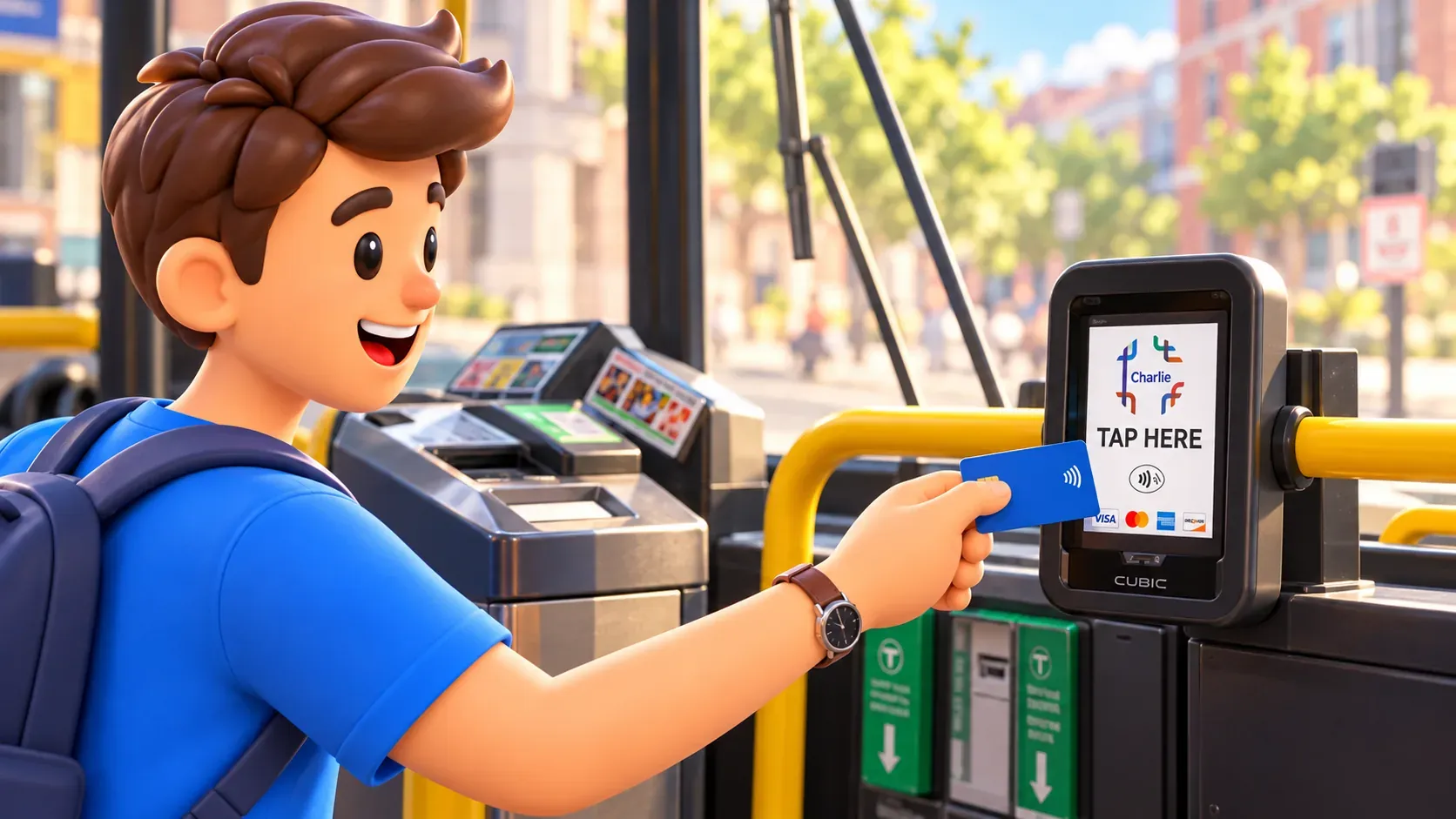
The familiar reusable CharlieCard can hold stored money or selected passes. During the current transition, MBTA says not to tap that existing card on the new Charlie readers intended for contactless payment. Use the appropriate older gate or farebox target for that card.
On a bus, the older farebox and a separate new reader can sit close together. Look at the equipment and instructions rather than assuming every screen accepts every medium. Presenting the right card to the wrong reader is a usability problem, not evidence that the card’s balance has disappeared.
The new Charlie Card programme is being introduced in stages, with testing described on the official Charlie site. Do not confuse that staged product with the existing CharlieCard simply because the names sound alike. Use the actual instructions supplied with the medium you obtain.
Likewise, MyCharlie management, the newer Charlie account and the mTicket app serve different purposes. Registering an account does not necessarily convert an existing pass into another system. Keep your ticket information and the payment method actually used together.
If using a CharlieCard saved from a previous trip, check its validity and balance before leaving. The autumn pilot warns that some older cards not reloaded within the last year may need a value reload at a vending machine for the updated transfer benefit to apply correctly.
Ordinary fares and what the amount covers
The published ordinary adult subway fare is $2.40 and the local bus fare is $1.70. These are service fares, not permission to ride all regional trains and ferries at one price. Commuter Rail is zonal, and ferry amounts depend on the service.
| Adult example | Published price | Check before purchase |
|---|---|---|
| Subway one way | $2.40 | Payment and transfer conditions |
| Local bus one way | $1.70 | Actual bus route and payment |
| 1-Day pass product | $11 | Correct medium, coverage and start time |
| 7-Day pass product | $22.50 | Seven-day validity and correct coverage |
| Commuter Rail Weekend Pass | $10 | Its own weekend and train coverage, not a subway pass |
These examples are not a full concession table. Check eligibility and required proof separately. A fare for an adult, a pass that includes Zone 1A and a ticket to an outer rail zone are different products even when one of their prices happens to look similar.
Pay attention to the exact title selected at the machine or in the app. The same broad phrase one-day pass can refer to products whose medium changes coverage. Do not purchase a convenient-looking button before checking the services you need.
Autumn 2026 changes: transfers and express buses
From 1 September 2026, MBTA is piloting an unlimited number of eligible bus, subway and ferry transfers within two hours of the first tap, charging only the highest individual fare in that linked journey. The word unlimited describes the number of qualifying transfers inside the window, not unlimited travel all day.
Use the same payment method for the benefit. For ferry connections, contactless payment is the relevant current option described by the service-specific instructions. Do not assume that a stored-value old card or any printed ticket gains every ferry right merely from the pilot announcement.
Cash does not provide those electronic transfer rights. Official general and detailed pages also describe some CharlieTicket conditions differently, so confirm the actual purchased ticket rather than promising a universal stored-value ticket transfer. A suitable pass and a cash-value ticket are not the same product.
The same autumn pilot aligns Express Bus fares with local bus fares. It does not change the fare category of every Silver Line route. SL1, SL2 and SL3 use subway fares, while SL4 and SL5 use bus fares under the current service-specific guidance.
Check whether the pilot still applies when you travel. A current trial is a useful saving opportunity, not a permanent promise. Older advice based on the previous transfer count or express fare may be out of date even if the rest of the article looks familiar.

Do you need a day or seven-day pass?
Count independently paid journeys after eligible transfers, not every time you board. Several connected legs inside the transfer window can cost less than separate full fares. A long museum or meal break can place a later ride outside the window.
At the published ordinary subway rate, five independent paid subway journeys exceed the one-day pass price. That does not mean five boardings always make it worthwhile: some may already be transfers, and your actual mix of buses, free services and desired walking can change the result.
The seven-day product can be useful for a stay with regular included travel. Compare it with the journeys you really want rather than choosing activities far away to justify the purchase. Convenience can matter even without a lower total, but keep those arguments separate.
Pass start times depend on the actual medium. MBTA’s detailed overview says selected CharlieTicket and mTicket time products can run from purchase, while CharlieCard versions start on first use. Check the printed or displayed dates and times; do not assume every format can be bought far in advance without starting.
Our guide to comparing total travel cost and time explains the general method. For Boston, compare equal networks, actual transfer benefits and the right time window. Bank-card tapping should not be treated as an invented automatic pass or fare cap.
Commuter Rail: separate zones and ticket presentation
For ordinary Commuter Rail travel, choose the correct origin, destination and zones. Standard contactless Tap to Ride is not the usual fare payment for these trains. A bank card that worked at the subway reader does not prove you have purchased a regional rail ticket.
Buy the suitable printed ticket or mTicket product and follow its presentation instructions. In mTicket, activate the ticket you are ready to use and show it to the conductor. Do not activate an unrelated future journey to test the screen; activation affects the validity period.
Prepare enough battery to display the active ticket when requested. A purchase receipt or screenshot does not provide the same live ticket interaction. If a problem arises, speak to the actual operator before relying on a payment method that the train does not accept.
The Commuter Rail Weekend Pass has its own train coverage and weekend validity. It is not a general subway or bus pass. Check event-train and other stated exclusions before assuming the word all covers every special service marketed in the region.
Read the actual timetable for the outward and return train. Regional rail can suit a particular visit, but its frequency and final departure need not match a central subway line. Allow for station access and any required connection between services.
Zone 1A and the format of the pass
A pass on an existing CharlieCard and a Commuter Rail Zone 1A pass printed on a CharlieTicket can have different coverage. The current MBTA descriptions distinguish subway/bus LinkPass use from the specified rail and inner-harbour products. Buy the version that explicitly includes your intended service.
Do not extend Zone 1A coverage to every outer Commuter Rail station. Confirm where the chosen journey falls before boarding. A familiar station name inside the wider Boston region does not automatically place it inside the central fare zone.
There are also specific exceptions, such as designated CharlieCard use within Fairmount Line Zone 1A and specialised monthly rail media. Those exceptions should not be turned into the claim that ordinary stored-value CharlieCards work on all Commuter Rail trains.
For monthly products, verify both medium and entitlement before comparing prices. A mobile rail product and a printed rail pass can have different transfers. A short visitor should not buy a commuter product simply because it displays more modes in a general fare overview.
Ferries and Silver Line: check the service name
Ferries have their own routes, fares and pass conditions. Current contactless payment supports eligible ferry use, but an old CharlieCard is not universally a ferry ticket. Check the actual service and payment location, not just the presence of MBTA branding on a waterfront sign.
Silver Line is bus-based even though it often appears with rapid transit on visitor maps. Its route number matters for the fare. A generic bus-only pass does not automatically cover every Silver Line journey because some routes use the subway fare category.
Our article on transport tickets and validation abroad explains why the visible vehicle and the fare product can differ. Here, use Boston’s actual route and medium rules rather than deciding from a train or bus icon alone.
RoadMe helps you build a complete personal visit around your interests and pace, so transport supports the trip you want. Preparing the whole stay in the app is more effective than letting payment products or disconnected reservations dictate every choice.

Before your first ride
- List the actual subway, bus, rail and ferry services you need.
- Match the payment medium to the correct reader or ticket procedure.
- Keep the same method for eligible linked transfers.
- Check current pilot conditions and the actual Silver Line route.
- Confirm pass coverage and its printed or displayed start time.
- Prepare rail tickets, battery and the return timetable separately.
Boston is easier when you separate an old card, a new reader, a pass and a regional ticket. Choose the combination that covers your actual journeys, then follow its real validation process instead of expecting one familiar name to solve every fare.